How Many Quarts Dutch Oven Do You Need For Sourdough Bread
Choosing the right Dutch oven quart size is crucial for baking sourdough bread with great oven spring and a crispy crust. A 5-quart Dutch oven is the most popular choice for a standard loaf, while a 6-quart gives extra room for larger or freeform bâtards. This guide explains how many quarts you need based on dough size, shape, and desired crust thickness.
Baking sourdough bread at home is one of the most rewarding things you can do. But the secret to a great loaf often comes down to the tool you use. A Dutch oven traps steam and creates the perfect environment for oven spring and a crispy crust. If you have ever wondered how many quarts Dutch oven for sourdough bread, you are not alone. The answer depends on the size of your dough, the shape you want, and the kind of bake you prefer. In this guide, I will walk you through everything you need to know to pick the right Dutch oven size for your next sourdough bake.
When I first started baking sourdough, I used a random pot I had in the kitchen. The bread was okay, but the crust was pale and the crumb was dense. After some research, I learned that Dutch oven quart capacity is a big deal. A pot that is too small will crowd the dough and limit its rise. A pot that is too large can let too much steam escape, which also hurts oven spring. The right quart size gives your loaf room to expand while keeping the heat and moisture exactly where they need to be. This article will help you find that sweet spot.
Whether you bake a small boules or a large bâtard, the quart capacity of your pot matters. I will cover the most popular sizes, compare cast iron and enameled options, and share practical tips so you can bake with confidence. By the end, you will know exactly how many quarts Dutch oven for sourdough bread you need. Let us dive in.
Key Takeaways
- 5-quart Dutch oven: The go-to size for a 1- to 2-pound sourdough loaf, offering perfect heat retention and steam.
- 6-quart Dutch oven: Ideal for larger loaves, multiple small loaves, or extra-tall bâtards without crowding.
- 3.5-quart or 4-quart: Great for single small boules or mini loaves, but can restrict oven spring if dough is too big.
- Cast iron vs. enameled: Both work well; cast iron holds heat longer, while enameled is easier to clean and lighter.
- Shape matters: Round ovens suit boules, oval ovens fit bâtards and batons better.
- Preheating is key: Always preheat the Dutch oven with the oven to achieve maximum oven spring.
- Measure your dough: Match the quart size to your dough weight for the best rise and crust.
📑 Table of Contents
- Why Dutch Oven Size Matters for Sourdough
- How Many Quarts Dutch Oven For Sourdough Bread: The Most Popular Sizes
- How to Choose the Right Quart Size Based on Your Dough
- Cast Iron vs. Enameled Dutch Ovens for Sourdough
- Common Mistakes to Avoid When Choosing a Dutch Oven
- Final Verdict: What Size Dutch Oven Should You Buy?
Why Dutch Oven Size Matters for Sourdough
The size of your Dutch oven directly affects how your bread bakes. A Dutch oven works by trapping steam from the dough. This steam keeps the outer layer of the bread soft during the early stages of baking. That softness allows the loaf to expand freely, which bakers call oven spring. If the pot is too small, the dough cannot expand, and the bread will be squished. If it is too big, the steam escapes too quickly, and the crust sets before the loaf has fully risen.
The quart capacity determines the volume of air and steam inside the pot. A 5-quart pot holds about 4.7 liters of space. That is enough for a standard 1-pound to 2-pound loaf. A 3.5-quart pot is smaller and works best for a single small boule of about 12 ounces. A 6-quart pot gives you more room for a larger loaf or two smaller loaves at once. Choosing the right size is the first step toward a beautiful sourdough with a blistered crust and an open crumb.
The Role of Steam in Sourdough Baking
Steam is the invisible ingredient that makes sourdough bread so special. During the first 15 to 20 minutes of baking, the dough is still flexible. The Dutch oven lid traps the steam released by the wet dough. This steam keeps the surface of the bread moist, which delays crust formation. As a result, the loaf can expand in all directions. This expansion gives you that dramatic rise you see in professional sourdough loaves.
When you use a pot that is too large, the steam has too much space to fill. It cools down faster and loses its power. When the pot is too small, the steam is trapped but the dough has no room to grow. The quart size must match the dough size so the steam stays at the right concentration. That is why how many quarts Dutch oven for sourdough bread is such an important question.
How Many Quarts Dutch Oven For Sourdough Bread: The Most Popular Sizes
Now let us look at the most common Dutch oven sizes and what they are best for. I will break them down by quart capacity so you can easily compare.
3.5-Quart Dutch Oven
A 3.5-quart Dutch oven is a compact pot. It is great for baking a single small boule or a mini loaf. If you are just starting out and want to test a sourdough starter recipe without committing to a large loaf, this size works well. It is also perfect for individual servings or small dinner parties. However, if you try to bake a full-sized 2-pound loaf in a 3.5-quart pot, it will overflow and the crumb will be dense. Best for: small boules, test bakes, and single-person households.
5-Quart Dutch Oven
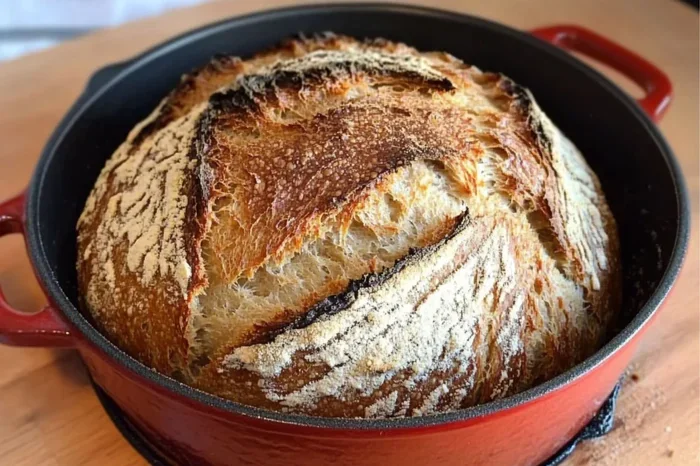
The 5-quart Dutch oven is the gold standard for sourdough baking. It can comfortably handle a 1-pound to 2-pound loaf. Whether you bake a round boule or an oval bâtard, this size gives the dough plenty of room to rise. The heat retention is excellent, and the lid seals in enough steam for a beautiful oven spring. Most beginner and expert bakers agree that a 5-quart pot is the most versatile choice. It is the size you will see in most sourdough recipes. Best for: standard loaves, boules, bâtards, and all-around baking.
6-Quart Dutch Oven
A 6-quart Dutch oven is for the ambitious baker. If you like to bake two smaller loaves at once, or if you prefer a very tall bâtard or a baton shape, this size gives you extra headroom. It is also great if you like to bake a large round loaf of 2.5 pounds or more. The only downside is that it uses more energy to preheat, and the extra space can make it harder to maintain steady steam if you do not add enough water. Best for: large loaves, multiple small loaves, and free-form shapes.
4-Quart Dutch Oven
A 4-quart Dutch oven sits between the 3.5 and 5-quart sizes. It is a good middle ground for a medium boule or a smaller bâtard. If you do not want a huge pot but the 3.5-quart feels too small, the 4-quart is a nice compromise. It can handle a 1-pound loaf with ease. Best for: medium-sized loaves and those who want a compact but capable pot.
| Dutch Oven Size | Quart Capacity | Ideal Loaf Weight | Best Shape | Great For |
|---|---|---|---|---|
| Small | 3.5 qt | 12 oz or less | Boule | Test bakes, small households |
| Medium | 4 qt | 1 lb | Boule or bâtard | Medium loaves, compact kitchens |
| Standard | 5 qt | 1.5–2 lb | Boule, bâtard, baton | Most sourdough bakers |
| Large | 6 qt | 2–2.5 lb or two small loaves | Bâtard, baton | Large loaves, batch baking |
This table shows the quart capacity and what each size can handle. The 5-quart Dutch oven is the safest choice for most people. If you are unsure, go with a 5-quart. It will serve you well for years.
How to Choose the Right Quart Size Based on Your Dough
Knowing how many quarts Dutch oven for sourdough bread you need comes down to matching the pot to your dough. Here are the key factors to consider.
Weigh Your Dough
The weight of your dough is the single most important factor. A standard sourdough recipe makes about 1.5 pounds of dough after bulk fermentation. That dough will fit perfectly in a 5-quart pot. If you make a smaller batch of 12 ounces, a 3.5-quart or 4-quart pot is enough. If you make a large batch of 2.5 pounds, a 6-quart pot gives the dough room to expand without touching the lid.
Consider the Shape You Want
The shape of your final loaf also matters. A round boule does not need as much vertical space. An oval bâtard or a long baton needs more height. A 5-quart round Dutch oven works great for boules. An oval 5-quart or 6-quart pot is better for bâtards. Some bakers prefer a round pot because it distributes heat evenly. Others like the oval shape for longer loaves. Choose the shape that matches your banneton and the look you want.
Think About Your Baking Frequency
If you bake sourdough every week, a 5-quart pot is a wise investment. If you only bake once a month, a smaller size might be fine. Also, think about storage. A 6-quart cast iron Dutch oven is heavy. Make sure you have a sturdy shelf or cupboard. Quick Tip: If you bake multiple loaves, consider buying two 5-quart pots instead of one large pot. This gives you flexibility.
Measure Your Banneton
Your banneton or proofing basket should fit inside the Dutch oven with a little room to spare. If the banneton touches the sides of the pot, the dough will not have enough space to rise. A good rule of thumb is that the banneton should be about 1 inch smaller than the inner diameter of the pot. This ensures the bread can expand freely during the final proof and the early stages of baking.
Cast Iron vs. Enameled Dutch Ovens for Sourdough
When it comes to Dutch ovens, you have two main choices: bare cast iron and enameled cast iron. Both can bake excellent sourdough bread, but they have differences.
Cast Iron Dutch Oven
A bare cast iron Dutch oven is beloved by many sourdough bakers. It heats slowly but retains heat incredibly well. This steady heat creates a consistent oven spring and a deeply browned crust. Cast iron is also very durable and can last a lifetime if you care for it properly. The downside is that it is heavy, and it requires seasoning. If you are not careful, it can rust. Common Mistake: Putting a hot cast iron pot in cold water, which can cause warping or cracking. Always let it cool before washing.
Enameled Dutch Oven
An enameled Dutch oven has a glass-like coating over the cast iron. It is easier to clean and does not require seasoning. The enamel also comes in many colors, which is a nice bonus. For sourdough baking, an enameled pot works just as well as bare cast iron. It holds heat nicely and the lid traps steam effectively. The main downside is that the enamel can chip if you drop it or hit it with a heavy object. Also, enameled pots are usually lighter than bare cast iron, which means they may not retain heat quite as long. Expert Insight: Many professional bakers use enameled Dutch ovens because they are low-maintenance and still deliver great results.
Which One Should You Pick?
If you want the absolute best heat retention and do not mind the weight, choose bare cast iron. If you prefer easy cleaning and a lighter pot, go with enameled. For sourdough baking, both are excellent. The most important thing is the quart size, not the material. A 5-quart enameled pot will bake just as good a loaf as a 5-quart bare cast iron pot.
Common Mistakes to Avoid When Choosing a Dutch Oven
Even experienced bakers make mistakes when picking a Dutch oven for sourdough. Here are some pitfalls to watch out for.
- Buying a pot that is too small: A 3.5-quart pot will crowd a full-sized loaf. The dough will stick to the sides and the crust will be thick and hard.
- Ignoring the shape: A round pot is not ideal for a long bâtard. The dough will be squeezed into an odd shape, and the crumb will be uneven.
- Choosing a pot with a loose lid: The lid must fit snugly to trap steam. A loose lid lets steam escape, which reduces oven spring and gives you a pale crust.
- Not preheating the pot: Preheating the empty Dutch oven is essential for a good oven spring. If you skip this step, the bread will not rise as much.
- Overfilling the pot: Leave at least 2 inches of space between the top of the dough and the lid. Otherwise, the bread will touch the lid and stick.
- Using the wrong baking temperature: Most sourdough recipes call for 450°F to 500°F. A pot that is too large or too small can affect how the heat circulates. Stick to the recommended temperature and adjust time if needed.
Avoiding these mistakes will help you get consistent, bakery-quality sourdough bread every time. Quick Tip: Before you buy, measure the inside diameter and height of the Dutch oven. Compare that to the size of your banneton. This simple check can save you from a frustrating bake.
Final Verdict: What Size Dutch Oven Should You Buy?
After reviewing all the factors, the clear winner for most sourdough bakers is the 5-quart Dutch oven. It is the perfect balance of size, heat retention, and versatility. It can handle a wide range of loaf sizes and shapes, from small boules to large bâtards. If you are just starting your sourdough journey, a 5-quart pot is all you need.
If you bake for a large family or you love to bake multiple loaves at once, a 6-quart Dutch oven gives you extra room. If you only bake small loaves or test recipes, a 3.5-quart or 4-quart pot is a great compact option. No matter which size you choose, make sure the lid fits tightly and the pot is made of quality material. How many quarts Dutch oven for sourdough bread you need is not a one-size-fits-all answer, but with the guidance above, you can make a confident choice.
Remember that the Dutch oven is just one part of the equation. Your sourdough starter, fermentation time, scoring technique, and baking temperature all play a role. But having the right pot sets the foundation for a beautiful loaf with a crisp crust and a light, airy crumb. So grab your Dutch oven, preheat it, and enjoy the magic of sourdough baking. You will love the results.
Frequently Asked Questions
Can I use a 3.5-quart Dutch oven for sourdough?
Yes, a 3.5-quart Dutch oven works well for small boules of 12 ounces or less. It is perfect for test bakes or single servings. However, it will be too small for a standard 2-pound loaf, which will overflow and result in a dense crumb.
Is a 5-quart Dutch oven the best size for sourdough?
Most bakers agree that a 5-quart Dutch oven is the most versatile size. It handles a 1- to 2-pound loaf comfortably and gives the dough enough room for excellent oven spring. If you are unsure, a 5-quart pot is the safest choice.
What happens if my Dutch oven is too big for the dough?
A pot that is too large lets steam escape too quickly. This reduces oven spring and can lead to a pale, thick crust. The dough may also dry out faster. Always match the quart capacity to the dough weight for the best results.
Does the shape of the Dutch oven matter for sourdough?
Yes, shape matters. Round Dutch ovens are ideal for boules and distribute heat evenly. Oval Dutch ovens fit bâtards and batons better, giving long loaves the space they need. Choose the shape that matches your proofing basket and desired loaf shape.
Should I choose cast iron or enameled for sourdough?
Both work great. Cast iron offers superior heat retention and a slightly crispier crust, but it is heavy and requires seasoning. Enameled Dutch ovens are lighter, easier to clean, and need no maintenance. For sourdough baking, the material matters less than the quart size and lid fit.
How do I know if my Dutch oven will fit my banneton?
Measure the inner diameter of the Dutch oven. Your banneton should be about 1 inch smaller than that diameter. This leaves enough room for the dough to expand during the final proof and the early bake without touching the sides or lid.