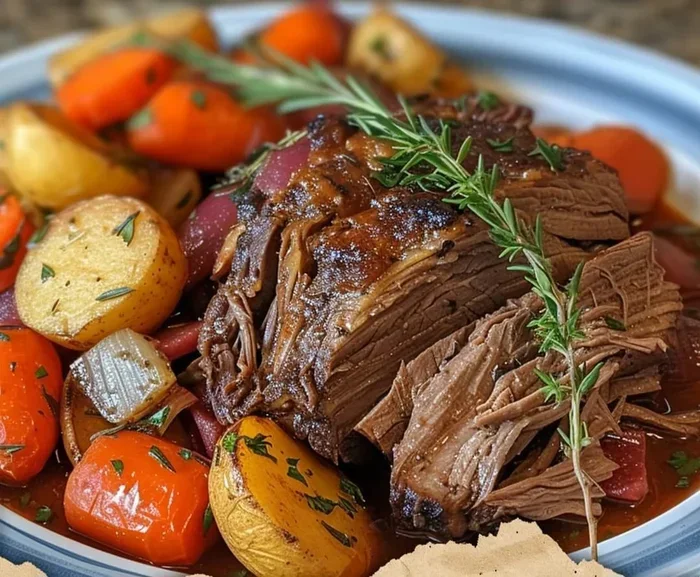
What Temp Pot Roast In Oven For Juicy Tender Results
Cooking a pot roast in the oven starts with getting the temperature right. The sweet spot for a juicy, tender pot roast is between 300°F and 325°F. This low and slow method breaks down tough connective tissues in beef chuck roast, turning it fall-apart tender. Whether you use a Dutch oven or a baking dish, understanding your pot roast oven temperature makes all the difference. Learn the exact temp, timing, and pro tips below.
Key Takeaways
- Best Oven Temp: Cook pot roast at 300°F to 325°F for the juiciest results.
- Internal Temp Matters: Aim for 190°F to 200°F for fall-apart tender beef.
- Sear First: Always sear your roast before braising for deeper flavor.
- Use a Meat Thermometer: Guessing leads to overcooked or undercooked roast beef.
- Low and Slow Wins: Higher temps dry out the meat; patience gives you tender pot roast.
- Rest the Meat: Let the roast rest 15 to 20 minutes after cooking for juicier slices.
- Liquid Ratio: Use about 1 to 2 cups of braising liquid for moist oven-braised beef.
📑 Table of Contents
- What Temp Pot Roast In Oven For Juicy Tender Results
- The Best Oven Temperature for Pot Roast
- How Long to Cook Pot Roast in the Oven
- Step-by-Step Guide to Oven Pot Roast
- Common Mistakes to Avoid When Cooking Pot Roast
- Quick Tips for the Perfect Pot Roast
- Expert Insights on Braising Beef in the Oven
- How to Tell When Your Pot Roast Is Done
- Frequently Asked Questions
- Conclusion
What Temp Pot Roast In Oven For Juicy Tender Results
There is nothing quite like a homemade pot roast filling your kitchen with a rich, savory aroma. It is the kind of meal that brings everyone to the table. But getting it right can feel tricky. The pot roast oven temperature is the single most important factor. Too hot and the meat dries out. Too low and it takes forever. This guide walks you through everything you need to know about what temp pot roast in oven for perfectly juicy results every single time.
Whether you are a beginner cook or someone who has been making beef chuck roast for years, there is always something new to learn. I will share the exact temperatures, timing guidelines, and simple tips that separate a good pot roast from a great one. By the end, you will feel confident enough to make oven-braised beef like a pro. Let us get started.
Why Temperature Control Is Everything for Pot Roast
Pot roast is not just a recipe. It is a technique. The whole idea behind low and slow cooking is to gently break down the tough fibers in cheaper cuts of beef. Cuts like chuck roast or shoulder roast have lots of collagen. When you cook them at the right pot roast oven temperature, that collagen melts into gelatin. This is what makes the meat fall-apart tender and full of flavor.
If you crank the heat too high, the outside of the roast burns before the inside has a chance to soften. You end up with tough, dry meat. Nobody wants that. The braising temperature needs to be just right. That is why knowing your numbers matters so much.
The Best Oven Temperature for Pot Roast
The gold standard for pot roast oven temperature is 325°F. Some cooks prefer 300°F for an even slower cook. Both work beautifully. The key is consistency. Once you set your oven, try not to open the door too often. Every time you open it, heat escapes and your cook time goes up.
Here is a quick breakdown of the most common oven temperatures for pot roast:
- 300°F: Slower cook, extra tender, great for larger roasts over 4 pounds.
- 325°F: The most popular choice. Balanced cook time and moisture.
- 350°F: Faster but riskier. Only use if you are short on time and watch it closely.
For the best oven pot roast, stick with 325°F. It gives you a beautiful balance of flavor and tenderness without drying things out. I have found that 325°F works perfectly for roasts between 3 and 5 pounds.
What Internal Temperature Should Pot Roast Reach
Now, the oven temperature is only half the equation. You also need to know the pot roast internal temperature. This is where a meat thermometer becomes your best friend. The target internal temp for a tender pot roast is 190°F to 200°F.
At this range, the collagen has fully broken down. The meat shreds easily with a fork. If you pull it at 160°F, it will still be tough. That is because the collagen needs sustained heat over time to convert. This is why low and slow cooking is so important for beef braising.
Here is a simple temp guide:
- 160°F: Still tough. Needs more time.
- 180°F: Starting to soften but not there yet.
- 190°F to 200°F: Perfect. Tender and juicy.
- 210°F+: Overcooked. The meat may start to dry out.
Always check the thickest part of the roast. Avoid touching bone if you can, as it reads hotter than the surrounding meat.
How Long to Cook Pot Roast in the Oven
Timing depends on the size of your roast and the oven temperature. A general rule of thumb is about 30 to 35 minutes per pound at 325°F. But that is just a starting point. The real answer is the internal temperature.
Timing Guide by Roast Size
- 2 to 3 pounds: About 2.5 to 3 hours at 325°F.
- 3 to 4 pounds: About 3 to 3.5 hours at 325°F.
- 4 to 5 pounds: About 3.5 to 4.5 hours at 325°F.
- 5+ pounds: About 4.5 to 5.5 hours at 325°F.
These are estimates. Always use a thermometer. Every oven is different. Some run hot, some run cold. Knowing your oven’s true temperature can save a lot of guesswork.
If you are using a Dutch oven, it traps heat really well. You may need to reduce the time slightly by about 15 to 20 minutes. The heavy cast iron holds heat so efficiently that the roast cooks a bit faster.
Step-by-Step Guide to Oven Pot Roast
Now that you know the pot roast oven temperature, let us walk through the process. Follow these steps and you will nail it every time.
Step 1: Choose the Right Cut of Beef
Not all beef cuts are created equal for pot roast. You want a cut with lots of connective tissue and marbling. Beef chuck roast is the undisputed champion here. It is affordable, widely available, and turns into the most tender, flavorful roast when cooked low and slow.
Other great options include:
- Bottom round roast: Lean but works well with slow cooking.
- Brisket: Rich flavor, perfect for pot roast.
- Short ribs: Extremely tender and juicy.
- Top blade roast: Great marbling and flavor.
Avoid lean cuts like sirloin or tenderloin for pot roast. They do not have enough fat or collagen to hold up to long cooking times.
Step 2: Sear the Roast
Searing is a step you should never skip. It adds a deep, caramelized flavor to your beef roast recipes that you simply cannot get any other way. Pat the roast dry with paper towels first. Season generously with salt and pepper.
Heat a tablespoon of oil in your Dutch oven or oven-safe pot over medium-high heat. Once the oil is shimmering, place the roast in. Let it sear for about 3 to 4 minutes per side until you get a beautiful brown crust. This sear pot roast step locks in juices and builds the flavor foundation for your entire dish.
Step 3: Add Aromatics and Liquid
After searing, remove the roast and set it aside. In the same pot, add chopped onions, carrots, celery, and garlic. Sauté for about 5 minutes until softened. Then add your braising liquid. This can be beef broth, red wine, or a combination of both.
A good rule is to use about 1 to 2 cups of liquid. You do not want to fully submerge the roast. The liquid should come about halfway up the sides. This creates the perfect steamy environment for oven-braised beef.
Add herbs like thyme, rosemary, and bay leaves. A splash of Worcestershire sauce adds depth. Return the roast to the pot, nestling it into the vegetables and liquid.
Step 4: Cover and Cook
Cover the pot tightly with a lid or aluminum foil. Place it in the preheated oven at 325°F. Let it cook undisturbed for most of the time. Resist the urge to peek too often.
After about 2.5 to 3 hours, start checking the internal temperature. When it reaches 190°F to 200°F, your pot roast is done. The meat should be incredibly tender and easy to pull apart with a fork.
Step 5: Rest and Slice
This step is just as important as the cooking. Remove the pot from the oven and let the roast rest for 15 to 20 minutes. This allows the juices to redistribute throughout the meat. If you cut too soon, all those flavorful juices run out onto the cutting board instead of staying in the roast.
Once rested, slice against the grain for the most tender results. Serve with the vegetables and spoon some of the pot roast gravy over the top.
Common Mistakes to Avoid When Cooking Pot Roast
Even experienced cooks make mistakes with pot roast oven temperature. Here are the most common ones and how to avoid them.
Cooking at Too High a Temperature
This is the number one mistake. Some people set the oven to 375°F or 400°F thinking it will cook faster. It does not. It dries the roast out. The braising temperature needs to stay low so the collagen can break down properly. Stick with 300°F to 325°F for the best tender pot roast.
Skipping the Sear
Searing takes only about 15 minutes but makes a huge difference in flavor. Skipping it leaves your pot roast tasting flat. Take the extra few minutes to get a good brown crust on all sides.
Not Using a Meat Thermometer
Timing is just a guideline. Temperature is the truth. Without a meat thermometer, you are guessing. Invest in a good instant-read thermometer. It costs very little and takes the guesswork out of cooking beef roast oven style.
Overcrowding the Pot
If you are cooking vegetables with the roast, do not overcrowd the pot. Vegetables need space to steam and caramelize. Too many vegetables create too much moisture and can actually make the roast soggy instead of tender.
Opening the Oven Door Too Often
Every time you open the oven door, you lose heat and extend the cook time. Check the temperature only when you need to. Trust the process and let the oven do its work.
Quick Tips for the Perfect Pot Roast
Here are some extra tips that take your pot roast oven temperature game to the next level:
- Bring the roast to room temperature before cooking. This helps it cook more evenly.
- Use a Dutch oven if you have one. The heavy walls distribute heat evenly.
- Add potatoes and root vegetables in the last 1.5 hours of cooking so they do not turn to mush.
- Make gravy from the drippings. Skim the fat, then simmer the liquid on the stovetop with a little cornstarch slurry.
- Cook a day ahead if possible. Pot roast tastes even better the next day as the flavors meld together.
- Let the roast rest for at least 15 minutes before slicing.
- Save the leftovers for sandwiches, tacos, or beef stew the next day.
These small adjustments make a big difference in the final result. They are the kind of details that separate a good pot roast recipe from an unforgettable one.
Expert Insights on Braising Beef in the Oven
Oven-braised beef is one of the oldest and most reliable cooking methods. Professional chefs have been using this technique for generations. The beauty of it is its simplicity. You need minimal equipment and inexpensive cuts of meat to create something extraordinary.
The science behind low and slow cooking is well understood. Collagen, the tough protein found in connective tissue, begins to break down at around 160°F. But it needs sustained heat over several hours to fully convert into gelatin. This is why a pot roast internal temperature of 190°F to 200°F is the target. At that point, the meat is not just cooked through. It is transformed.
According to food science experts, the ideal braising temperature for beef is between 300°F and 325°F. This range keeps the liquid at a gentle simmer without boiling. Boiling would make the meat tough and stringy. A gentle simmer keeps the environment moist and tenderizing.
One more expert tip: always use enough liquid to create steam but not enough to submerge the roast. The steam circulates inside the covered pot and bathes the meat in gentle, moist heat. This is the secret behind fall-apart tender results.
Choosing the Right Braising Liquid
The liquid you choose for your pot roast shapes the final flavor profile. Here are some popular options:
- Beef broth: Classic and savory. Works well for traditional pot roast.
- Red wine: Adds depth and richness. Great for special occasions.
- Beer: Gives a hearty, malty flavor. Pairs well with root vegetables.
- Tomato juice: A Southern favorite that adds a subtle tang.
- A mix of broth and wine: The best of both worlds.
No matter which liquid you choose, make sure it is hot when you add it to the pot. Adding cold liquid to a hot sear can shock the meat and affect the texture slightly.
How to Tell When Your Pot Roast Is Done
There are three reliable ways to check if your pot roast is done:
- Internal temperature: 190°F to 200°F on a meat thermometer.
- Fork test: Insert a fork into the thickest part. If it slides in easily and the meat pulls apart, it is done.
- Visual check: The meat should look shrunk away from the bone (if bone-in) and feel very soft when pressed.
If any of these signs are not there yet, keep cooking and check again every 30 minutes. Patience is the secret ingredient in any great pot roast oven temperature recipe.
Frequently Asked Questions
What is the best oven temperature for pot roast?
The best oven temperature for pot roast is 325°F. This provides a gentle, even heat that breaks down tough connective tissues without drying out the meat. Some cooks prefer 300°F for an even slower, more tender result. Avoid going above 350°F as it can dry the roast out before the collagen has time to melt.
How long does it take to cook a pot roast in the oven at 325°F?
A 3 to 4 pound pot roast takes about 3 to 3.5 hours at 325°F. A general guideline is 30 to 35 minutes per pound. However, always rely on the internal temperature of 190°F to 200°F rather than time alone. Every oven and every roast is slightly different.
Can I cook pot roast at 350°F?
Yes, you can cook pot roast at 350°F but it is not ideal. The higher temperature increases the risk of drying out the meat. If you must use 350°F, reduce the cook time and check the internal temperature frequently. For the best results, stick with 300°F to 325°F for true low and slow cooking.
What internal temperature should pot roast be?
Pot roast should reach an internal temperature of 190°F to 200°F. At this range, the collagen in the beef has fully broken down into gelatin, making the meat tender and juicy. Pulling the roast at 160°F to 170°F will result in tough, chewy meat that has not had enough time to soften.
Do I need to cover the pot roast while cooking in the oven?
Yes, always cover the pot roast while braising in the oven. A tight-fitting lid or aluminum foil trap keeps the steam inside, which keeps the meat moist. The steam circulates around the roast and vegetables, creating a self-basting environment that is essential for tender, juicy results.
Can I use a regular baking dish instead of a Dutch oven?
Yes, you can use a regular baking dish or roasting pan for oven pot roast. However, a Dutch oven works best because its heavy walls retain heat evenly and the tight lid seals in moisture. If using a baking dish, cover it tightly with foil to achieve similar results.
Conclusion
Mastering what temp pot roast in oven is simpler than you think. The magic number is 325°F with an internal target of 190°F to 200°F. This low and slow approach transforms a humble cut of beef into something truly spectacular. The key is patience, a good meat thermometer, and a little bit of love.
Remember to sear your roast first, use the right braising liquid, and never skip the resting step. Avoid common mistakes like cooking too hot or opening the oven door too often. With these tips, your pot roast oven temperature will be spot on every time.
Now it is your turn. Grab a chuck roast, preheat that oven, and get cooking. Once you make one perfect oven-braised beef pot roast, you will never go back to takeout again. Happy cooking!