What Internal Temp To Cook Turkey In Oven The Right Way
Cooking a turkey in the oven starts with knowing the right internal temperature. The what internal temp to cook turkey in oven question is the most important factor for a safe, juicy, and flavorful bird. The USDA recommends reaching 165°F in the thickest parts of the turkey, but many chefs pull the bird earlier for juicier results. This guide covers turkey cooking temperature, roasting times, thermometer use, and expert tips so your oven-baked turkey turns out perfect every single time.
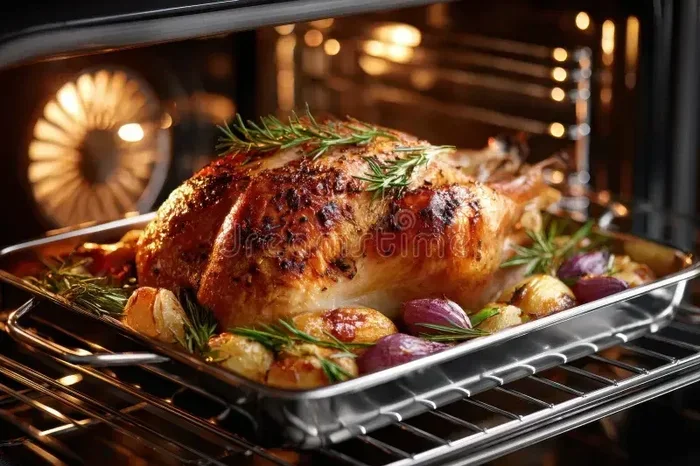
There is nothing quite like a golden brown turkey fresh out of the oven. The aroma fills the kitchen. The skin crackles. And everyone gathers around the table, ready to dig in. But behind that beautiful bird lies a question every home cook must answer: what internal temp to cook turkey in oven. Get this wrong, and you end up with dry meat or worse, a food safety risk. Get it right, and you serve the best turkey of your life.
This guide walks you through everything you need to know about turkey cooking temperature. We will cover safe temperatures, roasting times, thermometer tips, and common mistakes. Whether you are cooking for Thanksgiving, Christmas, or just a Sunday family dinner, this article has you covered. Let us make sure your oven-roasted turkey is juicy, safe, and absolutely delicious.
Key Takeaways
- Safe Internal Temp: The USDA says turkey must reach 165°F in the thickest part of the breast and thigh.
- Use a Meat Thermometer: A digital food thermometer is the only reliable way to check turkey doneness.
- Pull Early for Juiciness: Many experts pull turkey at 160°F because carryover cooking raises the temp after removal.
- Resting Time Matters: Letting turkey rest for 20-30 minutes keeps juices locked in.
- Stuffing Safety: If stuffing your turkey, the filling must also reach 165°F internally.
- Oven Temp Consistency: Roasting at 325°F to 350°F gives even cooking without drying out the meat.
- Check Multiple Spots: Always test temperature in at least three places for accurate readings.
📑 Table of Contents
- Why Internal Temperature Matters So Much
- What Internal Temp To Cook Turkey In Oven: The Official Guidelines
- How to Use a Meat Thermometer Correctly
- Oven Temperature and Cooking Time for Turkey
- Carryover Cooking: The Secret to Juicy Turkey
- Common Mistakes That Ruin Turkey
- Expert Tips for the Perfect Turkey Every Time
- Frequently Asked Questions
Why Internal Temperature Matters So Much
Cooking a turkey is not just about setting a timer. It is about heat, protein, and safety. The internal temperature determines whether your turkey is safe to eat and how moist it tastes. Many people rely on pop-up timers or cooking by time alone. These methods can fail. A thermometer takes the guesswork out completely.
Turkey is a poultry product. Poultry carries bacteria like salmonella and campylobacter. These harmful organisms die only when the meat reaches a high enough temperature. That is why the safe turkey temperature of 165°F exists. It is not a suggestion. It is a science-backed food safety standard set by the USDA.
The Science Behind Poultry Cooking Temperatures
When you cook turkey, heat breaks down proteins and melts fat. At 165°F, harmful bacteria are destroyed almost instantly. But cooking to exactly 165°F in the oven can be tricky. Ovens run hot or cold. The turkey’s size varies. The oven-baked turkey temperature at the center may differ from the edges.
This is why many experienced cooks use a technique called carryover cooking. When you pull the turkey out of the oven, the residual heat continues to raise the internal temperature by 5 to 10 degrees. So if you pull the bird at 160°F, it will coast up to 165°F while resting. This method keeps the meat juicier without sacrificing safety.
What Internal Temp To Cook Turkey In Oven: The Official Guidelines
The USDA provides clear guidelines for turkey cooking temperature. These rules apply to whole turkeys, turkey breasts, and ground turkey products. Here is what the experts say:
- Whole Turkey: The internal temperature must reach 165°F in the innermost part of the thigh, the innermost part of the wing, and the thickest part of the breast.
- Turkey Breast: Check the thickest part of the breast. It must read 165°F.
- Turkey Thighs and Drumsticks: These darker meat cuts also need to hit 165°F at the bone.
- Stuffed Turkey: The stuffing inside must also reach 165°F. This is critical for food safety.
- Ground Turkey: All ground turkey products must reach 165°F with no exceptions.
These numbers are not negotiable if you want to avoid foodborne illness. However, many professional chefs and home cooks prefer to pull the turkey slightly below 165°F and let carryover cooking finish the job. This approach yields a more tender and moist result.
Temperature by Cut: A Quick Reference
Different parts of the turkey cook at slightly different rates. The breast cooks faster than the thighs. The wings can dry out quickly. Understanding these differences helps you cook a more even roasted turkey breast and juicy thighs every time.
For the best results, check temperature in at least three locations. The thickest part of the breast, the deepest part of the thigh, and near the wing joint. If any spot reads below 165°F, keep cooking. Do not trust a single reading alone.
How to Use a Meat Thermometer Correctly
A meat thermometer is the single most important tool for cooking turkey. Without one, you are guessing. And guessing leads to either dry meat or unsafe poultry. A good digital instant-read thermometer costs under $20 and changes everything about how you cook.
Types of Thermometers for Turkey
Not all thermometers are the same. Here is a quick look at the options:
- Digital Instant-Read Thermometers: These give you a reading in about 10 seconds. They are the best choice for checking turkey doneness near the end of cooking. The ThermoWorks Thermapen is a favorite among professionals.
- Dial Oven-Safe Thermometers: These stay in the turkey while it cooks. You can check the temperature without opening the oven door. However, they are less precise than digital models.
- Leave-In Probe Thermometers: These connect to a wireless display. You can monitor the turkey roast tips from across the room. Some even send alerts to your phone when the target temp is reached.
Where to Insert the Thermometer
Placement matters a lot. Do not stick the probe into the outer meat. Do not let it touch the bone. Bone conducts heat differently than meat and will give you a false reading. Here is where to check:
- Breast: Insert into the thickest part, avoiding the bone and any cavities.
- Thigh: Go deep into the inner thigh muscle, parallel to the bone.
- Wing: Check the innermost part near the wing joint.
- Stuffing (if applicable): Insert into the center of the stuffing cavity.
Take the thermometer out between checks and clean it with a hot damp cloth. This prevents cross-contamination and keeps your readings accurate.
Oven Temperature and Cooking Time for Turkey
Now that you know the target temperature, the next question is how to get there. Oven temperature and cooking time go hand in hand. The right oven setting ensures even cooking without drying out the bird.
Best Oven Temperature for Roasting Turkey
Most experts recommend roasting turkey at 325°F to 350°F. This range cooks the bird evenly and allows the skin to turn golden brown. Here is a simple breakdown:
- 325°F: Slower, more even cooking. Best for larger turkeys over 16 pounds. Lower risk of drying out.
- 350°F: Slightly faster cooking. Works well for medium-sized birds between 8 and 16 pounds. May need closer monitoring.
- 375°F: Faster cooking but higher risk of uneven browning. Some cooks use this for smaller turkeys or turkey breast roasts.
Avoid going above 375°F for a whole turkey. High heat can burn the outside while leaving the inside undercooked. The goal is steady, gentle heat that penetrates the bird evenly.
How Long Does It Take to Cook a Turkey?
Cooking time depends on the size of the bird and the oven temperature. Here is a general guide for an unstuffed turkey at 325°F:
- 8 to 12 pounds: 2.5 to 3 hours
- 12 to 16 pounds: 3 to 4 hours
- 16 to 20 pounds: 4 to 4.5 hours
- 20 to 24 pounds: 4.5 to 5 hours
These times are estimates. Always rely on the thermometer, not the clock. A whole turkey recipe might say 3 hours, but your oven may run 15 degrees hotter or cooler. That difference matters.
Should You Cover the Turkey With Foil?
Some cooks tent the turkey with aluminum foil for the first part of cooking. This traps moisture and prevents the breast from drying out too early. After the first 1.5 to 2 hours, remove the foil to let the skin crisp up.
Others skip the foil entirely. They argue that a golden brown turkey with crispy skin tastes better without the foil barrier. Both methods work. Try them both and see which one you prefer.
Carryover Cooking: The Secret to Juicy Turkey
Carryover cooking is one of the most important concepts in roasting turkey. When you pull the bird from the oven, the internal temperature continues to rise. This happens because the outer layers of the turkey are hotter than the center. Heat flows inward after removal.
This rise can be 5 to 10 degrees Fahrenheit. That means if you pull the turkey at 160°F, the final temperature after resting will be around 165 to 170°F. This is why many chefs recommend pulling the turkey a few degrees early.
Carryover cooking also applies to the thighs. Dark meat is more forgiving than white meat. It can handle a few extra degrees without becoming dry. The breast, however, dries out fast if you overcook it. So pay extra attention to breast temperature.
How Long Should Turkey Rest?
Resting is not optional. It is essential. When you cut into a hot turkey right out of the oven, the juices run all over the cutting board. The meat dries out. Resting lets the juices redistribute throughout the meat.
Here is the rule of thumb:
- Small turkeys (under 12 pounds): Rest for 15 to 20 minutes.
- Medium turkeys (12 to 16 pounds): Rest for 20 to 30 minutes.
- Large turkeys (over 16 pounds): Rest for 30 to 45 minutes.
Tent the turkey loosely with foil during resting. Do not wrap it tightly. You want to keep it warm without steaming the skin. A loose tent preserves that crispy exterior while the inside finishes cooking.
Common Mistakes That Ruin Turkey
Even experienced cooks make mistakes with oven-roasted turkey. Here are the most common errors and how to avoid them.
Cooking by Time Alone
This is the number one mistake people make. A recipe says 3 hours, so they pull the turkey at 3 hours. But ovens vary. Turkey shapes vary. The only way to know for sure is to use a thermometer. Time is a guide, not a rule.
Not Starting with a Room Temperature Turkey
Putting a cold turkey straight into a hot oven creates uneven cooking. The outside overcooks while the inside stays raw. Take the turkey out of the fridge 30 to 60 minutes before roasting. This small step makes a big difference in turkey roasting temp consistency.
Overstuffing the Turkey
If you stuff your turkey, do not pack the stuffing too tightly. Tight packing prevents heat from reaching the center of the stuffing. The filling needs room to expand and cook evenly. Loose packing ensures the stuffing reaches 165°F safely.
Opening the Oven Door Too Often
Every time you open the oven door, heat escapes. The temperature drops by 25 to 50 degrees. This slows cooking and can lead to uneven results. Use the oven light and a window to check on your bird. Trust your thermometer readings and keep the door closed.
Skipping the Thermometer
Some people still judge doneness by the color of the juices or by wiggling the leg. These methods are unreliable. Clear juices do not always mean the turkey is safe. A leg that moves easily does not mean the internal temperature is correct. A thermometer removes all doubt.
Expert Tips for the Perfect Turkey Every Time
Want to take your holiday turkey recipe to the next level? Here are some pro tips that make a real difference.
- Brine overnight: A simple saltwater brine adds moisture and flavor. Even a quick brine of 2 to 4 hours helps.
- Dry the skin: Pat the turkey dry with paper towels before roasting. Dry skin crisps up better than wet skin.
- Use compound butter: Rub softened butter under the skin over the breast. This adds richness and helps the skin turn golden.
- Tent with cheesecloth: Some cooks brush the breast with butter and cover it with a cheesecloth soaked in butter. This creates an incredibly crispy skin.
- Let the turkey cool completely before refrigerating: If you are making leftovers, let the bird cool to room temperature before storing it in the fridge.
Quick Tips for Thanksgiving Day
Thanksgiving cooking can get chaotic. Keep these quick tips in mind to stay on track:
- Start checking the temperature 1 to 1.5 hours before the estimated finish time.
- Have a backup thermometer in case the first one fails.
- Set a timer for resting. Do not skip this step.
- Warm your plates in the oven so the turkey stays hot longer on the table.
- Save the drippings for gravy. They are liquid gold.
Frequently Asked Questions
What is the safe internal temperature for a whole turkey?
The USDA recommends that a whole turkey reach an internal temperature of 165°F in the thickest part of the breast, the innermost part of the thigh, and the innermost part of the wing. Always use a food thermometer to confirm this temperature in multiple spots before serving.
Can you pull the turkey out of the oven before it reaches 165°F?
Yes. Many experienced cooks pull the turkey at 160°F to 162°F. This is because carryover cooking will raise the temperature by 5 to 10 degrees after removal. Letting the turkey rest for 20 to 30 minutes ensures it reaches the safe temperature of 165°F while staying juicier.
How long should a turkey rest after coming out of the oven?
A turkey should rest for at least 20 to 30 minutes before carving. Larger birds over 16 pounds benefit from a 30 to 45 minute rest. During this time, the juices redistribute throughout the meat, making each slice tender and flavorful instead of running all over the cutting board.
Does stuffing a turkey affect the internal cooking temperature?
Yes. If you stuff your turkey, the stuffing must also reach 165°F to be safe. Tightly packed stuffing takes longer to heat through, which can lead to overcooked meat. For the safest results, many cooks prefer to cook stuffing separately in a casserole dish.
What oven temperature is best for roasting a turkey?
Most experts recommend roasting turkey at 325°F to 350°F. This range provides even cooking and allows the skin to become golden brown without burning. For larger birds over 16 pounds, 325°F is ideal because it gives the heat more time to penetrate to the center safely.
How can I tell if my turkey is done without a thermometer?
You should not rely on visual cues alone. However, if you do not have a thermometer, check that the juices run clear when you pierce the thickest part of the thigh, and that the leg moves freely in the socket. These signs are helpful but not as reliable as a meat thermometer reading of 165°F.