How To Make Farmhouse Coffee Table With Simple Steps
Building a farmhouse coffee table is easier than you think. This guide walks you through every step, from choosing wood and tools to finishing and customizing your rustic table. You will learn practical tips, common mistakes to avoid, and creative ideas to make your table uniquely yours.
There is something special about a handmade farmhouse coffee table. It brings warmth, character, and a personal touch to any room. Unlike mass-produced furniture, a DIY table tells a story. You built it with your own hands, and that makes every evening coffee or family gathering feel more meaningful.
If you have been looking for a weekend project that combines practicality with rustic charm, you are in the right place. This guide breaks down the entire process into simple, easy-to-follow steps. Whether you are a complete beginner or have some woodworking experience, you will find everything you need here. Let us dive in and build your very own farmhouse coffee table.
## Why Build a Farmhouse Coffee Table?
Before we get into the steps, let us talk about why this project is worth your time. A farmhouse coffee table is more than just a piece of furniture. It is a statement of style, a gathering spot for family, and a centerpiece for your living space.
### The Appeal of Rustic Furniture
Rustic farmhouse style has been trending for years, and it shows no signs of slowing down. People love the warm, natural look of wood and the cozy feeling it brings. A farmhouse coffee table fits perfectly into this aesthetic. It complements rustic living rooms, farmhouse kitchens, and even modern spaces that need a touch of warmth.
### Save Money With DIY
Store-bought farmhouse tables can be expensive. A quality rustic coffee table from a furniture store can cost several hundred dollars. When you build it yourself, you control the materials and the cost. You can create something just as beautiful for a fraction of the price. Plus, there is deep satisfaction in knowing you made it with your own hands.
### A Rewarding Weekend Project
This build does not require days of work. Most people can complete a farmhouse coffee table in one weekend. You do not need a professional workshop or expensive tools. A basic garage or backyard setup is more than enough. It is the perfect project for someone who wants to dip their toes into woodworking.
## Planning Your Farmhouse Coffee Table Design
Good planning makes the build go smoothly. Before you cut a single piece of wood, take some time to think about your design. This step saves money, reduces mistakes, and ensures you end up with a table you truly love.
### Choosing the Right Wood
The wood you choose sets the tone for your entire table. For an authentic farmhouse look, consider these popular options:
- Pine: Affordable and easy to work with. Pine has a soft grain that takes stain beautifully.
- Oak: Durable and strong. Oak gives a heavier, more traditional farmhouse feel.
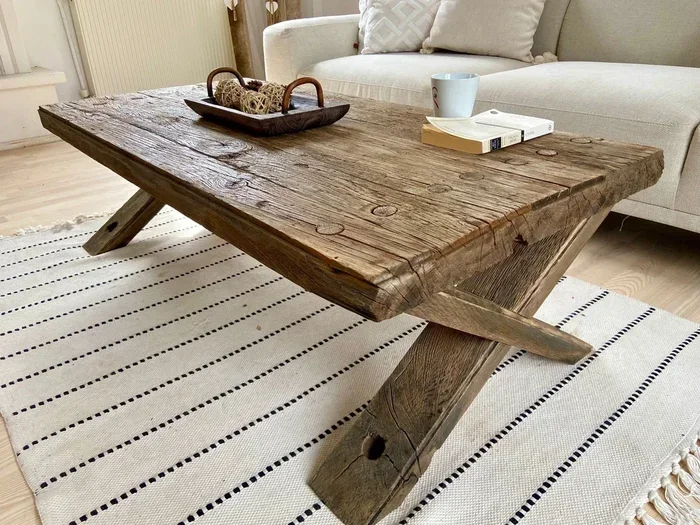
- Reclaimed Wood: Perfect for a rustic, weathered look. Reclaimed wood adds character and history to your piece.
- Cedar: Naturally resistant to moisture and insects. Cedar has a lovely scent and warm color.
Each wood type has its own personality. Pine is great for beginners because it is soft and forgiving. Oak is ideal if you want a table that will withstand heavy use for decades. Reclaimed wood is the top choice for those who want maximum rustic charm.
### Standard Dimensions to Consider
A farmhouse coffee table should fit comfortably in your living space. Here are some standard dimensions to guide you:
- Length: 48 to 60 inches works well for most rooms.
- Width: 24 to 30 inches provides ample surface area.
- Height: 16 to 18 inches matches standard sofa seat height.
Measure your available space before you start. You want the table to feel spacious without overwhelming the room. A table that is too large makes a room feel cramped, while one that is too small looks lost.
## Materials and Tools You Will Need
Having everything ready before you start is a game changer. Here is a complete list of what you need to build a farmhouse coffee table.
### Materials List
- 2×4 lumber for the base and legs (approximately 8 to 10 pieces)
- 1×12 or 1×10 boards for the tabletop (quantity depends on table length)
- Wood glue (Titebond III is a reliable choice)
- 2.5-inch wood screws
- 1.25-inch wood screws
- Sandpaper in grits 80, 120, and 220
- Wood stain or paint of your choice
- Polyurethane or wax finish
- Wood filler for filling gaps and holes
### Essential Tools
- Circular saw or hand saw
- Drill and drill bits
- Clamps (at least 2 to 4)
- Measuring tape
- Square edge for straight cuts
- Paintbrush or foam applicator
- Sander or sanding block
- Pencil for marking measurements
You do not need every fancy tool on the market. A basic circular saw, a drill, and some clamps will get you through this entire build. The key is to take your time and measure twice before cutting.
## Step-by-Step Building Process
This is the heart of the project. Follow these steps carefully, and you will have a beautiful farmhouse coffee table in no time.
### Step 1: Build the Base Frame
Start by cutting your 2×4 lumber to size for the base frame. You will need two long side pieces and two shorter end pieces to form a rectangle. Cut the legs from 2×4 pieces as well, typically 16 to 18 inches each.
Attach the legs to the inside corners of the base frame using wood glue and 2.5-inch screws. Pre-drilling your holes prevents the wood from splitting. This is a small step that makes a big difference.
### Step 2: Attach the Apron
The apron is the frame that runs underneath the tabletop. It adds strength and gives the table a clean, finished look. Cut four apron pieces to fit between the legs on each side.
Attach the apron pieces to the inside of the legs using 1.25-inch screws and wood glue. Make sure everything is square by checking with your measuring square. A square base means a stable table that will not wobble.
### Step 3: Build the Tabletop
Lay out your 1×12 or 1×10 boards side by side on a flat surface. Arrange them so the best grain faces up. Apply wood glue along the edges where boards meet. Press them together tightly and clamp them in place.
Let the glue dry for at least 24 hours. This patience pays off with a solid, seamless tabletop. Once dry, check for any gaps and fill them with wood filler. Sand the top smooth once the filler has dried.
### Step 4: Attach the Tabletop to the Base
Place the tabletop upside down on a soft surface. Set the base frame on top, centered. Use 1.25-inch screws to attach the base to the tabletop from underneath. Pre-drill again to avoid splitting the wood.
Flip the table right side up and check for stability. Give it a gentle shake. If it wobbles, check that all legs are even and the base is square. Small adjustments now save frustration later.
### Step 5: Sand and Finish
Sand the entire table starting with 80-grit sandpaper, then moving to 120-grit, and finally 220-grit for a smooth finish. Sand in the direction of the wood grain for the best results.
Wipe away all dust with a tack cloth. Apply your chosen stain or paint evenly with a brush or foam applicator. Let it dry completely, then apply a coat of polyurethane or wax to protect the surface. Two to three coats of finish gives the best durability and appearance.
## Customization Ideas for Your Farmhouse Coffee Table
One of the best things about building your own farmhouse coffee table is the ability to customize it. Make it truly yours with these creative ideas.
### Add a Shelf or Storage Compartment
Consider adding a lower shelf between the legs. This gives you extra storage for books, magazines, or baskets. It also adds visual interest and makes the table feel more substantial. A lower shelf is a simple addition that elevates the design.
### Use Reclaimed Wood for a Weathered Look
If you want that authentic rustic charm, reclaimed wood is your best friend. Old barn wood, salvaged pallets, or reclaimed fence boards all work beautifully. The imperfections and aged character of reclaimed wood give your farmhouse coffee table a story that new lumber simply cannot match.
### Choose a Unique Shape
While rectangular is the classic farmhouse shape, do not be afraid to get creative. A round farmhouse coffee table softens a room and works well in smaller spaces. An oval shape adds elegance while keeping the rustic feel. Even a slightly tapered or tapered-edge design can make your table stand out.
### Add Metal Accents
Combining wood with metal creates a beautiful contrast that is very popular in modern farmhouse design. Consider adding black iron pipe legs instead of wooden ones. Or attach metal corner brackets for an industrial touch. The combination of warm wood and cool metal creates a stunning visual balance.
## Maintaining Your Farmhouse Coffee Table
A farmhouse coffee table built with care can last for generations. Proper maintenance keeps it looking beautiful and functioning well for years to come.
### Regular Cleaning
Dust your table weekly with a soft, dry cloth. For spills, wipe them up immediately with a damp cloth and dry the area thoroughly. Avoid using harsh chemical cleaners, as they can strip the finish and damage the wood over time.
### Refinishing Tips
Over time, your table may show signs of wear. Scratches and dull spots are normal and add to the rustic character. When the finish starts to look worn, simply sand the surface lightly and apply a fresh coat of stain and polyurethane. This simple refresh brings your farmhouse coffee table back to life.
### Protecting the Surface
Use coasters under all drinks to prevent water rings. Place a tablecloth or protective pad under hot items to avoid heat damage. If you have young children, consider applying a thicker finish layer for extra durability and easier cleaning.
## Common Mistakes to Avoid
Even with the best plans, mistakes can happen. Here are some common pitfalls to watch out for when building your farmhouse coffee table.
- Skipping the pre-drilling step: This leads to split wood and weak joints. Always pre-drill before driving screws.
- Rushing the glue drying time: Patience is essential. Moving the table before the glue fully cures weakens the joints.
- Ignoring the wood grain direction: Sanding against the grain creates scratches that are hard to fix. Always sand with the grain.
- Using the wrong finish: Some finishes yellow over time. Choose a clear polyurethane that stays crystal clear for the best results.
- Not checking for square: A base that is not square leads to a wobbly table. Check your angles at every stage of the build.
## Expert Tips for a Professional Finish
Small details make the difference between a good table and a great one. Here are some expert tips that elevate your farmhouse coffee table from basic to beautiful.
- Use painter’s tape to protect areas you do not want stained. This gives you clean, crisp lines when applying finish.
- Round over the tabletop edges with a router or sandpaper. This prevents splinters and gives a softer, more polished look.
- Apply stain with a rag instead of a brush. This gives a more even, natural-looking finish that highlights the wood grain beautifully.
- Add felt pads to the bottom of the legs. This protects your floors and prevents the table from scratching when you move it.
- Build the table in a dry, climate-controlled space. Wood expands and contracts with humidity changes. A stable environment prevents warping and cracking over time.
## Conclusion
Building a farmhouse coffee table is one of the most rewarding DIY projects you can tackle. It combines simple woodworking skills with creative design to produce a piece of furniture that adds warmth and character to your home. From choosing the right wood to applying the final coat of finish, every step brings you closer to a table you will cherish for years.
Remember, the beauty of a farmhouse coffee table lies in its simplicity and authenticity. You do not need expensive tools or advanced skills. You need a plan, some basic materials, and the willingness to put in a weekend of work. The result is a handcrafted piece that reflects your style and personality.
Start your project this weekend. Gather your materials, follow the steps in this guide, and enjoy the process of creating something real and lasting. Your new farmhouse coffee table will not just be furniture. It will be a conversation starter, a family gathering spot, and a proud reminder of what you built with your own hands.
Key Takeaways
- Simple Materials: You only need basic lumber, wood glue, screws, and finish to build a beautiful farmhouse coffee table.
- Budget-Friendly: A DIY farmhouse coffee table costs far less than store-bought rustic furniture.
- Customizable Design: You can adjust the size, shape, and style to match your home perfectly.
- Beginner-Friendly: No advanced woodworking skills are required for this straightforward build.
- Durability: With proper finishing and care, your farmhouse coffee table will last for years.
- Rustic Charm: This table adds warm, inviting character to any living room or family space.
Frequently Asked Questions
How long does it take to build a farmhouse coffee table?
Most people can complete a farmhouse coffee table in one to two weekends. The actual building takes about 4 to 6 hours, but you need to factor in glue drying time and finish coats. Rushing the process leads to weaker joints and a less polished result.
What is the best wood for a farmhouse coffee table?
Pine is the most popular choice for beginners because it is affordable and easy to work with. Oak offers more durability for heavy-use tables. Reclaimed wood gives the most authentic rustic farmhouse look and tells a unique story through its aged character and natural imperfections.
Do I need advanced woodworking skills to build this table?
Not at all. This farmhouse coffee table project is designed for beginners. You only need basic skills like measuring, cutting, drilling, and sanding. If you can handle a circular saw and a drill, you have everything you need to build a beautiful table that rivals store-bought rustic furniture.
How much does it cost to build a farmhouse coffee table?
A DIY farmhouse coffee table typically costs between $50 and $150 in materials. The exact cost depends on the wood type and finish you choose. Pine and basic lumber keep costs low, while reclaimed wood or premium finishes may increase the price slightly. Either way, you save significantly compared to buying a similar table.
Can I use a farmhouse coffee table outdoors?
Yes, but you need to choose the right finish and materials. Cedar and teak are naturally weather-resistant. Apply an exterior-grade polyurethane or marine varnish to protect the wood from moisture and UV damage. If you plan to keep it outdoors year-round, consider a metal base for added durability against the elements.
How do I make my farmhouse coffee table look more rustic?
Use reclaimed or distressed wood for an instant rustic look. Apply a vinegar and steel wool solution to age the wood naturally. You can also use a wire brush to create texture along the grain. Adding metal pipe legs or iron accents enhances the farmhouse aesthetic and gives your table an authentic, time-worn character that complements any rustic living space.