How Does Descaling A Coffee Machine Work Step By Step
Descaling a coffee machine removes limescale and mineral buildup that affects taste and performance. The process uses a descaling solution or natural alternatives like vinegar and citric acid to dissolve deposits inside the water system. Follow our step-by-step guide to descale your machine safely and effectively.
You brew your morning cup and notice something is off. The coffee tastes bitter. The machine takes forever to brew. Maybe it makes weird gurgling sounds you have never heard before. These are classic signs that your coffee machine needs descaling. But what exactly does descaling do? And how does descaling a coffee machine work?
Descaling is one of the most important maintenance tasks you can do for your coffee maker. Over time, minerals from water build up inside your machine. This buildup is called limescale or calcium deposits. It clogs tubes, blocks heating elements, and ruins the taste of your coffee. The good news is that descaling is easy. You just need the right solution and a little time. In this guide, we walk you through exactly how descaling works and why it keeps your coffee tasting fresh.
Whether you own a basic drip coffee maker or a fancy espresso machine, the descaling process follows similar steps. You dissolve a cleaning agent in water, run it through the machine, and then rinse everything out. That is the core idea. But there are important details to get right. Let us break it all down so you can descale your machine with confidence.
Key Takeaways
- Descaling dissolves mineral deposits: Hard water creates calcium and limescale buildup that blocks water flow and ruins coffee flavor.
- Multiple solutions work: You can use commercial descaling products, white vinegar, or citric acid depending on your machine and preference.
- The process is simple: Fill the reservoir, run brew cycles, and rinse thoroughly to complete the job.
- Regular descaling matters: Most manufacturers recommend descaling every 1 to 3 months for best results.
- Signs your machine needs descaling: Slower brewing, unusual noises, and off-tasting coffee are clear indicators.
- Prevention helps: Using filtered water reduces scale buildup and extends the time between descaling sessions.
📑 Table of Contents
- What Is Descaling And Why Does Your Coffee Machine Need It
- How Descaling Actually Works: The Science Behind It
- Step By Step: How To Descale Your Coffee Machine
- How Often Should You Descale Your Coffee Machine
- Common Descaling Mistakes To Avoid
- Tips To Prevent Scale Buildup Between Descaling Sessions
- Benefits Of Regular Descaling
- Final Thoughts On How Descaling Works
What Is Descaling And Why Does Your Coffee Machine Need It
Descaling means removing mineral deposits from the inside of your coffee machine. These deposits form when you use tap water over and over again. Water contains dissolved minerals like calcium and magnesium. When water heats up inside your machine, these minerals solidify. They stick to the walls of the water reservoir, heating element, and tubing.
Think of it like grease building up inside a pan. At first, you do not notice it. But over weeks and months, the layer gets thicker. It starts affecting how your machine works. Here is what happens when limescale builds up inside a coffee maker:
- Water flow slows down: Scale narrows the tubes and restricts water movement through the machine.
- Heating efficiency drops: Mineral coating on the heating element acts like insulation. Your machine works harder and takes longer to heat water.
- Coffee tastes bad: Scale affects water temperature and flow rate. This changes the extraction process and makes your coffee taste bitter or flat.
- Machine lifespan shortens: Heavy scale can damage internal components over time. Pumps and valves wear out faster when they are working harder.
- Strange noises occur: Gurgling and bubbling sounds happen when scale blocks water passages.
The minerals in your water are invisible to the naked eye. But they accumulate quickly. People who live in hard water areas notice scale buildup faster. Even if you use a water filter, some minerals still get through. This is why regular descaling is essential for every coffee machine owner.
How Limescale Forms Inside A Coffee Machine
Every time you brew coffee, hot water passes through the internal system. As the water heats, calcium carbonate separates from the liquid. This white, chalky substance sticks to metal and plastic surfaces. Over time, layers of this deposit build up. The process is similar to how a kettle develops a white crust at the bottom. Your coffee machine works the same way, just on a smaller scale.
The rate of buildup depends on several factors:
- Water hardness: Hard water has more minerals. It causes faster scale formation.
- How often you brew: Daily use means more hot water cycles and more mineral deposits.
- Water temperature: Higher temperatures cause minerals to solidify faster.
- Water quality: Untreated tap water has more minerals than filtered or bottled water.
Some machines have a descaling indicator light that tells you when it is time. If your machine does not have this feature, a good rule of thumb is to descale every one to three months. If you notice any of the symptoms we mentioned above, do not wait. Start the descaling process right away.
How Descaling Actually Works: The Science Behind It
Now let us answer the big question: how does descaling a coffee machine work at a chemical level? The process relies on an acid-based reaction. Limescale is primarily calcium carbonate. It is a base. When you introduce an acid to it, a chemical reaction occurs. The acid dissolves the calcium carbonate and breaks it down into soluble compounds. These dissolve into the water and flush out of the machine.
Different descaling agents use different acids. Here is a quick look at the most common options:
- Citric acid: A natural acid found in citrus fruits. It dissolves scale effectively and is safe for most machines. Many people prefer it because it is non-toxic and smells pleasant.
- White vinegar (acetic acid): A household staple that works well for light to moderate scale buildup. It is affordable and easy to find.
- Commercial descaling solutions: Products specifically designed for coffee machines. They often contain citric acid or sulfamic acid blended for optimal performance. Brands like Dezcal and Urnex are popular choices.
- Lemon juice: Contains natural citric acid. It works similarly to pure citric acid but is less concentrated.
No matter which solution you choose, the process is the same. The acid-rich liquid sits inside the machine’s system. It dissolves the mineral deposits on contact. Then the dissolved minerals flush out with the liquid. This is why running multiple cycles is so important. You need enough liquid to dissolve all the scale and carry it out of the machine.
Why You Should Not Use Harsh Chemicals
It is tempting to use strong cleaning agents. But coffee machines have plastic and rubber components that can degrade. Bleach and abrasive cleaners will damage your machine. Stick to food-safe descaling solutions. If you are concerned about which products are safe, check the manufacturer’s guidelines. Many coffee machine brands, including those made by companies like Cuisinart, provide specific descaling recommendations for their models.
Step By Step: How To Descale Your Coffee Machine
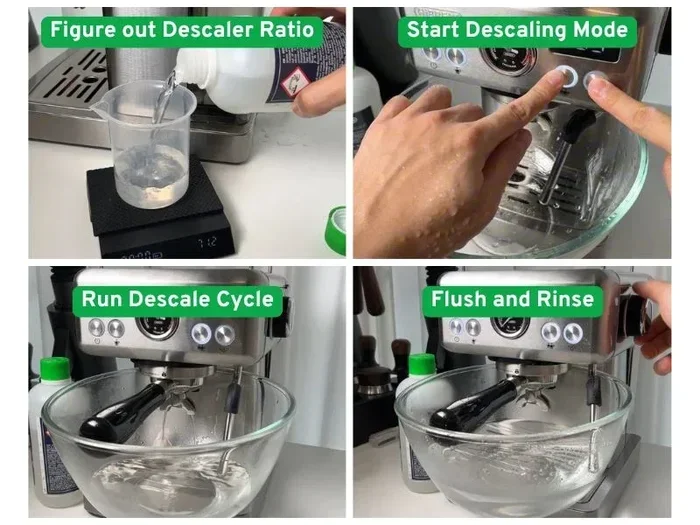
Now for the part you have been waiting for. Here is the complete step-by-step process for descaling your coffee machine. Follow these instructions carefully for the best results.
Step 1: Gather Your Supplies
Before you start, make sure you have everything ready. Here is what you need:
- Your chosen descaling solution (commercial product, white vinegar, or citric acid)
- Clean water (filtered is best)
- A measuring cup
- A clean cloth or sponge
- Fresh coffee grounds for a test brew after descaling
Measure your descaling solution according to the product instructions. If you are using white vinegar, mix equal parts vinegar and water. For citric acid, use about one to two tablespoons per liter of water.
Step 2: Prepare The Machine
Start with an empty machine. Remove any leftover coffee grounds or pods. Take out the water filter if your machine has one. Empty the drip tray and discard any old water from the reservoir. You want a completely clean starting point before introducing the descaling solution.
If your machine has a removable water reservoir, take it out and rinse it with warm water. This removes any loose debris or surface-level grime before you begin the descaling cycle.
Step 3: Fill The Reservoir With Descaling Solution
Pour your descaling mixture into the water reservoir. Fill it to the maximum line if the solution is diluted enough. Most machines require a full reservoir for the descaling cycle to work properly. Make sure you do not overfill past the maximum mark.
If you are using a concentrated commercial descaler, follow the dilution ratio on the label exactly. Using too strong a solution can damage internal seals and gaskets.
Step 4: Run The First Brew Cycle
Place a large mug or container on the drip tray. Turn on the machine and start a brew cycle without coffee grounds. Let the descaling solution run through the system and into the mug. Discard the liquid. Repeat this process until the reservoir is empty.
You may notice brownish or cloudy water coming out. This is the dissolved scale and minerals leaving your machine. It is completely normal and exactly what you want to see. The more discolored the water, the more buildup your machine had.
Step 5: Let The Solution Sit
Once the reservoir is empty, do not run another cycle right away. Let the descaling solution sit inside the machine for 15 to 30 minutes. This soaking time allows the acid to work on stubborn deposits. The longer you let it sit, the more scale it dissolves.
However, do not leave vinegar or citric acid solutions in the machine for more than one hour. Prolonged exposure can damage rubber seals and plastic components in some machines.
Step 6: Run Rinse Cycles
After the soaking period, refill the reservoir with clean water. Run at least two to three full brew cycles with fresh water only. This rinses out any remaining descaling solution and dissolved minerals. Each rinse cycle should produce clear water.
Taste the water from each cycle. If you detect any vinegar or citric acid flavor, run another rinse cycle. You want zero taste or smell of the descaling agent before you brew coffee again.
Step 7: Clean The Exterior And Final Test
While the machine is rinsing, wipe down the exterior with a damp cloth. Clean the drip tray, the coffee basket, and any removable parts. Use warm soapy water and dry everything thoroughly before reassembling.
Once all rinse cycles are complete, brew a test pot of coffee. This serves two purposes. First, it confirms the machine is working properly again. Second, it flushes any remaining traces of the descaling solution. Throw out this first pot of coffee. Do not drink it. Brew a second pot and taste it. Your coffee should taste clean, fresh, and balanced.
How Often Should You Descale Your Coffee Machine
Frequency depends on how often you use your machine and the hardness of your water. Here is a general guideline:
- Daily use with hard water: Descale every 4 to 6 weeks.
- Daily use with soft water: Descale every 2 to 3 months.
- Occasional use (a few times per week): Descale every 2 to 3 months.
- Hard water area: Consider descaling monthly regardless of usage frequency.
Some machines have a built-in descaling indicator that lights up when it is time. This is incredibly helpful because it takes the guesswork out of maintenance. If your machine has this feature, trust it and follow the prompts.
Think of descaling like changing the oil in your car. You do it on a regular schedule to prevent bigger problems. Skipping descaling leads to reduced performance, worse-tasting coffee, and eventually costly repairs. A few minutes of descaling every couple of months saves you from expensive replacements later.
Common Descaling Mistakes To Avoid
Even though descaling is straightforward, people make mistakes that can cause problems. Here are the most common errors to watch out for:
- Using the wrong descaling solution: Do not use bleach, dish soap, or general-purpose cleaners. These are not designed for coffee machines and can leave harmful residues.
- Skipping the rinse cycles: This is the most common mistake. If you do not rinse thoroughly, descaling solution ends up in your next pot of coffee. It tastes terrible and can be harmful if consumed.
- Not descaling often enough: Waiting until the machine breaks down means heavy scale buildup has already occurred. Prevention is much easier than repair.
- Using boiling water: Never pour boiling water into the reservoir. It can damage plastic components and warp the reservoir.
- Ignoring the water filter: If your machine has a water filter, replace it after descaling. Old filters do not effectively reduce minerals and can reintroduce scale-causing deposits.
When cleaning other parts of your kitchen, you might use methods similar to descaling. For example, many people know how to clean an oven with a dishwasher tablet without scrubbing. The principle is similar: a cleaning agent dissolves tough buildup so you can easily wash it away. The same concept applies to descaling your coffee machine.
Tips To Prevent Scale Buildup Between Descaling Sessions
Descaling is effective, but prevention is even better. Here are simple tips to slow down scale buildup and keep your machine running smoothly:
- Use filtered water: A simple carbon filter removes many of the minerals that cause scale. This alone can double the time between descaling sessions.
- Empty the reservoir when not in use: Standing water in the machine promotes mineral deposits. Empty any leftover water after each use.
- Descale your machine regularly: Do not wait for problems to appear. Stick to a consistent maintenance schedule.
- Use the right water temperature: Most machines heat water to the optimal brewing temperature. Let the machine handle heating rather than adding boiling water yourself.
- Clean the machine monthly: A quick rinse of the reservoir and drip tray every week reduces the chance of buildup forming.
If you want to keep your coffee machine in top shape, regular maintenance goes a long way. Just like you would care for other kitchen appliances, your coffee maker deserves the same attention. For appliances with self-cleaning features, such as certain oven models, the process is built right into the machine. You might find it interesting to learn how Aqualift self-clean works on a Kitchenaid oven. While it is a different appliance, the concept of automated cleaning cycles is similar to how some modern coffee machines handle descaling.
Benefits Of Regular Descaling
Descaling is not just about fixing a problem. It is about keeping your coffee machine performing at its best. Here are the key benefits you get from regular descaling:
- Better-tasting coffee: Without mineral interference, water heats evenly and extracts flavors properly. Your coffee tastes cleaner and more balanced.
- Faster brewing: Clean tubes and heating elements allow water to flow freely. Brew times return to normal.
- Longer machine life: Descaling reduces strain on pumps, valves, and heating elements. Your machine lasts longer before needing replacement.
- Energy savings: A descaled machine heats water more efficiently. It uses less electricity and saves money on your energy bill over time.
- Fewer repairs: Scale buildup is one of the leading causes of coffee machine breakdowns. Regular descaling prevents most of these issues.
The process is quick, affordable, and incredibly effective. A bottle of descaling solution costs just a few dollars. Compare that to the cost of repairing or replacing a coffee machine. Regular descaling is the single best investment you can make for your coffee maker.
Final Thoughts On How Descaling Works
Now you know the full answer to how does descaling a coffee machine work. The process uses acid-based solutions to dissolve mineral deposits that build up from repeated hot water cycles. You dissolve the solution in water, run it through the machine, let it soak, and rinse thoroughly. It is simple, effective, and essential for maintaining great-tasting coffee.
Make descaling a regular part of your coffee routine. Set a reminder on your phone or mark your calendar. Your coffee machine works hard every day for you. A little maintenance goes a long way in keeping it running smoothly for years to come. Start with the first step today. Your morning coffee will thank you.
Frequently Asked Questions
Can I use white vinegar to descale my coffee machine?
Yes, white vinegar is a safe and effective descaling agent for most coffee machines. Mix equal parts white vinegar and water, then run it through the brew cycles. Make sure to rinse thoroughly with clean water afterward to remove any vinegar taste.
How long does the descaling process take?
The entire process takes about 30 to 45 minutes for most machines. This includes filling the reservoir, running brew cycles, letting the solution sit for 15 to 30 minutes, and completing two to three rinse cycles. Some machines with a dedicated descaling mode may be faster.
What happens if I do not descale my coffee machine?
Without regular descaling, mineral deposits build up inside the machine. This causes slower brewing, worse-tasting coffee, unusual noises, and eventually machine failure. Heavy scale can permanently damage heating elements and pumps, leading to costly repairs or replacement.
Is citric acid better than vinegar for descaling?
Both citric acid and vinegar work well. Citric acid is often preferred because it dissolves scale effectively and leaves less odor and taste behind. Vinegar is more affordable and easier to find. Choose citric acid if you want a gentler option with a milder smell.
Can I use lemon juice instead of a commercial descaler?
Lemon juice contains natural citric acid and can work for light scale buildup. However, it is less concentrated than pure citric acid or commercial descalers. You may need to use more lemon juice and run additional cycles for the same results.
Do I need to descale a coffee machine that I rarely use?
Yes, even machines used infrequently can develop scale buildup from standing water. It is still a good idea to descale every three to six months regardless of usage. Also, empty the water reservoir after each use to minimize mineral deposits.
=== CONCLUSION ===
Descaling a coffee machine is a simple yet essential maintenance task that keeps your brewer running at peak performance. By understanding how descaling works and following the step-by-step process outlined in this guide, you can ensure your coffee tastes great every single morning. Use the right descaling solution, follow each step carefully, and never skip the rinse cycles. Your coffee machine will reward you with better-tasting coffee, faster brewing, and a longer lifespan. Start descaling today and taste the difference it makes.