Can Calphalon Pots Go In The Oven Without Any Damage
So, can Calphalon pots go in the oven without any damage? The quick answer is yes, but only if you follow the manufacturer’s guidelines. Calphalon cookware is built with specific oven-safe limits that depend on the material, lid, and handle construction. This guide explains exactly which pots are safe, what temperatures they can handle, and how to prevent damage.
So, can Calphalon pots go in the oven without any damage? The short answer is yes, but with some important caveats. Many home cooks reach for their Calphalon pots when a recipe calls for oven finishing, and that is perfectly fine—as long as you know the limits of your specific cookware. Calphalon oven safety depends on the material, the lid, the handle construction, and the temperature you plan to use. In this guide, we break down exactly which Calphalon pots are safe, what temperatures they can handle, and the simple steps you can take to avoid warping, cracking, or ruining the nonstick surface. Whether you are baking a casserole or finishing a steak, understanding your Calphalon cookware will keep it performing for years.
Not all Calphalon pots are created equal. Some lines are designed for stovetop-only use, while others are versatile enough for oven finishing. The confusion often comes from the wide range of collections—hard anodized, nonstick, stainless steel, and ceramic-coated. Each has its own oven-safe rating. By the end of this article, you will know exactly what your pot can handle and how to use it safely. We will also cover common mistakes that lead to damage, so you can protect your investment.
If you have ever wondered, “Is my Calphalon pot oven-safe?” you are not alone. This question comes up in kitchens across the country. The good news is that most Calphalon cookware is indeed oven-safe within certain temperature ranges. The key is to check the bottom of the pot or the user manual for the specific rating. Never guess, because exceeding the limit can cause the handles to loosen, the nonstick coating to break down, or the pot to warp. Let us walk through everything you need to know about using Calphalon pots in the oven the right way.
Key Takeaways
- Check the manual: Every Calphalon line has specific oven-safe limits printed on the bottom or in the paperwork.
- Avoid thermal shock: Never move a cold pot directly into a hot oven or vice versa.
- Remove lids first: Most Calphalon lids are not oven-safe and can warp or release harmful fumes.
- Stick to moderate heat: Many Calphalon pots are safe up to 450°F, but the broiler is a no-go.
- Hand-wash only: Dishwashers and abrasive scrubbers can degrade the nonstick coating over time.
- Inspect handles and rivets: Ensure they are heat-resistant before placing the pot in the oven.
- Follow warranty rules: Using the pot outside recommended temperatures may void the Calphalon warranty.
📑 Table of Contents
- Can Calphalon Pots Go In The Oven? The Short Answer
- Understanding Calphalon Cookware Materials and Oven Safety
- Oven Temperature Limits and Broiler Warnings
- Which Calphalon Pots Are Safe for the Oven?
- How to Use Calphalon Pots in the Oven Without Damage
- Common Mistakes That Damage Calphalon Pots
- Expert Care Tips for Long-Lasting Calphalon Cookware
Can Calphalon Pots Go In The Oven? The Short Answer
Can Calphalon pots go in the oven? Yes, most of them can, but the answer is not a blanket yes for every piece. Calphalon manufactures a wide range of cookware, and each line has its own oven-safe temperature limit. The general rule is that hard anodized and stainless steel Calphalon pots tend to handle higher heat than their nonstick counterparts. You will also need to consider the lid. Many Calphalon lids are made of glass or silicone-coated materials that can only withstand moderate heat. Putting a lid in the oven that is not rated for it can cause it to crack or release harmful fumes. Always check the manufacturer’s markings on the bottom of the pot. Look for an oven-safe symbol or a maximum temperature number. If you cannot find it, a quick search with the model number will give you the answer. Calphalon oven temperature limits are clearly stated for each collection, so there is no need to guess.
Understanding Calphalon Cookware Materials and Oven Safety
Hard Anodized Calphalon Pots
Hard anodized Calphalon pots are among the most durable options. The anodization process hardens the aluminum exterior, making it resistant to scratches and warping. Most hard anodized Calphalon cookware is oven-safe up to 450°F (232°C). This makes them excellent for dishes that start on the stovetop and finish in the oven, such as braised meats or baked pasta. The hard-anodized surface is also non-reactive, meaning it will not interact with acidic foods even under high heat. However, the handles on hard anodized pots are often made of stainless steel or silicone-covered metal, which can handle the heat. Always ensure the handle is oven-safe before placing the pot in the oven. Some older models may have plastic handles that are not heat-resistant, so check carefully.
Nonstick Calphalon Cookware
Nonstick Calphalon pots are designed for easy food release, but their coating limits their oven use. Most nonstick Calphalon lines are oven-safe up to 400°F (204°C). The nonstick coating can begin to degrade at higher temperatures, releasing fumes that are harmful to humans and pets. This is why you should never preheat an empty nonstick pot. The coating is also sensitive to thermal shock, so avoid moving it from a cold refrigerator directly into a hot oven. Nonstick pot oven use is perfectly fine for baking casseroles or finishing dishes, as long as you stay within the temperature limit. The lids on nonstick Calphalon pots are usually not oven-safe, so remove them before baking.
Stainless Steel Calphalon Lines
Stainless steel Calphalon cookware, such as the Calphalon Contemporary or Calphalon Signature lines, can often handle higher temperatures. Many stainless steel pots are oven-safe up to 500°F (260°C) or even higher. Stainless steel is an excellent choice for oven use because it does not degrade with heat and is completely non-reactive. The Calphalon stainless steel oven safe rating makes these pots ideal for roasting vegetables or baking bread. The lids on stainless steel pots may be stainless steel or glass. Stainless steel lids are generally oven-safe, but glass lids have a lower temperature limit, usually around 350°F to 400°F. Always check the lid material before placing it in the oven.
Oven Temperature Limits and Broiler Warnings
Knowing the maximum oven temperature for your Calphalon pot is crucial for safety and longevity. Exceeding the limit can cause the pot to warp, the handles to loosen, or the nonstick coating to break down. Here is a quick breakdown of what to avoid.
- Never exceed the max temperature: Every Calphalon pot has a stated oven-safe limit. Going over it, even by a small margin, can cause permanent damage.
- Avoid the broiler: The broiler element produces direct, intense heat that can warp the bottom of the pot and damage the handles. Most Calphalon pots are not broiler-safe.
- No direct heat on the oven floor: Placing a pot directly on the oven floor exposes it to uneven, extreme heat. Always use a middle rack.
- Watch for plastic or wooden elements: If your pot has a plastic knob on the lid or a wooden handle, it cannot go in the oven. Even at moderate temperatures, these materials will melt or scorch.
- Check the bottom of the pot for the oven-safe symbol.
- Remove any lid that is not marked as oven-safe.
- Place the pot on the middle oven rack.
- Do not preheat the pot empty in the oven.
- Allow the pot to cool gradually before washing.
Quick Tip: If you are unsure about the temperature limit, err on the side of caution and keep the oven at or below 350°F. This is a safe range for almost all Calphalon cookware and is sufficient for most baking and roasting recipes.
Expert Insight: Professional chefs often use oven-safe cookware that can handle high heat, but they also know that thermal shock is the biggest enemy. Always let your Calphalon pot come to room temperature before placing it in a preheated oven. This simple habit prevents cracking and warping.
Which Calphalon Pots Are Safe for the Oven?
Not every Calphalon pot is designed for oven use. Some lines are strictly stovetop, while others are versatile enough for oven finishing. Below is a comparison of popular Calphalon lines and their oven safety.
| Calphalon Line | Material | Max Oven Temp | Lid Oven-Safe? |
|---|---|---|---|
| Calphalon Premier Nonstick | Hard anodized with nonstick | 400°F (204°C) | No (glass lid not rated) |
| Calphalon Contemporary Nonstick | Hard anodized with nonstick | 450°F (232°C) | No (silicone knob melts) |
| Calphalon Stainless Steel | Stainless steel with aluminum core | 500°F (260°C) | Yes if stainless steel lid |
| Calphalon Unison Nonstick | Hard anodized with nonstick | 450°F (232°C) | No |
| Calphalon Simply Calphalon | Hard anodized aluminum | 400°F (204°C) | No |
This table shows that oven-safe cookware varies by line. If you own a Calphalon pot not listed here, check the bottom for the oven-safe symbol. The symbol usually looks like an oven with a number inside. If the number is 450, your pot can go in the oven up to that temperature. If there is no symbol, treat it as stovetop-only.
Quick Tip: When in doubt, contact Calphalon customer service with your pot’s model number. They can confirm the oven-safe rating in seconds. This is especially helpful for older pieces where the marking may have worn off.
Calphalon Sauce Pans and Sauté Pans
Sauce pans and sauté pans are the most common Calphalon pots people use in the oven. A Calphalon sauté pan with a stainless steel handle can often go in the oven up to its max temperature. However, if the sauté pan has a nonstick interior, you must respect the nonstick temperature limit. Calphalon saute pan oven use is great for searing meat on the stovetop and then finishing it in the oven. Just make sure the pan is oven-safe and the handle is heat-resistant.
Calphalon Stockpots
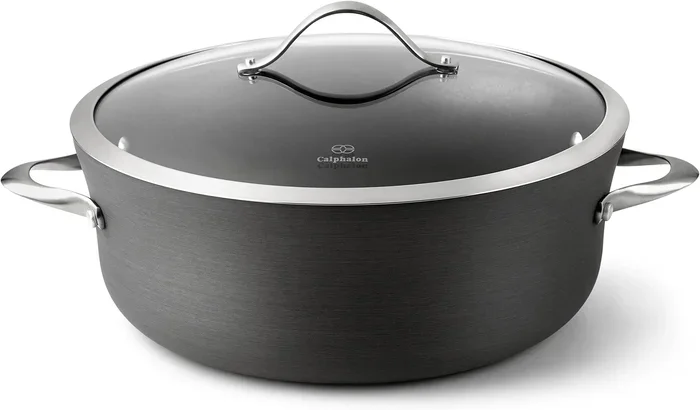
Stockpots are large and heavy, and they are often used for making soups, stocks, and boiling pasta. Many Calphalon stockpots are oven-safe, but the size and weight mean you need to be extra careful when moving them. Always use oven mitts. The large lid on a stockpot may not fit in the oven, so remove it. Calphalon stockpot oven use is common for recipes like baked beans or stews that start on the stovetop and finish in the oven. Check the bottom of the stockpot for the temperature rating.
How to Use Calphalon Pots in the Oven Without Damage
Using Calphalon pots in the oven safely is simple if you follow a few basic rules. These tips will help you get the best results and extend the life of your cookware.
First, always preheat the oven before placing the pot inside. Putting a cold pot into a hot oven can cause thermal shock, which leads to warping. The pot may develop a wobbly bottom, making it unstable on the stovetop. Second, never heat an empty nonstick pot in the oven. The empty coating can overheat and release toxic fumes. Always add food or liquid before placing the pot in the oven. Third, use the middle rack. The top rack is too close to the heating element, and the bottom rack exposes the pot to direct heat from the oven floor. The middle rack allows for even heat circulation.
Fourth, remove the lid unless it is specifically marked as oven-safe. Most Calphalon lids are made of glass or have silicone handles that cannot handle high heat. Even if the lid is oven-safe, removing it allows steam to escape and helps food crisp up. Fifth, let the pot cool naturally. Do not plunge a hot pot into cold water. This thermal shock can crack the aluminum core or warp the pot. Instead, set it on a trivet or wooden board and let it come to room temperature before washing.
Quick Tip: If you are using a Calphalon pot for roasting vegetables, toss them in a little oil and spread them in a single layer. This prevents sticking and makes cleanup easier. The Calphalon oven temperature limit still applies, so keep the oven at or below the pot’s maximum rating.
Expert Insight: Many home cooks ask, “Can I put a Calphalon pot with a silicone handle cover in the oven?” The answer is no. Silicone handles are usually rated for up to 400°F, but the cover can melt or slip off at high temperatures. Always remove silicone covers before placing the pot in the oven, or ensure the handle itself is made of heat-resistant material.
Common Mistakes That Damage Calphalon Pots
Even with the best intentions, it is easy to make mistakes that shorten the life of your Calphalon cookware. Here are the most common errors people make when using Calphalon pots in the oven.
- Ignoring the temperature limit: Cranking the oven to 500°F because a recipe calls for high heat is a quick way to ruin a nonstick pot rated for 400°F. The coating will break down, and the pot may warp.
- Leaving the lid on: A glass lid can shatter in a hot oven, and a silicone knob can melt onto the pot. Always remove the lid unless it is explicitly oven-safe and has no plastic or silicone parts.
- Thermal shock: Moving a pot from the refrigerator to a hot oven, or from the oven to a cold sink, causes rapid expansion and contraction. This leads to warping and can crack the nonstick coating.
- Using abrasive cleaners: Steel wool or harsh scrubbers scratch the nonstick surface. Once the coating is scratched, it cannot be repaired, and the pot must be replaced.
- Stacking pots without protection: Storing Calphalon pots nested together without a protective layer between them can scratch the nonstick surface. Use a paper towel or soft cloth between stacked pots.
- Using the pot on the broiler: The broiler produces direct, intense heat that no nonstick or hard anodized pot is designed to handle. It can permanently damage the pot and void the warranty.
Common Mistake: One of the biggest mistakes is assuming that because a Calphalon pot looks sturdy, it can handle any heat. The nonstick coating is a delicate layer that degrades over time, especially with high heat. Treat your pot gently, and it will last for years.
Expert Insight: If you notice your Calphalon pot is warping, stop using it in the oven immediately. A warped pot sits unevenly on the stovetop, causing hot spots and uneven cooking. Warping is often a sign of thermal shock, and the pot may no longer be safe for oven use even at lower temperatures.
Expert Care Tips for Long-Lasting Calphalon Cookware
Proper care is the best way to ensure your Calphalon pots remain oven-safe and perform well for years. Here are some expert-recommended care tips.
Wash your Calphalon pots by hand with warm, soapy water and a soft sponge. Even if the manufacturer says the pot is dishwasher-safe, hand washing is gentler and helps preserve the nonstick coating. Avoid using chlorine bleach or abrasive cleaners, as these can damage the surface. Dry the pot thoroughly after washing to prevent water spots, especially on stainless steel.
Store your Calphalon pots carefully. Hang them from a pot rack, or stack them with a protective layer between each piece. If you stack them in a cabinet, place a soft cloth or paper towel between the pots to prevent scratching. This is especially important for nonstick pans, where even a small scratch can affect cooking performance.
If your Calphalon pot has a wooden handle, never soak it in water. Wipe it clean and dry it immediately. Wooden handles can crack or split if exposed to too much moisture. For pots with metal handles, check the rivets periodically. Loose rivets can make the handle unstable, and a wobbly handle is a safety hazard when moving a hot pot from the oven.
Quick Tip: If food sticks to the bottom of a Calphalon pot after oven use, fill it with warm water and a drop of dish soap. Let it soak for 15 minutes, then gently wipe with a soft sponge. This prevents the need for abrasive scrubbing.
Expert Insight: The Calphalon warranty covers manufacturing defects, but it does not cover damage caused by misuse, such as overheating or thermal shock. To keep your warranty active, always use your Calphalon pots within the recommended temperature limits and follow the care instructions in the manual.
Can Calphalon pots go in the oven without any damage? The answer is a resounding yes, provided you respect the temperature limits and follow a few simple guidelines. Always check the bottom of your pot for the oven-safe symbol, remove non-oven-safe lids, and avoid thermal shock. Whether you have a hard anodized sauté pan or a stainless steel stockpot, understanding your Calphalon cookware will keep it safe and performing at its best. By avoiding common mistakes like broiler use, abrasive cleaning, and stacking without protection, you can enjoy your Calphalon pots for decades. Remember, Calphalon oven safety is all about knowing the limits and treating your cookware with care. Now that you know the rules, you can confidently use your Calphalon pots in the oven for all your favorite recipes.
Frequently Asked Questions
Can I put a Calphalon nonstick pot in the oven?
Yes, most Calphalon nonstick pots are oven-safe, but only up to their stated temperature limit, usually 400°F to 450°F. Always check the bottom of the pot for the oven-safe symbol. Never exceed the maximum temperature, as the nonstick coating can break down and release harmful fumes.
What is the maximum oven temperature for Calphalon pots?
The maximum oven temperature varies by line. Hard anodized and stainless steel Calphalon pots can often handle up to 450°F to 500°F, while nonstick lines are typically limited to 400°F. Always refer to the manufacturer’s guidelines on the bottom of the pot or in the user manual.
Can Calphalon lids go in the oven?
Most Calphalon lids are not oven-safe. Glass lids can shatter under high heat, and silicone knobs can melt. Only use a lid in the oven if it is explicitly marked as oven-safe and has no plastic or silicone parts. When in doubt, remove the lid before baking.
Why did my Calphalon pot warp in the oven?
Warping usually happens due to thermal shock, which occurs when a cold pot is placed in a hot oven or a hot pot is plunged into cold water. It can also happen if the pot exceeds its oven temperature limit. Once a pot is warped, it may not sit flat on the stovetop, and it is best to retire it from oven use.
Is it safe to put a Calphalon pot with a silicone handle cover in the oven?
No, silicone handle covers are generally not designed for oven use. They can melt or slip off at high temperatures, exposing the metal handle underneath. Always remove silicone covers before placing the pot in the oven, or ensure the handle itself is made of heat-resistant material.
How do I clean my Calphalon pot after oven use?
Let the pot cool completely before washing. Fill it with warm water and a drop of mild dish soap, and let it soak for 15 minutes. Use a soft sponge to clean the interior, and avoid abrasive scrubbers. For stubborn stains, bake a paste of baking soda and water in the pot at a low temperature, then wash as usual. Hand washing is always recommended to preserve the nonstick coating.