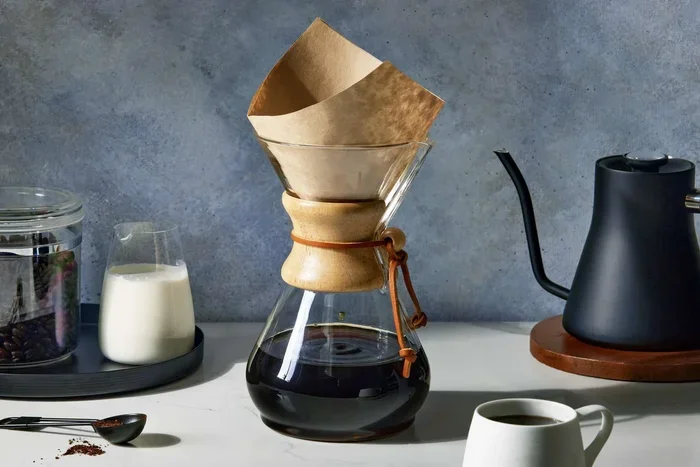
What Size Coffee Grind For Chemex Your Ultimate Guide
Getting the right coffee grind size for your Chemex is the single most important step toward brewing a clean, flavorful cup. The ideal grind is medium-coarse, resembling sea salt or rough sand, and it unlocks balanced extraction without bitterness. Whether you are new to Chemex or looking to refine your technique, this guide covers everything you need to know about grind size, grinder choice, and brewing tips.
If you have ever wondered why your Chemex coffee tastes off, the answer might be simpler than you think. What size coffee grind for Chemex is the question that solves most brewing problems. Getting the grind size right transforms a mediocre cup into something truly special. It is the foundation of every great pour over brew, and it is surprisingly easy to master once you understand the basics.
The Chemex pour over maker is famous for producing a clean, bright, and full-bodied cup of coffee. But that clarity does not happen by accident. It happens because of the right grind size, the right water temperature, and the right technique. Among all of these variables, grind size for Chemex carries the most weight. Get this one thing right, and everything else falls into place much more easily.
This guide will walk you through exactly what grind size works best for your Chemex brewer. We will cover how to set your grinder, what the grounds should look like, common mistakes to avoid, and pro tips that will level up your brewing game. Whether you are a complete beginner or a seasoned coffee lover looking to dial in your process, you will find practical advice you can use right away.
Key Takeaways
- Medium-coarse grind is king: The sweet spot for Chemex is a medium-coarse consistency, similar to sea salt or rough sand particles.
- Burr grinders win every time: A quality burr grinder gives you consistent particle size, which is essential for even extraction in a Chemex.
- Grind too fine and you get bitterness: Over-extraction leads to harsh, unpleasant flavors that mask the delicate notes of your coffee.
- Grind too coarse and you get weakness: Under-extraction results in sour, thin coffee that lacks body and depth.
- Freshly ground beans matter: Grind your coffee right before brewing for the best flavor and aroma.
- Water temperature plays a role too: Hot but not boiling water (195 to 205 degrees Fahrenheit) works best with the right grind size.
- Experiment and adjust: Every bean and roast level is different, so tweak your grind size to match your taste preferences.
📑 Table of Contents
Understanding the Chemex Brewing Method
What Makes Chemex Different From Other Brewers
The Chemex stands out in the world of manual coffee brewing. Its thick glass vessel and proprietary bonded paper filter work together to produce a cup that is remarkably clean and free of sediment. Unlike a standard pour over coffee maker that uses a thin filter, the Chemex filter removes more oils and fine particles. This gives the brew a smoother, more refined taste.
Because the filter is so effective, the grind size you choose matters even more. A standard drip coffee maker can forgive a slightly off grind, but the Chemex will expose every inconsistency. The slow, deliberate pouring method also means that water spends more time in contact with the grounds. This extended brewing time makes the extraction process very sensitive to particle size.
Think of it this way. Just like checking what temp for pork tenderloin in oven requires precision to get that perfect juicy result, brewing great Chemex coffee demands the same level of care and attention to detail. Small changes make a big difference in the final cup.
The Role of Extraction in Chemex Coffee
Extraction is the process of pulling flavors, oils, and compounds out of the coffee grounds using hot water. The goal is to extract the right amount of soluble material to create a balanced and enjoyable cup. Too little extraction leaves your coffee sour and weak. Too much extraction pulls out bitter compounds that overwhelm the natural flavors.
Grind size directly controls how fast and how thoroughly extraction happens. Smaller particles have more surface area exposed to water, which speeds up extraction. Larger particles slow it down. This is why grind size for Chemex needs to sit in a very specific range. It is not too fine, and it is not too coarse. It is right in the middle, leaning slightly on the coarser side.
Much like knowing what oven temperature to cook roast beef is critical for a perfect roast, understanding extraction helps you understand why your grind size is so important for Chemex brewing.
The Ideal Grind Size for Chemex
Medium-Coarse Is the Sweet Spot
The consensus among coffee experts and Chemex enthusiasts is clear. The best grind size for Chemex is medium-coarse. This is slightly coarser than what you would use for a standard drip machine but not as coarse as what you would use for a French press. The ideal texture looks and feels like rough sea salt or coarse sand.
When you look at the grounds in your hand, each particle should be visibly distinct and roughly the same size. You should not see any powdery fines, and you should not feel any large, chunky pieces. The uniformity of the particles is just as important as the overall size. Consistent particles extract at the same rate, which leads to a balanced and flavorful cup.
If you have ever tasted over-extracted coffee, you know how unpleasant it can be. It tastes bitter, harsh, and hollow. On the other hand, under-extracted coffee tastes sour, thin, and grassy. The medium-coarse grind for Chemex hits the sweet spot between these two extremes. It gives you a cup that is rich, smooth, and full of complexity.
Comparing Grind Sizes for Different Brew Methods
It helps to see how Chemex grind size compares to other popular brewing methods. This gives you a frame of reference and makes it easier to dial in your grinder correctly.
- Extra Coarse: Cold brew. Looks like chunky pebbles. Steeped for 12 to 24 hours.
- Coarse: French press. Similar to sea salt. Steeped for four minutes.
- Medium-Coarse: Chemex and Clever Dripper. Resembles rough sand or sea salt with a few larger flakes.
- Medium: Standard drip coffee makers. Texture like regular sand.
- Medium-Fine: Pour over devices like the Hario V60 or Kalita Wave. Finer than sand but not powdery.
- Fine: Espresso. Texture like powdered sugar or flour.
- Extra Fine: Turkish coffee. Almost powder-like, very fine and smooth.
As you can see, the Chemex sits in a very specific spot on the spectrum. It is not the finest grind, and it is not the coarsest. It is the middle ground where extraction happens at a controlled, even pace. Getting this right is the first step toward perfect pour over coffee at home.
Visual and Tactile Guide to the Right Grind
Not sure if your grind is correct? Use your senses. Look at the grounds. They should be roughly uniform in size with no obvious powder. Feel them between your fingers. They should feel gritty but not sharp. You should be able to see individual particles clearly.
Another quick test is the brew time. For a standard Chemex brew with about 600 milliliters of water and 30 grams of coffee, the total brew time should fall between four and five minutes. If it finishes much faster, your grind is probably too coarse. If it takes much longer, it is likely too fine. Adjust accordingly and try again.
How to Grind Coffee for Chemex
Using a Burr Grinder for Consistent Results
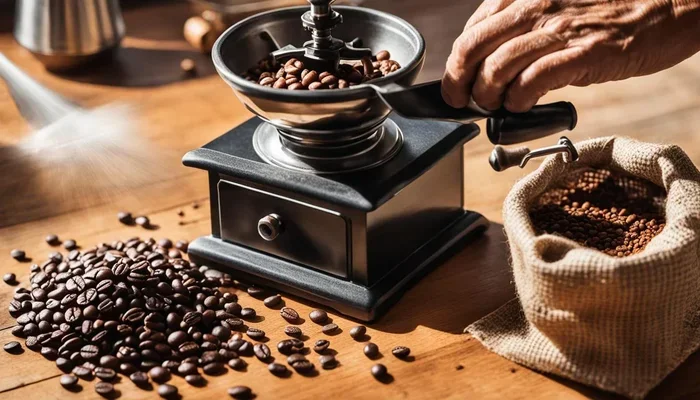
The type of grinder you use matters enormously. A burr grinder is the clear winner for Chemex brewing. Burr grinders crush coffee beans between two abrasive surfaces, producing particles that are remarkably uniform in size. This consistency is exactly what you need for even extraction in a Chemex.
There are two main types of burr grinders: flat burr and conical burr. Both work well for Chemex. Flat burr grinders tend to produce a very even particle distribution, while conical burr grinders are often quieter and more affordable. Either one will serve you well as long as it produces a medium-coarse setting.
When you set your burr grinder, start at the medium-coarse setting and adjust from there. Most quality burr grinders have numbered settings or a dial that lets you fine-tune the grind. Spend a few minutes experimenting. Taste the difference between each adjustment. Your palate will quickly learn what the right grind looks and tastes like.
Just like following what temperature to bake a roast in the oven ensures a perfectly cooked meal, using a burr grinder with the right setting ensures a perfectly extracted cup of Chemex coffee.
Why Blade Grinders Fall Short
Blade grinders chop coffee beans with a spinning blade. They are cheap and widely available, but they produce an inconsistent mix of fine powder and large chunks. This inconsistency leads to uneven extraction. Some particles extract too quickly, turning bitter, while others extract too slowly, turning sour.
If you are serious about Chemex coffee, investing in a burr grinder is one of the best decisions you can make. Even an affordable burr grinder will produce dramatically better results than a high-end blade grinder. The difference in taste is night and day.
If you must use a blade grinder, try a pulse-and-shake technique. Pulse the grinder in short bursts, shaking it gently between each pulse. This helps distribute the beans more evenly. It is not perfect, but it is a noticeable improvement over running the grinder continuously.
Timing Your Grind for Freshness
Coffee starts to lose its freshness within minutes of being ground. The aromatic oils that give coffee its wonderful flavor begin to evaporate almost immediately. For the best results, grind your beans right before you start brewing.
Measure out your coffee first, then grind it immediately. A typical Chemex brew uses a ratio of about 1 to 15 or 1 to 16. That means 30 grams of coffee to 480 grams of water, or roughly 50 grams of coffee per six-cup Chemex. Weigh your beans with a kitchen scale for consistency every time.
Grinding ahead of time is the enemy of great Chemex coffee. Even grinding five minutes before brewing can result in noticeable flavor loss. Make the grind the very first step in your brewing routine, and you will taste the difference.
The Science Behind Grind Size and Extraction
How Particle Size Affects Brewing
Understanding the science behind grind size helps you make better decisions every time you brew. When water contacts coffee grounds, it dissolves soluble compounds. These include acids, sugars, oils, and caffeine. The rate at which these compounds dissolve depends largely on the surface area of the particles.
Smaller particles have more total surface area exposed to water. This means extraction happens faster and more completely. Larger particles have less surface area, so extraction is slower and less complete. The medium-coarse grind for Chemex balances these factors perfectly. It gives the water enough surface area to extract the desirable compounds without pulling out too many of the bitter ones.
This is the same principle that applies to every manual brewing method. Whether you are using a pour over cone, a French press, or an AeroPress, grind size is always the first variable to adjust when something tastes wrong.
Over-Extraction: What Happens When You Grind Too Fine
When your grind is too fine for Chemex, the water extracts too many compounds from the grounds. The result is a cup that tastes bitter, astringent, and harsh. You might also notice a dry, puckering sensation on your tongue. These are signs of over-extraction.
Over-extracted coffee often has a dark, muddy appearance. The flavors feel muddled and confused, with no clear sweetness or brightness. If this sounds familiar, your grind is probably too fine. Try grinding one or two notches coarser on your burr grinder and brew again.
Other signs of over-extraction include a lingering bitter aftertaste and a lack of pleasant acidity. The coffee feels heavy and unpleasant rather than clean and refreshing. Adjusting the grind size is the fastest way to fix this problem.
Under-Extraction: What Happens When You Grind Too Coarse
Under-extraction is the opposite problem. When the grind is too coarse, the water does not have enough time or surface area to dissolve the desirable compounds. The result is a cup that tastes sour, thin, and lifeless. It might have a sharp, vinegary quality that is far from pleasant.
Under-extracted coffee often looks pale and watery. The flavors are weak and lack body. You might detect fruity or citrusy notes, but they come across as harsh rather than pleasant. If your Chemex coffee tastes sour or empty, try grinding one or two notches finer.
The key is to make small adjustments. Change the grind size by just one or two settings on your grinder, then brew a small test batch. Taste it carefully. Keep adjusting until you find the sweet spot where the flavors are balanced and clear.
Tips for Perfect Chemex Coffee Every Time
Master Your Water Temperature
Water temperature and grind size work hand in hand. The ideal water temperature for Chemex brewing is between 195 and 205 degrees Fahrenheit. Water that is too hot will over-extract the coffee, even with the right grind. Water that is too cool will under-extract it.
If you do not have a thermometer, bring your water to a boil and then let it sit for about 30 to 45 seconds. This brings it down to the ideal range. Pour the water in a slow, steady stream using a gooseneck kettle for the most control.
Pre-Wet Your Filter
Chemex filters are thicker than standard paper filters. Before you add your coffee grounds, rinse the filter with hot water. This removes any papery taste and preheats the glass vessel. Discard the rinse water before you begin brewing.
This small step makes a noticeable difference in the taste of your coffee. It ensures that nothing interferes with the clean, pure flavor that the Chemex is known for.
Pour in Stages
The Chemex brewing process works best with a staged pour. Start by adding just enough water to saturate the grounds, about twice the weight of the coffee. Wait about 30 to 45 seconds. This allows the coffee to “bloom,” releasing carbon dioxide and preparing the grounds for full extraction.
After the bloom, pour the remaining water in slow, concentric circles. Avoid pouring directly on the filter. Pour onto the coffee bed in the center and let the water draw down through the grounds and filter naturally.
Keep Your Ratio Consistent
A consistent coffee-to-water ratio is essential for repeatable results. The standard ratio for Chemex is 1 to 15 or 1 to 16. This means 1 gram of coffee for every 15 to 16 grams of water. Use a digital scale to measure both the coffee and the water accurately.
Once you find a ratio that you love, stick with it. Consistency is the secret ingredient in great coffee. When you change variables like the ratio, the grind size, or the water temperature, it becomes hard to know what is actually making the difference.
Store Your Beans Properly
The quality of your beans matters as much as your grind size. Store whole bean coffee in an airtight container away from light, heat, and moisture. Do not keep it in the freezer, as condensation can degrade the flavor.
Buy whole beans in quantities that you will use within two to four weeks. Fresh beans produce the best flavor, and no amount of grind perfection can compensate for stale coffee.
Common Mistakes to Avoid
Even experienced coffee brewers make mistakes. Here are the most common errors when grinding coffee for a Chemex and how to avoid them.
- Using the wrong grind size: This is the number one mistake. Do not use a fine espresso grind or a coarse French press grind for Chemex. Stick with medium-coarse.
- Grinding too far in advance: Grind your beans just before brewing. Pre-ground coffee loses its flavor quickly.
- Using a blade grinder: The inconsistency ruins the extraction. Invest in a burr grinder.
- Ignoring water temperature: Boiling water scorches the coffee. Let it cool slightly before pouring.
- Skipping the bloom: The bloom phase is crucial for even extraction. Do not rush past it.
- Not weighing your coffee: Scoops and tablespoons are imprecise. Use a scale for consistency.
- Changing too many variables at once: Adjust one thing at a time so you can identify what is working and what is not.
Expert Insights on Grind Size and Chemex Brewing
Professional baristas and coffee roasters agree on one thing. The Chemex rewards precision. Because the thick filter removes so much sediment and oil, any inconsistency in the grind is immediately visible in the cup. This makes the Chemex both a demanding brewer and a wonderful teacher.
Many experts recommend starting with a slightly coarser grind than you think you need. It is always easier to grind finer and try again than to fix an over-extracted cup. The process of dialing in your grind is part of the joy of Chemex brewing. Each adjustment teaches you something new about your beans, your grinder, and your palate.
The best coffee drinkers treat every brew as an opportunity to learn. They pay attention to the grind, the water, the temperature, and the time. Over time, these small observations add up to a deep understanding of what makes a great cup. And at the center of it all is always the grind size.
If you are curious about how grind size principles apply to other brewing methods, check out our guide on slow cooking steak in the oven to understand how low and slow precision applies across different culinary techniques.
Final Thoughts
Mastering what size coffee grind for Chemex is a game changer. It is the difference between a forgettable cup and a memorable one. The medium-coarse grind, when paired with a quality burr grinder and proper brewing technique, produces coffee that is clean, bright, and incredibly satisfying.
Remember the key principles. Grind medium-coarse, like rough sea salt. Use a burr grinder for consistency. Grind fresh, right before brewing. Pay attention to water temperature and pour technique. Make small adjustments and taste as you go. These habits will serve you well no matter what kind of coffee you are brewing.
The Chemex is more than a coffee maker. It is a ritual. It is a moment of calm and creativity in your morning. And the perfect cup starts with the perfect grind. Take your time, enjoy the process, and savor every sip.
Frequently Asked Questions
What is the best grind size for Chemex coffee?
The best grind size for Chemex is medium-coarse. It should resemble the texture of rough sea salt or coarse sand. This size allows for proper extraction during the slower pour over brewing process, resulting in a clean and balanced cup without bitterness or sourness.
Can I use a regular coffee grinder for Chemex?
Yes, but the type of grinder matters. A burr grinder is strongly recommended because it produces uniform particle sizes. A blade grinder chops beans inconsistently, which leads to uneven extraction and a less enjoyable cup. If you only have a blade grinder, try pulsing it in short bursts and shaking it between pulses for slightly better consistency.
How do I know if my grind is too fine for Chemex?
If your Chemex coffee tastes bitter, harsh, or leaves a dry aftertaste, your grind is likely too fine. Other signs include a dark, muddy appearance and a brew time that exceeds five minutes. Try grinding one or two settings coarser and brew a small test batch to see if the flavor improves.
How long should Chemex coffee brew?
A standard Chemex brew should take between four and five minutes from the first pour to the last drop. The bloom phase takes about 30 to 45 seconds, and the remaining pours should draw down steadily. If the brew finishes much faster, your grind may be too coarse. If it takes much longer, it may be too fine.
Does the type of coffee bean affect the ideal grind size?
Yes, it can. Dark roasted beans are more porous and extract faster, so you may want to grind slightly coarser. Light roasted beans are denser and extract more slowly, so a slightly finer medium-coarse grind may work better. Always start with the standard medium-coarse setting and adjust based on taste.
Should I use filtered water with my Chemex?
Yes, filtered water is highly recommended. The quality of water has a significant impact on coffee flavor. Chlorine and heavy minerals in tap water can interfere with extraction and mask the delicate flavors of your coffee. Clean, filtered water lets the true character of your beans shine through in every cup.
=== CONCLUSION ===
What size coffee grind for Chemex is a question with a clear and satisfying answer: medium-coarse, consistent, and freshly ground. This single adjustment can elevate your Chemex brewing from good to exceptional. Combined with the right water temperature, proper ratio, and patient technique, the perfect grind unlocks the full potential of your coffee beans.
The journey to great Chemex coffee is one of small, deliberate steps. Each brew teaches you something new. You learn to notice the texture of the grounds, the sound of the pour, the aroma as it blooms, and the flavor as it settles in your cup. Over time, these observations become second nature, and brewing Chemex coffee becomes less of a chore and more of a joy.
Start with the medium-coarse grind. Use a burr grinder. Grind fresh. Pay attention to the details. And most importantly, enjoy the process. The perfect cup of Chemex coffee is waiting for you, one careful grind at a time.