How To Use Vinegar To Descale Your Coffee Machine Fast
Using vinegar to descale your coffee machine is a quick, affordable, and effective way to remove mineral buildup and keep your brewer performing at its best. This guide walks you through the entire process step by step, from preparation to the final rinse. You will learn the right vinegar-to-water ratio, how long to run the cycle, and tips to prevent limescale from coming back.
There is nothing worse than a coffee machine that has stopped performing the way it should. Your morning brew tastes off, the machine takes longer to heat up, or you notice weird white residue inside the water tank. These are all signs that limescale and mineral deposits have built up inside your machine. The good news is that you do not need expensive commercial products to fix this. A simple household item, white vinegar, can do the job quickly and effectively.
In this guide, I will show you exactly how to use vinegar to descale coffee machine setups of all types. Whether you own a drip coffee maker, a single-serve pod machine, or an espresso unit, the process is simple and affordable. You will learn the step-by-step method, how often to descale, and common mistakes to avoid. By the end, you will feel confident tackling this maintenance task on your own.
Descaling is one of the most important things you can do to keep your coffee maker running smoothly. Over time, hard water leaves behind calcium and mineral deposits that clog the internal tubing and heating element. This not only affects the taste of your coffee but can also cause long-term damage to the machine. Using vinegar to remove these deposits is a proven, budget-friendly method that works surprisingly well.
Key Takeaways
- White vinegar is the best choice: It is affordable, safe, and highly effective at breaking down mineral deposits inside your coffee machine.
- Descale every 1 to 3 months: Regular descaling prevents buildup, improves taste, and extends the life of your brewer.
- Always rinse thoroughly: Running two to three plain water cycles after descaling removes any vinegar taste and odor.
- Use the right ratio: A mix of half white vinegar and half water works for most machines and delivers strong descaling results.
- Clean removable parts by hand: Soaking the carafe and filter basket in vinegar solution removes surface buildup and keeps them looking new.
- Avoid vinegar on certain components: Do not use vinegar on machines with stainless steel boilers or sensitive internal parts without checking the manual first.
📑 Table of Contents
- How To Use Vinegar To Descale Coffee Machine: Why It Matters
- Why Vinegar Is the Best Descaling Agent
- Step-by-Step Guide To Descale Your Coffee Machine With Vinegar
- How Often Should You Descale Your Coffee Machine?
- Common Mistakes To Avoid When Descaling With Vinegar
- Maintaining Your Coffee Machine After Descaling
How To Use Vinegar To Descale Coffee Machine: Why It Matters
Many coffee lovers overlook the importance of regular descaling. They focus on buying quality beans and the perfect grind but forget about what is happening inside the machine. Mineral buildup is a silent problem that gets worse over time if left untreated.
What Is Limescale and How Does It Build Up?
Limescale is a hard, chalky deposit made mostly of calcium carbonate. It forms when hard water is heated inside your coffee machine. As the water evaporates during brewing, the minerals are left behind on the walls of the water reservoir, heating element, and internal tubes. Over weeks and months, this layer thickens and restricts water flow. The result is a machine that struggles to heat properly and brews weaker, slower coffee.
Hard water areas are especially prone to this problem. If you have ever noticed white crusty spots around your faucet or shower head, the same thing is happening inside your coffee maker. The difference is that you cannot see it easily from the outside. That is why regular maintenance matters so much.
Signs Your Coffee Machine Needs Descaling
Your machine will tell you when it needs attention. Watch for these warning signs:
- Slower brewing time: If your coffee takes longer than usual to drip or pour, mineral buildup may be blocking the water path.
- Unusual taste: A metallic, bitter, or off-flavor in your coffee often comes from deposits inside the heating chamber.
- Visible white residue: Check the water tank and the outlet spout. White or chalky spots are a clear sign of limescale.
- Strange noises: Gurgling or bubbling sounds during brewing can mean water is not flowing freely through clogged tubes.
- Reduced heat: If your coffee is not as hot as it used to be, the heating element may be coated in mineral scale.
Ignoring these signs can lead to bigger problems. A heavily scaled machine may eventually stop working altogether. That is why it is much better to address the issue early with a simple vinegar descale.
Why Vinegar Is the Best Descaling Agent
You might wonder why vinegar works so well for descaling. The answer lies in its acidity. Vinegar contains acetic acid, which naturally dissolves the calcium and mineral deposits that form inside coffee machines. It is safe, non-toxic, and something you probably already have in your kitchen pantry.
Types of Vinegar You Can Use
Not all vinegars are created equal when it comes to descaling. Here is a quick look at your options:
- White distilled vinegar: This is the top choice for most people. It has a high acid concentration, is clear, and leaves no color behind. It is also inexpensive and easy to find at any grocery store.
- Apple cider vinegar: This works in a pinch but can leave a slight residue and odor. If you use it, make sure to rinse your machine thoroughly afterward.
- Cleaning vinegar: This is a stronger version of white vinegar with about 6% acidity. It is great for tough buildup but should be used with caution in smaller machines.
For most coffee machines, plain white distilled vinegar mixed with water is the best combination. It is strong enough to dissolve scale but gentle enough not to damage internal parts.
Vinegar vs Commercial Descalers
There are plenty of commercial descaling products on the market. So why choose vinegar? Here is a quick comparison:
| Factor | White Vinegar | Commercial Descaler |
|---|---|---|
| Cost | Very low (a few dollars) | Moderate to high ($10-$25) |
| Availability | Any grocery store | Specialty stores or online |
| Effectiveness | Excellent for light to moderate buildup | Excellent for all levels of buildup |
| Safety | Non-toxic and natural | May contain harsh chemicals |
| Ease of Use | Simple mix with water | Pre-measured pods or liquids |
| Residue Risk | Low if rinsed properly | Very low |
That said, always check your coffee machine manual before using any descaling method. Some manufacturers recommend only their branded descalers, especially for high-end espresso machines.
Step-by-Step Guide To Descale Your Coffee Machine With Vinegar
Now that you understand why descaling matters and why vinegar works, let us get into the process. Follow these steps carefully for the best results.
What You Will Need
Before you start, gather these simple supplies:
- White distilled vinegar
- Fresh, clean water
- A measuring cup
- A clean cloth or sponge
- Your empty coffee carafe or cup
That is it. You do not need any special tools or expensive products. Everything you need is already in your kitchen.
The Descaling Process
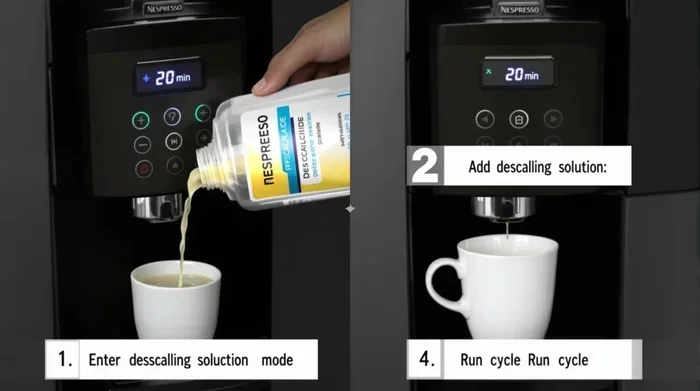
Here is the step-by-step method to descale your coffee maker using vinegar:
- Empty the machine: Remove any leftover coffee grounds, used filters, or old water from the reservoir. Make sure the machine is cool and unplugged before you start.
- Prepare the vinegar solution: Mix equal parts white vinegar and water. For most standard coffee makers, use about 32 ounces of vinegar and 32 ounces of water. If your machine has a larger reservoir, you can scale up the ratio.
- Fill the water reservoir: Pour the vinegar and water mixture into the tank until it reaches the maximum fill line.
- Run a half brew cycle: Turn on the machine and let it run about halfway through the brew cycle. Then turn it off and let the solution sit inside the machine for 30 minutes. This soaking time helps the vinegar break down the mineral deposits more effectively.
- Complete the brew cycle: After 30 minutes, turn the machine back on and let it finish brewing the vinegar solution into the carafe.
- Repeat if needed: For heavy buildup, you may need to run the vinegar solution through the machine a second time. Simply refill the reservoir with fresh vinegar and water and repeat the process.
The entire process takes about 45 minutes to an hour, depending on how scaled your machine is. It is a simple task that does not require any special skills or experience.
Rinsing and Final Steps
This is the part most people skip, but it is critical. After the vinegar cycle, you must rinse the machine thoroughly to remove any vinegar taste and smell.
- Run two to three full water cycles: Fill the reservoir with clean water and run the machine through a full brew cycle. Repeat this two or three times with fresh water each time.
- Wipe down the interior: Use a damp cloth to clean the inside of the water reservoir and any removable parts.
- Wash the carafe and filter: Remove the carafe and filter basket. Wash them with warm soapy water or soak them in a vinegar solution for 15 minutes.
- Brew a test cup: After rinsing, brew a small test batch of coffee. If you still smell or taste vinegar, run one more rinse cycle.
Taking the time to rinse properly ensures that your next cup of coffee tastes fresh and clean. Do not rush this step.
How Often Should You Descale Your Coffee Machine?
The frequency of descaling depends on several factors, including your water quality and how often you use the machine. Here is what you need to know.
Factors That Affect Descaling Frequency
Not everyone needs to descale at the same interval. Consider these factors:
- Water hardness: If you live in an area with hard water, you will need to descale more often, possibly every 4 to 6 weeks. Soft water areas may only need descaling every 3 months.
- Daily usage: A machine used multiple times a day will build up scale faster than one used occasionally.
- Machine type: Single-serve machines with small water reservoirs tend to accumulate scale more quickly than larger drip coffee makers.
- Age of the machine: Older machines with more internal tubing are more susceptible to buildup and may need more frequent descaling.
Quick Tips For Regular Maintenance
Keeping your coffee machine clean between descaling sessions is easy with a few simple habits:
- Use filtered water: This reduces the amount of minerals that enter your machine in the first place.
- Empty the water reservoir: Do not leave standing water in the tank when you are not using the machine for extended periods.
- Clean removable parts weekly: Wash the carafe, filter basket, and lid with warm soapy water every week.
- Wipe down the exterior: A quick wipe with a damp cloth keeps the outside of your machine looking great and prevents dust buildup.
Some modern coffee machines have a built-in descaling light or indicator. If yours does, pay attention to it. The light is your machine telling you it is time for maintenance.
Common Mistakes To Avoid When Descaling With Vinegar
Even though descaling with vinegar is straightforward, there are a few mistakes that can cause problems. Here is what to watch out for.
Using Too Much Vinegar
More vinegar does not mean better results. Using full-strength vinegar can damage rubber seals, plastic components, and internal tubing over time. Always dilute your vinegar with water in the recommended 1:1 ratio. This gives you enough acidity to dissolve scale without risking damage to your machine.
Similarly, if you are ever cleaning other kitchen appliances like a toaster oven, the same principle applies. Just as you would not use harsh chemicals on a small kitchen appliance, you should be gentle with your coffee machine as well.
Skipping The Rinse Cycle
This is the most common mistake people make. After the vinegar cycle finishes, they immediately brew a pot of coffee and wonder why it tastes sour. The vinegar residue left inside the machine will transfer to your coffee, creating an unpleasant flavor. Always run at least two to three plain water cycles after descaling. Your taste buds will thank you.
Ignoring The Manual
Every coffee machine is different. Some manufacturers explicitly warn against using vinegar because it can void the warranty or damage specific components. Before you start, read your machine’s manual and check for any descaling recommendations or restrictions. When in doubt, contact the manufacturer directly.
Not Descaling Regularly Enough
One descaling session is not a permanent fix. Mineral buildup is an ongoing process, especially if you use hard water. Set a reminder on your phone or calendar to descale your machine every 1 to 3 months. Consistent maintenance is far easier than dealing with heavy scale buildup later on.
Maintaining Your Coffee Machine After Descaling
Descaling is only one part of keeping your coffee machine in top shape. A little daily care goes a long way toward preventing buildup and extending the life of your brewer.
Daily Habits To Keep Your Machine Clean
- Empty the grounds after every use: Do not leave used coffee grounds sitting in the filter basket or carafe. They can harbor bacteria and affect the taste of your next brew.
- Fresh water daily: If you leave water in the reservoir overnight, empty it and refill with fresh water each morning.
- Wipe the drip area: Coffee spills and splashes around the drip tray can attract mold and bacteria. Wipe this area down after each use.
- Leave the lid open: After brewing, leave the carafe lid and machine lid open. This allows the interior to air dry and prevents mold growth.
When To Call A Professional
Most coffee machines respond well to a vinegar descale. However, there are times when professional help is the better choice. If you have tried descaling multiple times and still notice slow brewing, unusual noises, or persistent bad tastes, there may be a deeper issue. A qualified technician can inspect the internal components and address problems that go beyond simple mineral buildup.
Also, if you own a high-end espresso machine with a sealed boiler system, check with the manufacturer before attempting any DIY descaling. These machines often require specific descaling products and procedures to maintain their warranties.
For general home coffee machines, vinegar descaling is safe, effective, and incredibly affordable. It is one of the best investments you can make in the longevity of your favorite kitchen appliance.
Remember, a clean coffee machine brews better coffee. The time you spend on maintenance pays off every single morning when you take that first sip of fresh, great-tasting coffee. Make descaling a regular part of your kitchen routine and your machine will reward you for years to come.
If you are interested in learning more about kitchen appliance care, you might also find it helpful to read about how to clean melted plastic out of an oven or explore other cleaning techniques for your home equipment.
Frequently Asked Questions
Can I use apple cider vinegar to descale my coffee machine?
Yes, you can use apple cider vinegar in an emergency, but white distilled vinegar is the better choice. Apple cider vinegar can leave a slight residue and odor that may affect the taste of your coffee. If you use it, be sure to run extra rinse cycles to remove any lingering smell.
How long should I let the vinegar sit in my coffee machine?
Let the vinegar solution sit in the machine for about 30 minutes after running it halfway through the brew cycle. This soaking time gives the acetic acid enough time to dissolve mineral deposits. For heavy buildup, you can let it sit for up to an hour.
Will vinegar damage my coffee machine?
When diluted properly with water in a 1:1 ratio, vinegar is safe for most coffee machines. However, some manufacturers advise against using vinegar on machines with stainless steel boilers or sensitive internal parts. Always check your owner’s manual before descaling.
Can I reuse the vinegar solution?
It is not recommended to reuse the vinegar solution. After one cycle, the vinegar has already absorbed dissolved minerals and is less effective. Fresh vinegar and water will give you the best descaling results.
What if I still taste vinegar after rinsing?
Run two to three additional plain water cycles through the machine. You can also brew a batch of coffee and discard it to help eliminate any remaining vinegar odor. If the taste persists, try adding a small pinch of baking soda to the water reservoir and running one more cycle.
Is descaling the same as cleaning the coffee machine?
No, they are different tasks. Cleaning removes coffee oils, grounds, and surface residue, while descaling specifically targets mineral deposits inside the water system. You should do both regularly for the best performance and taste.
=== CONCLUSION ===
Using vinegar to descale your coffee machine is one of the easiest and most cost-effective maintenance tasks you can do at home. It takes less than an hour, requires only a few simple supplies, and delivers noticeable results right away. Your coffee will taste better, brew faster, and last longer when you keep mineral buildup under control.
Make descaling a regular habit, and your coffee machine will stay in excellent shape for years. Follow the steps outlined in this guide, avoid the common mistakes, and enjoy the satisfaction of a perfectly clean brewer. A little care goes a long way, and your morning coffee will taste the difference every single day.