How To Cook Multigrain Rice In Rice Cooker
Cooking multigrain rice in a rice cooker is one of the easiest and most convenient ways to enjoy a nutritious, fluffy grain bowl every single day. With just a few simple steps, your rice cooker handles the measuring, washing, and perfect cooking cycle so you can focus on other things. This guide walks you through everything you need to know about how to cook multigrain rice in rice cooker, from water ratios to timing, so your results come out perfectly every time.
There is something truly satisfying about pulling a pot of perfectly cooked multigrain rice from your rice cooker. Whether you are looking to add more whole grains to your diet or simply want a fuss-free way to prepare a nutritious side, how to cook multigrain rice in rice cooker is a question that deserves a clear, straightforward answer. The good news is that your rice cooker handles the heavy lifting, giving you fluffy, flavorful grain blends with minimal effort. In this guide, you will learn everything from picking the right grain mix to nailing the perfect water ratio every single time. By the end, you will feel confident enough to make multigrain rice a regular part of your meal rotation.
This method works beautifully whether you are cooking for one or feeding a whole family. Rice cookers are designed to automate the steaming and simmering process, which means you do not need to watch the pot or guess when the rice is done. Multigrain rice brings a rich texture and a nutty flavor that plain white rice simply cannot match. It is packed with fiber, vitamins, and minerals that make every bite more nourishing. Let us walk through the entire process together, step by step.
Key Takeaways
- Soak your grains for at least 30 minutes to ensure even cooking and better texture.
- Use the right water ratio — typically 1:1.5 to 1:2 — for perfectly cooked multigrain rice.
- Rinse grains thoroughly before cooking to remove excess starch and prevent sticky, clumpy results.
- Let the rice rest for 10 minutes after cooking to achieve fluffy, separate grains.
- Avoid lifting the lid during the cooking cycle, as it releases steam and disrupts the process.
- Experiment with grain combinations like quinoa, barley, and millet to create your own custom blend.
- Follow your rice cooker’s manual settings, as different models may require adjusted timing and water amounts.
📑 Table of Contents
- What Is Multigrain Rice And Why Is It Worth Cooking In A Rice Cooker?
- Picking The Best Multigrain Rice For Your Rice Cooker
- Step-By-Step Instructions For Cooking Multigrain Rice
- Water Ratios And Settings That Make A Difference
- Tips And Tricks For Fluffy, Perfect Multigrain Rice Every Time
- Delicious Ways To Serve And Enjoy Multigrain Rice
- Final Thoughts On Cooking Multigrain Rice
What Is Multigrain Rice And Why Is It Worth Cooking In A Rice Cooker?
What Makes Multigrain Rice Different
Multigrain rice is a blend of several whole grains cooked together. Common ingredients include brown rice, quinoa, millet, barley, and sometimes even oats or amaranth. Each grain brings its own nutritional profile, creating a dish that is far more nutrient-dense than plain white rice. The combination of textures—from the chewiness of barley to the lightness of quinoa—makes every bite interesting and satisfying.
Cooking multigrain rice on the stovetop can be tricky. Different grains have different cooking times and water absorption rates. You might end up with some grains that are mushy and others that are still crunchy. A rice cooker solves this problem by maintaining a consistent temperature and steam level throughout the entire cooking cycle. This even heat distribution ensures that every grain in the blend cooks uniformly.
Why A Rice Cooker Is Your Best Friend Here
A rice cooker takes the guesswork out of preparing multigrain blends. Most modern units come with dedicated settings for brown rice, mixed grains, and even custom modes. You simply add your grains and water, press the right button, and let the machine do its thing. The automatic shut-off feature prevents overcooking, and the keep-warm function holds your rice at the perfect serving temperature until you are ready to eat.
If you already own a rice cooker, you are halfway there. The appliance is built to handle the steam and heat cycles that whole grains need. This makes it the most convenient tool for anyone who wants to enjoy healthy, grain-rich meals without standing over a stove. The same appliance can also handle other tasks, so it is a smart investment for any kitchen.
Picking The Best Multigrain Rice For Your Rice Cooker
Common Grains Found In Multigrain Blends
Not all multigrain blends are created equal. Some mixes focus on softer grains that cook quickly, while others include harder grains that need more time and liquid. Here are the most common grains you will find in store-bought or homemade multigrain blends:
- Brown rice — The most popular base grain. It has a slightly nutty flavor and a chewy texture. Brown rice takes longer to cook than white rice, which is why a rice cooker is so helpful.
- Quinoa — Adds a light, fluffy texture and a complete protein profile. It cooks relatively quickly and absorbs flavors well.
- Millet — A small, round grain that cooks up soft and slightly sweet. Millet is easy to digest and pairs well with almost any dish.
- Barley — Hearty and fiber-rich, barley adds a satisfying chew. It needs more water and a longer cooking time than most other grains.
- Amaranth — A tiny seed that is rich in protein and iron. It can make your rice slightly sticky, which is actually a nice texture contrast.
- Oats — Some blends include rolled oats for added fiber. They soften quickly and create a creamier overall texture.
Where To Find Quality Multigrain Rice
You can buy pre-mixed multigrain rice at most grocery stores, health food shops, and online retailers. Look for blends that list whole grains as the first ingredients and avoid mixes with added sugars or preservatives. Many brands now offer specific “rice cooker” multigrain blends that are pre-portioned and ready to use. If you prefer more control, you can create your own blend at home by mixing grains in bulk quantities and storing them in an airtight container.
When shopping, check the cooking instructions on the package. Some blends are designed for stovetop cooking and may need adjustments when used in a rice cooker. A good rule of thumb is to increase the water ratio slightly if the package instructions seem geared toward stovetop methods.
Step-By-Step Instructions For Cooking Multigrain Rice
Measuring And Rinsing Your Grains
Start by measuring your multigrain blend. A standard serving is about half a cup of dry grain per person. For a family of four, you would measure roughly two cups of the dry mix. Place the grains in a fine-mesh strainer and rinse them thoroughly under cold running water. This step removes excess surface starch, which helps prevent the rice from becoming overly sticky or gummy.
After rinsing, give the grains a quick soak. While this step is optional, it makes a noticeable difference, especially with harder grains like barley and quinoa. Soaking for 20 to 30 minutes softens the grains and reduces the overall cooking time. Drain the soaking water before adding the grains to your rice cooker pot.
The Cooking Process
Here is the simple process to follow once your grains are prepared:
- Add the rinsed and drained multigrain blend to the rice cooker pot.
- Measure and add the appropriate amount of water (more on ratios in the next section).
- If your rice cooker has a delay timer, you can set it to have fresh rice ready when you wake up or come home.
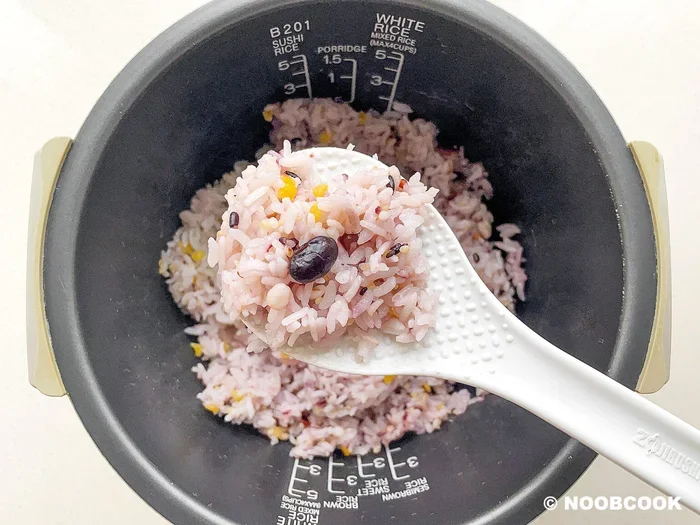
- Close the lid and select the appropriate setting. Most rice cookers have a “Mixed Grain” or “Brown Rice” mode that works well for multigrain blends.
- Press start and let the machine run its full cycle. Do not open the lid during cooking, as this releases steam and can affect the results.
- Once the cycle finishes, let the rice sit with the lid closed for 10 to 15 minutes. This resting period allows the grains to absorb any remaining moisture and become fluffier.
- Open the lid, fluff the rice gently with a fork, and serve.
Following these steps consistently will give you reliable, delicious results every time. The rice cooker does most of the work, so your main job is simply measuring and rinsing.
Water Ratios And Settings That Make A Difference
Getting The Water Ratio Right
The water ratio is the single most important factor in getting perfect multigrain rice. Too little water and the grains will be hard and undercooked. Too much water and you will end up with a mushy, porridge-like consistency. The right balance depends on the specific blend you are using, but here are some general guidelines to get you started:
| Grain Blend Type | Water Ratio (cups water per cup grain) | Approximate Cooking Time |
|---|---|---|
| Soft blend (quinoa, millet, oats) | 1.5 to 1.75 cups | 25 to 35 minutes |
| Medium blend (brown rice, quinoa, millet) | 1.75 to 2 cups | 35 to 45 minutes |
| Hearty blend (brown rice, barley, quinoa) | 2 to 2.25 cups | 45 to 55 minutes |
| Custom blend (your own mix) | Start with 2 cups, adjust next time | 40 to 60 minutes |
These ratios are a great starting point, but every rice cooker is slightly different. I recommend making a small test batch the first time you try a new blend. Note the results and adjust the water slightly for future attempts. Over time, you will develop the perfect ratio for your specific machine and favorite grain mix.
Understanding Your Rice Cooker Settings
Most rice cookers come with several cooking modes. The “White Rice” setting is too gentle for multigrain blends and will leave harder grains undercooked. Instead, look for a “Brown Rice,” “Mixed Grain,” or “Porridge” setting. The brown rice mode typically uses higher heat and a longer cooking cycle, which is exactly what whole grains need. If your cooker has a custom or manual mode, you can experiment with cook times and find what works best for your preferred blend.
Some advanced rice cookers also offer a “slow cook” or “steam” function that can be used for multigrain preparations. These settings provide gentler, more extended cooking that can produce exceptionally tender results. Check your machine’s manual to see what options are available and how they differ from the standard grain settings.
Tips And Tricks For Fluffy, Perfect Multigrain Rice Every Time
The Power Of Soaking
Soaking your multigrain blend before cooking is one of the easiest ways to improve the final texture. When grains soak in water ahead of time, they begin to absorb moisture and soften. This means they cook more evenly and require less water during the actual cooking cycle. For blends that include barley or other hard grains, soaking for at least one hour—or even overnight in the refrigerator—makes a dramatic difference.
If you are short on time, even a 20-minute soak helps. Just make sure to drain the soaking water completely before adding the grains to the rice cooker. The soaking water can contain some starches and impurities that might affect the texture of the finished rice.
Common Mistakes To Avoid
Even with a rice cooker, there are a few pitfalls that can ruin your multigrain rice. Here are the most common mistakes and how to avoid them:
- Skipping the rinse. Surface starch causes clumping and a gummy texture. Always rinse your grains before cooking.
- Using the wrong water ratio. Multigrain blends generally need more water than plain white rice. Start with a higher ratio and adjust downward on subsequent attempts.
- Opening the lid too early. Releasing steam during the cooking cycle disrupts the process and can leave grains unevenly cooked. Trust the machine and wait for it to finish.
- Not letting the rice rest. The 10 to 15 minute resting period after cooking is crucial. It allows moisture to redistribute and the grains to firm up slightly.
- Overfilling the cooker. Most rice cookers have a maximum fill line. Exceeding it can cause the rice to boil over or cook unevenly. Stick to the recommended capacity.
Avoiding these simple mistakes will save you from frustrating results and help you get consistent, restaurant-quality multigrain rice at home every time you cook.
Delicious Ways To Serve And Enjoy Multigrain Rice
Pairing With Proteins
Multigrain rice is incredibly versatile when it comes to pairing with proteins. Its nutty flavor and hearty texture complement almost any main dish. Try serving it alongside grilled chicken, roasted vegetables, or a rich curry. For a complete, balanced meal, pair your multigrain rice with How To Cook Backstrap In Air Fryer for a flavorful, lean protein that brings out the best in your grain bowl. The smoky, tender backstrap pairs beautifully with the earthy, chewy texture of multigrain rice.
If you are meal prepping for the week, cooked multigrain rice keeps well in the refrigerator for up to five days. It also freezes beautifully, so you can cook a large batch and portion it out for quick meals throughout the week. Simply reheat in the microwave with a splash of water, and it tastes almost as fresh as the day you cooked it.
Meal Ideas And Side Dishes
Beyond serving as a simple side, multigrain rice can be the foundation of an entire meal. Here are some ideas to inspire your next dinner:
- Buddha bowls — Top your multigrain rice with roasted vegetables, avocado, a fried egg, and a drizzle of tahini dressing.
- Stuffed peppers — Use multigrain rice as the filling base mixed with black beans, corn, tomatoes, and cheese.
- Rice salads — Toss cooled multigrain rice with chopped cucumber, cherry tomatoes, feta cheese, and a lemon vinaigrette for a refreshing lunch.
- Fried rice — Use day-old multigrain rice as the base for a vegetable or protein fried rice. The firmer texture of day-old grains holds up beautifully in a hot skillet.
- Soup accompaniment — Serve multigrain rice alongside hearty soups and stews for a satisfying, complete meal.
If you are looking for other fun side dishes to round out your meals, you can explore What To Try In Air Fryer for creative ideas that pair wonderfully with your grain bowls. The site has a great collection of recipes that work well alongside multigrain rice, from crispy snacks to fully loaded mains. You might also enjoy trying How Long To Cook Tostones In Air Fryer for a crispy, golden side that adds a satisfying crunch next to your soft, nutty multigrain rice.
For protein-focused meal prep, consider How To Prep Chicken Wings For Air Fryer as a complementary main. The wings add a savory, indulgent element that balances the wholesome, earthy character of multigrain rice perfectly. Together, they make a crowd-pleasing dinner that is both satisfying and easy to prepare.
Final Thoughts On Cooking Multigrain Rice
Learning how to cook multigrain rice in rice cooker opens up a world of healthy, flavorful meal options. The process is simple, the results are consistently impressive, and the nutritional benefits are hard to beat. With the right grain blend, proper water ratios, and a little practice, you can produce restaurant-quality multigrain rice in the comfort of your own kitchen. The rice cooker removes all the stress and uncertainty, leaving you free to focus on the meals and sides that make your dining experience memorable.
Start with a basic blend, follow the water ratios, and do not be afraid to experiment with your own custom mixes. Each batch will teach you something new about your machine and your preferences. Before long, cooking multigrain rice will feel second nature, and you will wonder how you ever managed your meals without this simple, reliable method. Enjoy the process, savor the results, and make wholesome grain bowls a regular part of your weekly routine.
Frequently Asked Questions
Can you cook multigrain rice in a rice cooker?
Yes, you absolutely can. Most modern rice cookers handle multigrain blends with ease, especially if you use the correct water ratio and the appropriate cooking setting. Simply rinse your grains, add water, and let the cooker do the work for you.
How much water do you use for multigrain rice in a rice cooker?
A good starting point is a 1:1.5 ratio of rice to water, but you may need to adjust based on the specific blend you are using. Heavier grains like barley or quinoa tend to absorb more water than softer ones like brown rice. Check your rice cooker manual for the multigrain setting, as many models automatically adjust the water level for you.
How long does it take to cook multigrain rice in a rice cooker?
Cooking time typically ranges from 30 to 45 minutes, depending on the grain mixture and your cooker’s settings. White rice-heavy blends cook faster, while mixes with whole grains like rye or millet take longer. Always let the rice rest for 10 minutes after the cycle finishes for the best texture.
Do you need to soak multigrain rice before cooking it in a rice cooker?
Soaking is not always required, but it helps soften harder grains and reduces overall cooking time. Soaking for 20 to 30 minutes works well for blends that include barley or whole wheat berries. If you skip soaking, just add a little extra water to compensate for the drier grains.
Why does my multigrain rice come out mushy or sticky in the rice cooker?
Mushy rice usually means too much water was added or the cooking time was too long. Each grain type absorbs water differently, so a one-size-fits-all approach often leads to inconsistent results. Try reducing the water slightly and using the multigrain or brown rice mode if your cooker offers it.
Can you use a rice cooker for multigrain rice if it does not have a multigrain setting?
Yes, you can still cook multigrain rice without a dedicated setting. Use the brown rice or manual mode, and stick to a 1:1.5 water-to-rice ratio as a baseline. If the rice is undercooked after the first cycle, simply add a splash of water and run it again for a few more minutes.