How To Clean Grease From Oven Quickly With These Tips
Discover the fastest and most effective ways to clean grease from oven surfaces using simple household ingredients and store-bought products. This guide covers homemade cleaners, commercial degreasers, and step-by-step techniques that save time and effort. Whether you face light splatters or burnt-on grime, these methods deliver a spotless oven without harsh scrubbing.
Grease inside your oven is more than just an eyesore. It affects how your food cooks, creates unpleasant odors, and can even become a fire hazard over time. If you have been searching for ways to how to clean grease from oven quickly, you are in the right place. This guide walks you through every method, product, and trick that makes oven cleaning fast and painless.
Whether you spilled sauce during baking or skipped cleaning after a big roast, grease buildup is a common kitchen problem. The good news is that you do not need expensive tools or hours of scrubbing. With the right approach, you can tackle grease removal in under thirty minutes. Let us dive into the simplest and most effective strategies that actually work.
Key Takeaways
- Baking soda and vinegar make a powerful, natural grease cutter that works on most oven surfaces.
- Commercial oven degreasers offer the fastest results for heavy grease buildup and baked-on stains.
- Soaking oven racks in hot soapy water loosens stubborn grease without hard scrubbing.
- Regular oven maintenance prevents deep grease accumulation and makes cleaning sessions shorter.
- Avoid harsh abrasives that can scratch oven interiors and damage non-stick coatings.
- Steam cleaning is a gentle yet effective method for loosening baked-on grease quickly.
📑 Table of Contents
- Why Grease Builds Up Inside Your Oven
- Best Homemade Solutions for Grease Removal
- How To Clean Grease From Oven Quickly Using Commercial Products
- Cleaning Oven Racks and Glass Door
- Preventing Future Grease Buildup in Your Oven
- Common Mistakes to Avoid When Cleaning Oven Grease
- Expert Insights on Fast and Safe Oven Cleaning
- Conclusion
Why Grease Builds Up Inside Your Oven
Understanding why grease accumulates helps you prevent it from becoming a major issue. Every time you cook fatty foods, oils splatter onto the oven walls, floor, and racks. Over multiple uses, these splatters bake onto surfaces and turn into tough, sticky residue.
The Science Behind Baked-On Grease
When oil heats up, it breaks down and bonds with food particles. This creates a hardened layer that regular wiping cannot remove. The higher the cooking temperature, the more stubborn the grease stains oven surfaces become. This is why baking at high temperatures often leaves behind the toughest residue.
Common Causes of Excessive Grease Buildup
- Frequent high-heat cooking like roasting and broiling melts fat and spreads it across surfaces.
- Cooking without lids or covers allows grease to splash freely onto oven walls.
- Using too much oil or butter in recipes increases the amount of splatter.
- Skipping drip pans or liners means grease drips directly onto the oven floor.
- Infrequent cleaning allows layers to build up over weeks and months.
Knowing these causes helps you adopt better cooking habits. Simple changes like using foil liners or reducing oil can significantly cut down on grease buildup oven problems.
Best Homemade Solutions for Grease Removal
Before you reach for chemical sprays, try these kitchen-safe ingredients that work surprisingly well for clean oven grease. Most of these items are already in your pantry, making them the easiest and cheapest option.
Baking Soda Paste: The Ultimate Grease Cutter
Baking soda is a mild abrasive that dissolves grease without scratching surfaces. To make a cleaning paste, mix three parts baking soda with one part water. Spread the paste evenly across the greasy areas inside your oven. Let it sit for at least two hours or overnight for the best results.
After soaking, wipe the paste away with a damp cloth. You will notice the grease cutter effect immediately. For extra stubborn spots, spray a bit of vinegar on the baking soda residue. The fizzing reaction helps lift remaining grime. This method is one of the most popular oven cleaning hacks for good reason.
Vinegar and Water Solution
White vinegar is a natural degreaser that cuts through light grease easily. Mix equal parts vinegar and water in a spray bottle. Spray the solution onto oven surfaces and let it sit for ten to fifteen minutes. Wipe clean with a soft cloth.
This homemade oven cleaner works best on fresh splatters and light grease stains oven surfaces. For heavier buildup, combine vinegar with baking soda for a two-step approach that tackles even baked-on grime.
Lemon and Steam Cleaning Method
Lemon juice is a natural degreaser with a pleasant scent. Fill an oven-safe dish with water and squeeze in two lemons. Place the dish on the lower rack and heat the oven to 200 degrees Fahrenheit for about ten minutes. The steam loosens grease and grime throughout the interior.
After the steam cycle, turn off the oven and let it cool slightly. Wipe down all surfaces with a damp cloth. This steam cleaning method is gentle, non-toxic, and perfect for regular maintenance of oven interior cleaning.
Dish Soap and Warm Water
For light grease, a simple mixture of dish soap and warm water does the job. Add a few drops of dish soap to a bowl of hot water. Dip a cloth or sponge into the solution and wipe down oven surfaces. This works well for routine clean oven grease maintenance between deep cleaning sessions.
How To Clean Grease From Oven Quickly Using Commercial Products
Homemade solutions are great for light to moderate grease. But when you face heavy, baked-on grime, commercial products deliver faster and stronger results. Here is how to choose and use them effectively.
Top-Rated Oven Degreasers on the Market
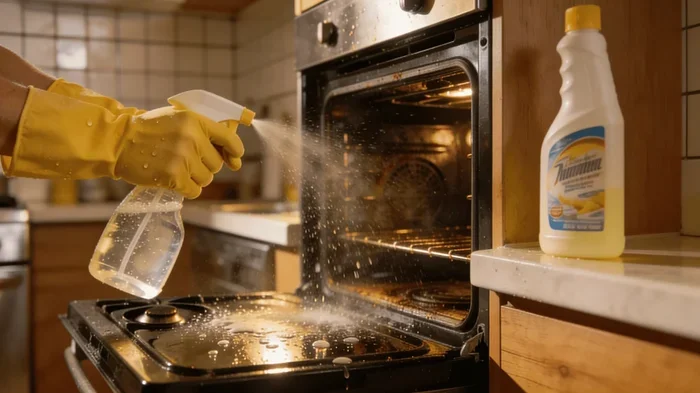
Commercial oven degreasers are formulated to dissolve tough grease fast. Look for products labeled as heavy-duty grease removers or oven cleaning solutions. Spray the product directly onto greasy surfaces, wait the recommended time (usually five to ten minutes), and wipe clean.
Some popular options include foaming sprays that cling to vertical surfaces and gel formulas that drip down and dissolve buildup. Always check that the product is safe for your oven type, especially if you have a self-cleaning oven or a non-stick interior.
Using Oven Cleaning Sprays Effectively
To get the best results from any grease removal spray, follow these steps:
- Remove the oven racks and any loose debris first.
- Shake the spray bottle well before use.
- Spray a generous layer on greasy areas, avoiding heating elements.
- Let the product sit for the time listed on the label.
- Wipe away the dissolved grease with a damp microfiber cloth.
- Rinse the interior with clean water and dry thoroughly.
Using a grease cutter spray saves significant time compared to scrubbing. The chemicals break down the grease bonds, so you barely need to touch the surface. This is the fastest way to how to clean grease from oven quickly when homemade methods fall short.
Safety Tips When Using Chemical Cleaners
- Always ventilate your kitchen by opening windows and turning on the exhaust fan.
- Wear rubber gloves to protect your skin from harsh chemicals.
- Never mix different cleaning products, especially bleach and ammonia-based sprays.
- Rinse surfaces thoroughly after using chemical cleaners to remove residue.
- Keep children and pets away during and after the cleaning process.
Cleaning Oven Racks and Glass Door
The oven racks and glass door often trap the most grease. These areas require special attention because grease clings to metal and builds up on glass in visible layers.
Soaking Oven Racks for Deep Cleaning
Remove the racks from the oven and place them in a large bathtub or sink. Fill the basin with hot water and add two tablespoons of dish soap and a half-cup of baking soda. Let the racks soak for at least two hours. The warm, soapy water softens the greasy oven racks and makes scrubbing effortless.
After soaking, use a non-abrasive scrubber to remove remaining grime. For heavily soiled racks, spray them with a commercial degreaser before soaking. Rinse thoroughly and dry completely before placing them back in the oven.
Cleaning the Oven Glass Door
The glass door lets you watch your food cook, but grease and food splatters quickly turn it opaque. Mix baking soda and water into a paste and spread it on the glass. Let it sit for twenty minutes, then wipe with a damp cloth.
For grease stains oven glass that have baked on, use a razor scraper at a shallow angle. This removes stubborn residue without scratching the glass. Finish by wiping the door with a vinegar and water solution for a streak-free shine.
Removing Burnt Grease From Oven Corners
Grease loves to collect in corners and crevices where it is hard to reach. Use an old toothbrush or a narrow cotton swab dipped in oven cleaning solution to target these spots. The small bristles work into tight spaces and lift burnt grease oven residue that cloths cannot access.
Preventing Future Grease Buildup in Your Oven
Cleaning is easier when you prevent excessive grease from forming in the first place. A few simple habits can dramatically reduce the frequency of deep oven interior cleaning sessions.
Use Oven Liners and Drip Pans
Place a silicone oven liner on the bottom rack to catch drips and splatters. These liners are reusable and easy to wipe clean. They act as a barrier between your food and the oven floor, preventing grease buildup oven problems before they start.
Cover Foods During Cooking
Using foil or a lid when cooking fatty foods reduces splatter significantly. This simple step keeps grease off the oven walls and ceiling. It also helps maintain a cleaner oven maintenance routine.
Wipe Down After Each Use
After every cooking session, let the oven cool slightly and wipe the interior with a damp cloth. Removing fresh splatters takes only a minute and prevents them from hardening into baked-on grease stains oven surfaces. This habit is the single most effective way to keep your oven clean with minimal effort.
Set a Regular Cleaning Schedule
Deep clean your oven every one to two months depending on how often you cook. Setting a oven cleaning schedule prevents grease from accumulating to levels that require harsh chemical treatments. Consistent maintenance makes each cleaning session faster and easier.
Common Mistakes to Avoid When Cleaning Oven Grease
Even with the right products, certain mistakes can damage your oven or make the job harder. Avoid these pitfalls to get the best results from your grease removal efforts.
Using Abrasive Scrubbers on Delicate Surfaces
Steel wool and harsh scrub pads can scratch non-stick oven interiors and damage glass surfaces. Always use soft cloths, microfiber wipes, or non-abrasive sponges. For tough spots, let the cleaning solution sit longer instead of scrubbing harder.
Skipping the Rinse After Cleaning
Chemical residues left behind can affect the taste of your food and release fumes during future cooking. Always rinse the oven interior thoroughly with clean water after using any oven degreaser or cleaner. Dry the surfaces completely to prevent water spots.
Ignoring the Oven Racks
Many people clean the oven interior but forget the racks. Greasy oven racks continue to shed residue onto the oven floor. Always remove and clean racks separately as part of your how to clean grease from oven quickly routine.
Using Too Much Water on Electric Ovens
Excess water can damage heating elements in electric ovens. Use damp cloths rather than soaking surfaces, and never spray liquid directly onto heating elements or control panels.
Expert Insights on Fast and Safe Oven Cleaning
Professional cleaners and appliance experts share a few insider tips that make oven cleaning faster and more effective.
Heat the Oven Before Cleaning
Some experts recommend heating the oven to 200 degrees Fahrenheit for five minutes before applying a cleaning solution. The warmth softens the grease and helps the cleaner penetrate deeper into the grime. This trick cuts cleaning time in half for clean oven grease that has built up over several weeks.
Use Microfiber Cloths for Streak-Free Results
Microfiber cloths trap grease and grime better than regular cotton rags. They leave no lint or streaks behind, which is especially important for glass oven doors. Keep a few dedicated microfiber cloths in your kitchen for oven and appliance cleaning.
Combine Methods for Best Results
The fastest grease removal often combines multiple approaches. Start with a homemade baking soda paste for gentle loosening. Follow up with a commercial grease cutter for deep-down grime. Finish with a vinegar rinse to neutralize odors and leave the oven fresh.
Know When to Call a Professional
If your oven has not been cleaned in years and grease has hardened into thick layers, professional oven cleaning services may be worth considering. They have industrial-grade tools and solutions that handle extreme grease buildup oven situations safely and efficiently.
Conclusion
How to clean grease from oven quickly does not have to be a dreaded chore. With the right combination of homemade solutions, commercial products, and smart prevention habits, you can keep your oven spotless with minimal effort. Start with baking soda and vinegar for light grease, reach for a commercial oven degreaser for heavy buildup, and always clean racks and glass doors separately for the best results.
Remember that consistency is the real secret. A quick wipe after each use and a scheduled deep clean every few weeks will save you hours of scrubbing over time. These oven cleaning hacks not only make your oven look better but also improve cooking performance and kitchen safety. Try these methods today and enjoy a gleaming, grease-free oven that works like new.
Frequently Asked Questions
What is the fastest way to clean grease from an oven?
The fastest method is using a commercial oven degreaser spray. Spray it on greasy surfaces, wait five to ten minutes, and wipe clean. For a natural alternative, apply a baking soda paste and let it sit overnight for similar results without chemicals.
Can I use baking soda and vinegar together to clean my oven?
Yes. Baking soda and vinegar create a fizzing reaction that lifts grease and grime effectively. Apply baking soda paste first, then spray vinegar on top. Let it sit for thirty minutes before wiping clean for the best grease removal results.
How often should I deep clean my oven?
Deep clean your oven every one to two months if you cook regularly. Light wiping after each use reduces the need for frequent deep sessions. Following a consistent oven cleaning schedule prevents heavy grease buildup oven problems.
Is it safe to use chemical oven cleaners in a self-cleaning oven?
No. Self-cleaning ovens use high heat to burn off grease, and chemical cleaners can damage the interior coating. Stick to the self-cleaning cycle or use only gentle, non-chemical methods for clean oven grease in these models.
How do I remove burnt-on grease from oven racks?
Soak the racks in hot water with dish soap and baking soda for two to three hours. After soaking, scrub with a non-abrasive pad. For stubborn spots, apply a commercial grease cutter spray before soaking to break down the burnt residue.
What household items can I use for oven cleaning?
Baking soda, white vinegar, lemon juice, dish soap, and warm water are all effective household items. These natural ingredients work well for homemade oven cleaner solutions and are safe for most oven surfaces without harsh fumes.