How To Clean Cuisinart Ss15 Coffee Maker Step By Step
Cleaning your Cuisinart SS15 coffee maker regularly keeps your coffee tasting great and extends the life of your machine. This step-by-step guide covers everything from daily rinse routines to deep descaling with vinegar. You will learn how to clean every part, avoid common mistakes, and maintain your machine like a pro.
Your Cuisinart SS15 coffee maker is a workhorse in your kitchen. It brews delicious coffee every morning, but it needs regular care to keep performing at its best. Over time, mineral deposits, coffee oils, and residue build up inside the machine. This affects the taste of your coffee and can even shorten the life of your appliance. The good news is that cleaning your Cuisinart SS15 does not have to be complicated. With the right approach, you can have it sparkling clean in under 30 minutes.
This guide walks you through every step of the cleaning process. You will learn how to clean the exterior, the internal components, and how to descale your machine properly. Whether you are a daily coffee drinker or someone who brews a few times a week, these tips will help you get the most out of your Cuisinart SS15. Let us dive in and make your coffee maker shine like new.
Key Takeaways
- Daily cleaning keeps your coffee fresh: A quick rinse after each brew prevents buildup and improves taste.
- Descaling is essential every 1-3 months: Mineral deposits build up fast and can ruin your machine if ignored.
- Vinegar and water is the best budget descaler: It works just as well as expensive store-bought solutions.
- Never use abrasive cleaners on stainless steel: They scratch the surface and can damage your machine.
- Clean every removable part separately: The brew basket, carafe, and filter need individual attention.
- Run a plain water cycle after descaling: This removes any vinegar taste and residue completely.
📑 Table of Contents
- Why Cleaning Your Cuisinart SS15 Matters
- What You Will Need to Clean the Cuisinart SS15
- Step-by-Step Guide to Clean the Cuisinart SS15
- How to Deep Clean Your Cuisinart SS15
- Common Mistakes People Make When Cleaning Their Coffee Maker
- How Often Should You Clean Your Cuisinart SS15
- Tips to Keep Your Cuisinart SS15 Running Like New
- Conclusion
Why Cleaning Your Cuisinart SS15 Matters
Many people overlook the importance of cleaning their coffee maker regularly. They simply brew and go. But here is the truth: a dirty coffee maker affects everything. The flavor of your coffee changes. The brewing temperature drops. And over time, mold and bacteria can grow inside the water reservoir and tubing.
When mineral-rich water passes through your machine repeatedly, it leaves behind limescale. This white, chalky buildup clogs the internal pathways. It forces your machine to work harder. That means longer brew times and weaker coffee. In serious cases, it can even cause your machine to break down entirely.
Regular cleaning prevents all of these problems. It keeps your coffee tasting bright and clean. It ensures your Cuisinart SS15 operates efficiently. And it saves you money by avoiding costly repairs or early replacement. Think of it as a small investment of time for a big payoff in coffee quality.
The Science Behind Coffee Residue
Coffee contains natural oils that do not dissolve in water. These oils coat the inside of your machine over time. They turn rancid and create a stale, bitter taste. Even if your coffee beans are high quality, old oils can make your morning cup taste off. This is why simply changing your coffee beans will not fix a dirty machine. You need to actually clean the equipment.
Hard water makes the problem worse. If your home has hard water, mineral deposits accumulate faster than in soft water areas. The calcium and magnesium in hard water form scale inside the heating element and tubes. This scale acts as an insulator. It reduces the efficiency of the heating element. Your coffee may not reach the optimal brewing temperature. The result is weak, under-extracted coffee that tastes flat.
What You Will Need to Clean the Cuisinart SS15
Before you start, gather everything you need. Having all your supplies ready makes the process smooth and fast. You do not need any special or expensive products. Most of what you need, you probably already have in your kitchen.
Here is your complete cleaning supply list:
- White distilled vinegar – This is your best friend for descaling. It dissolves mineral deposits naturally and safely.
- Warm water – You will use this for rinsing and mixing your cleaning solution.
- Mild dish soap – Use this for cleaning removable parts like the carafe and brew basket.
- Soft microfiber cloth – This is perfect for wiping the exterior without scratching the stainless steel.
- Soft-bristle brush – A small brush helps clean hard-to-reach spots in the brew basket and filter area.
- Baking soda – Great for tackling stubborn stains on the carafe and exterior.
- Dish towel or drying rack – You will need something to air-dry the removable parts.
Avoid using harsh chemicals or abrasive scrubbers. They can damage the stainless steel finish and leave residues that affect your coffee taste. Stick to gentle, food-safe cleaning products. Your coffee maker deserves the same care you would give to any other kitchen appliance.
If you are looking for alternative cleaning methods, some people use dishwasher tablets for tough cleaning jobs around the kitchen. While not directly applicable to the coffee maker internals, the same principle of using convenient cleaning agents applies when tackling kitchen grime.
Step-by-Step Guide to Clean the Cuisinart SS15
Now that you have everything ready, let us get into the actual cleaning process. I recommend cleaning your Cuisinart SS15 in this specific order. It ensures you do not miss any part and keeps the workflow efficient.
Step 1: Unplug and Disassemble the Machine
Safety first. Always unplug your coffee maker before cleaning. Never immerse the base unit in water. Once unplugged, remove all removable parts. Take off the carafe, the lid, the brew basket, and the filter basket. Set them aside on a clean surface. Check your owner’s manual if you are unsure which parts are removable. Most Cuisinart SS15 models have a straightforward design that makes disassembly easy.
Step 2: Wash the Removable Parts
Now wash the carafe, lid, brew basket, and filter basket with warm water and mild dish soap. Use a soft sponge to clean all surfaces. For the carafe, pay extra attention to the inside walls where coffee oils accumulate. A soft-bristle brush works wonders on the mesh filter basket. Rinse each piece thoroughly under warm running water. Make sure no soap residue remains.
If your carafe has stubborn coffee stains, try making a paste of baking soda and water. Apply it to the stains and let it sit for 15 minutes. Then scrub gently with a soft sponge. The stains should come off easily. This method is safe and effective. It does not scratch the glass or plastic.
Step 3: Wipe Down the Exterior
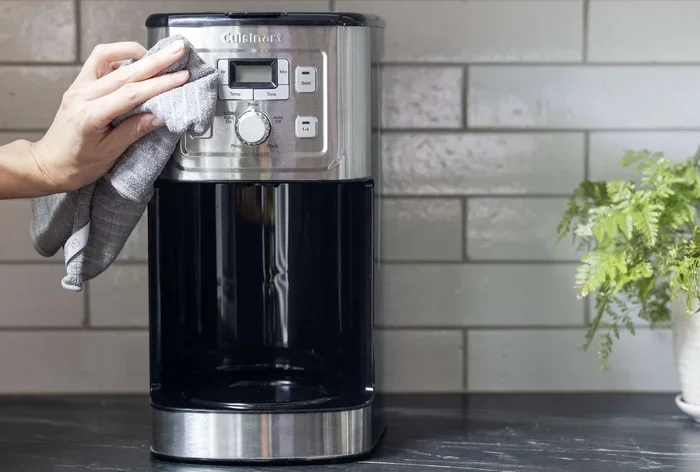
While the removable parts are soaking and drying, wipe down the exterior of the machine. Dampen your microfiber cloth with warm water and a small drop of dish soap. Wipe the stainless steel body gently. For any dried coffee splashes or water spots, use a paste of baking soda and water. Apply it with a soft cloth and rub in circular motions. The stainless steel will look brand new again.
Never use steel wool or abrasive pads on the exterior. They will scratch the finish. Scratches not only look bad but can also trap bacteria in the grooves. Keep it gentle and your machine will maintain its sleek appearance for years.
If you enjoy keeping your kitchen appliances spotless, you might appreciate learning how to clean other small kitchen appliances as well. For instance, cleaning an Oster toaster oven follows similar gentle cleaning principles for stainless steel surfaces.
Step 4: Clean the Water Reservoir
The water reservoir is where many people forget to clean. Over time, it can develop a film or slimy buildup. To clean it, fill the reservoir with warm water and a few drops of dish soap. Swish the water around vigorously. Then empty it and rinse two to three times with clean water. Use a clean cloth or sponge to wipe the inside walls if needed. Make sure the reservoir is completely free of soap before moving to the next step.
Step 5: Descale the Machine
Descaling is the most important part of cleaning your Cuisinart SS15. This is where you remove mineral buildup from the heating element and internal tubes. Here is how to do it:
- Fill the water reservoir with equal parts white vinegar and water. For a standard Cuisinart SS15, this means about 32 ounces of vinegar and 32 ounces of water.
- Place a clean mug or container on the warming plate.
- Turn on the machine and let it run half of a brew cycle.
- Turn off the machine and let the vinegar solution sit inside for 30 minutes. This gives it time to dissolve the mineral deposits.
- After 30 minutes, turn the machine back on and let it complete the brew cycle.
- Discard the vinegar water from the mug.
- Repeat the process two more times with fresh vinegar and water.
- Finally, run two to three full cycles with plain clean water. This rinses out any remaining vinegar taste.
That is it. Your machine is now descaled and ready to brew great-tasting coffee. The vinegar method is safe, effective, and incredibly affordable. It works just as well as commercial descaling solutions that cost three times as much.
Deep cleaning other kitchen appliances follows a similar philosophy. For example, deep cleaning a Ninja air fryer oven involves similar disassembly and soaking techniques to remove grease and buildup.
Step 6: Reassemble and Test
Once all parts are clean and dry, reassemble your Cuisinart SS15. Place the filter basket back in, then the brew basket. Set the carafe on the warming plate. Fill the reservoir with fresh water and run one quick brew cycle. This final rinse ensures everything is clean and ready for use. Your coffee maker should now look and smell fresh.
How to Deep Clean Your Cuisinart SS15
A regular cleaning keeps your machine running well. But every few months, you should do a deep clean. A deep clean goes beyond the surface and addresses buildup that regular cleaning might miss.
Start by soaking the removable parts in a solution of warm water and vinegar. Let them soak for 20 to 30 minutes. This loosens any hardened coffee oils and mineral deposits. Then scrub them as usual. For the water reservoir, you can also soak it in the vinegar solution. Just make sure you do not submerge the electrical base unit at any point.
For the brew group area (where the water distributes), use a pipe cleaner or a thin brush to reach into the small holes. Mineral deposits love to build up in these tiny openings. Clearing them out improves water flow and brewing temperature. This small step makes a surprisingly big difference in coffee quality.
If you are dealing with melted plastic or tough residue inside the machine, there are specific methods to handle those situations safely without damaging the internal components.
When to Call a Professional
Most cleaning tasks are simple enough to handle at home. But if your Cuisinart SS15 has a serious issue like a malfunctioning heating element or persistent clogs that vinegar cannot clear, it may be time to seek professional help. Contact Cuisinart customer service or a qualified appliance repair technician. Do not try to disassemble the base unit yourself. It contains electrical components that can be dangerous.
Common Mistakes People Make When Cleaning Their Coffee Maker
Even with the best intentions, people make mistakes when cleaning their coffee makers. Here are the most common ones and how to avoid them:
- Using too much vinegar: Vinegar is great for descaling, but too much can leave a lingering smell. Stick to the equal parts vinegar and water ratio. Always rinse thoroughly afterward.
- Skipping the rinse cycles: After descaling, always run two to three plain water cycles. Skipping this step means your next pot of coffee will taste like vinegar. Not a pleasant surprise in the morning.
- Using bleach or harsh chemicals: Bleach can damage the internal tubing and leave toxic residues. Never use bleach in or on your coffee maker. It is not worth the risk.
- Putting the base unit in water: The electrical base should never be submerged. This can cause a short circuit or electrical shock. Always wipe it with a damp cloth only.
- Ignoring the carafe gasket: The rubber gasket on the carafe lid can trap mold and mildew. Remove it occasionally and wash it separately with soap and water.
- Waiting too long between cleanings: Do not wait until your coffee tastes bad to clean the machine. Preventive maintenance is much easier and more effective than fixing problems after they develop.
Avoiding these mistakes keeps your cleaning efforts effective. It also protects your machine from damage. A little care goes a long way in extending the lifespan of your Cuisinart SS15.
How Often Should You Clean Your Cuisinart SS15
Consistency is the key to a clean coffee maker. Here is a simple maintenance schedule you can follow:
| Task | Frequency | Why It Matters |
|---|---|---|
| Rinse carafe and brew basket | After every use | Prevents coffee oil buildup |
| Wipe exterior and water reservoir | Weekly | Removes surface grime and splashes |
| Full cleaning and descaling | Every 1-3 months | Removes mineral deposits and deep grime |
| Deep clean all parts with soaking | Every 6 months | Addresses stubborn buildup and oils |
| Replace water filter | Every 60 brew cycles | Keeps water tasting clean and pure |
If you live in an area with hard water, you should descale more frequently. Hard water accelerates mineral buildup. Some people in hard water areas descale monthly. Check the inside of your machine regularly. If you see white chalky deposits, it is time to descale regardless of the schedule.
Signs Your Cuisinart SS15 Needs Cleaning
Your machine will tell you when it needs attention. Watch for these warning signs:
- The coffee tastes bitter or off
- Brewing takes longer than usual
- The machine makes unusual gurgling sounds
- You see white residue or scale inside the water reservoir
- The coffee is not as hot as it used to be
- There is a musty or stale smell when brewing
If you notice any of these signs, do not wait. Clean your machine right away. The longer you wait, the harder the buildup becomes to remove.
Tips to Keep Your Cuisinart SS15 Running Like New
Cleaning is only part of the equation. A few simple habits can keep your coffee maker in excellent condition between cleanings:
- Use filtered water: Filtered water has fewer minerals. It reduces scale buildup and means less frequent descaling. Your coffee will also taste better because there are no chlorine or mineral flavors.
- Do not leave water in the reservoir: After each use, empty any remaining water from the reservoir. Stagnant water promotes mold and mineral deposits. Fresh water for each brew is always better.
- Clean after every use: A quick rinse of the carafe and brew basket after each brew takes less than a minute. It prevents buildup from hardening and becoming difficult to remove later.
- Store the machine with the lid open: This allows air to circulate and prevents moisture buildup. Mold thrives in damp, enclosed spaces. An open lid helps keep everything dry and fresh.
- Use the right coffee grind: A medium grind works best for drip coffee makers like the Cuisinart SS15. Too fine a grind can clog the filter and brew basket, causing overflow and residue buildup.
These small habits take almost no time but pay off significantly. Your coffee maker will last longer, and every cup of coffee will taste better. It is the easiest way to get the most value from your investment.
Conclusion
Cleaning your Cuisinart SS15 coffee maker does not have to be a chore. With the right supplies and a simple routine, you can keep your machine in top shape all year round. The key is consistency. A quick rinse after each brew, a weekly wipe down, and a monthly descaling session will keep everything running smoothly.
Remember to use gentle, food-safe cleaning products. Avoid harsh chemicals and abrasive tools. And always rinse thoroughly after descaling to remove any vinegar taste. Your coffee maker works hard every morning to give you that perfect cup of coffee. A little care and attention in return goes a long way.
Follow the steps in this guide, and your Cuisinart SS15 will continue to brew delicious coffee for years to come. You will notice the difference in every cup. Clean coffee maker, better coffee, happier mornings. That is a win-win situation for everyone.
Frequently Asked Questions
Can I use lemon juice instead of vinegar to descale the Cuisinart SS15?
Yes, you can. Lemon juice is a natural acid that dissolves mineral deposits just like vinegar. Use the same equal parts lemon juice and water ratio. The process works the same way. Some people prefer lemon juice because it leaves a fresher scent behind.
How do I remove coffee stains from the Cuisinart SS15 carafe?
Make a paste with baking soda and a small amount of water. Apply it to the stains inside the carafe and let it sit for 15 minutes. Then scrub gently with a soft sponge. The stains should lift away easily. For stubborn stains, repeat the process or let the paste sit for 30 minutes.
Can I put the Cuisinart SS15 carafe in the dishwasher?
Yes, the carafe is generally dishwasher safe. However, hand washing with warm soapy water is gentler and helps the carafe last longer. The high heat and harsh detergents in dishwashers can cloud glass carafes over time. Hand washing is the safer choice.
How long does the descaling process take for the Cuisinart SS15?
The full descaling process takes about 45 minutes to an hour. This includes the three vinegar cycles and two to three rinse cycles. Each brew cycle takes roughly 10 to 15 minutes. The 30-minute soak between the first vinegar cycle adds extra time. But the actual active work is minimal.
What happens if I do not descale my Cuisinart SS15 regularly?
Mineral deposits build up inside the machine over time. This reduces water flow and brewing temperature. Your coffee will taste bitter or weak. In severe cases, the heating element can fail, and the machine may stop working altogether. Regular descaling prevents all of these problems.
Is it safe to use store-bought descaling solutions in the Cuisinart SS15?
Yes, commercial descaling solutions are safe and effective. They are specifically designed for coffee makers. However, white vinegar works just as well and costs a fraction of the price. If you prefer a store-bought option, follow the instructions on the product label carefully.