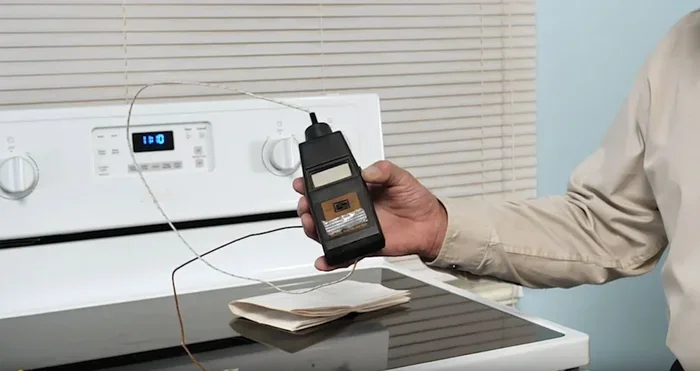
How To Calibrate Oven Thermometer For Accurate Baking
How To Calibrate Oven Thermometer is an essential topic that provides valuable insights.
Key Takeaways
- Understanding How To Calibrate Oven Thermometer: Provides essential knowledge
📑 Table of Contents
- Why Oven Temperature Accuracy Matters for Baking
- How to Know If Your Oven Thermometer Needs Calibration
- The Ice Water Method: Calibrating at Low Temperatures
- The Boiling Water Method: Calibrating at High Temperatures
- Adjusting Your Oven’s Temperature Settings
- Best Practices for Oven Thermometer Placement
- Maintaining Accurate Oven Temperatures Over Time
- FAQS
Why Oven Temperature Accuracy Matters for Baking
Baking is a science. Unlike cooking on the stovetop, where you can adjust seasoning or flip a steak, baking depends on precise oven temperature from start to finish. A few degrees off can change the texture, rise, and flavor of your final product.
What Happens When Your Oven Is Off
When your oven runs too hot, the outside of your food cooks faster than the inside. Cakes develop a thick crust while staying gooey in the center. Cookies spread too much and turn dark brown before the dough sets. Bread forms a hard shell early, trapping steam inside and preventing proper oven spring.
When your oven runs too cold, the opposite happens. Food takes longer to cook, drying out in the process. Muffins fail to rise. Pastries do not flake properly. Custards crack or weep. The list of problems goes on and on.
The Role of Your Oven Thermostat
Your oven’s built-in thermostat controls the heat. Over time, this component can drift out of alignment. The dial or digital display may say 350 degrees, but the actual oven temperature inside could be 325 or 375 degrees. This is why a separate baking thermometer is so valuable. It gives you a real reading, independent of what the oven claims.
Why Calibration Is Not Just for Professionals
You do not need to be a pastry chef to benefit from oven calibration. Home bakers of every skill level can improve their results with better temperature accuracy. Whether you bake once a month or every weekend, knowing your true oven temperature makes a huge difference.
How to Know If Your Oven Thermometer Needs Calibration
Before you start the calibration process, you need to confirm that your oven actually needs it. A simple test can reveal a lot about your oven’s temperature accuracy.
The Pre-Calibration Test
Place your oven thermometer on the middle rack. Set the oven to 350 degrees Fahrenheit. Wait at least 20 minutes for the oven to fully preheat. Then check the thermometer reading.
Here is what the results might mean:
- Within 5 degrees: Your oven is well calibrated. No action needed.
- 5 to 15 degrees off: Your oven is slightly inaccurate. Consider calibrating for better baking results.
- More than 15 degrees off: Your oven needs calibration immediately. This level of deviation will noticeably affect your recipes.
Signs Your Oven Is Running Hot or Cold
Sometimes you do not even need a thermometer to notice a problem. Watch for these common signs:
- Food browns too quickly on the outside but stays raw inside
- Baking times listed in recipes never seem to match your results
- You consistently adjust recipes by adding or subtracting time
- Your oven makes unusual clicking sounds during heating cycles
- Different areas of the oven seem to cook at different rates
The Ice Water Method: Calibrating at Low Temperatures
The ice water method is the most reliable way to test and calibrate at low temperatures. It uses a simple physical fact: a mixture of ice and water always stabilizes at 32 degrees Fahrenheit (0 degrees Celsius). This gives you a precise reference point.
What You Will Need
- A tall glass or mug
- Crushed or cubed ice
- Cold water
- Your oven thermometer
- A towel or oven mitt
Step-by-Step Instructions
- Fill the glass about two-thirds full with ice. Add cold water until the glass is nearly full. Stir gently for 30 seconds.
- Place your oven thermometer into the ice water. Make sure the sensing tip is fully submerged but not touching the bottom of the glass.
- Wait 60 seconds. The reading should settle at exactly 32 degrees Fahrenheit.
- Compare the thermometer reading to the known temperature of 32 degrees.
Interpreting the Results
If the thermometer reads 32 degrees, it is accurate at the low end. If it reads higher or lower, you now know the offset. For example, if it reads 35 degrees, your thermometer is running 3 degrees hot. You can apply this offset when using the thermometer in the oven.
Quick Tips:
- Use filtered or distilled water for the most consistent results
- Make sure the ice is fresh and not melted into a slush before adding water
- Do not let the thermometer touch the sides or bottom of the glass
- Repeat the test twice for confirmation
The Boiling Water Method: Calibrating at High Temperatures
The boiling water method tests your thermometer at the high end of the scale. This is especially useful for oven calibration because most baking happens between 300 and 450 degrees Fahrenheit.
What You Will Need
- A medium saucepan
- Fresh water
- A stove or hot plate
- Your oven thermometer
- A heat-safe container or tongs
Step-by-Step Instructions
- Fill the saucepan with water and bring it to a rolling boil on the stove.
- Carefully insert your baking thermometer into the boiling water. Use tongs or a heat-safe holder to keep your hands away from steam.
- Make sure the sensing tip is fully submerged but not touching the bottom of the pan.
- Wait 60 seconds and note the reading.
Understanding Boiling Point Variations
Water boils at 212 degrees Fahrenheit at sea level. However, boiling point changes with altitude. If you live at a higher elevation, water boils at a lower temperature. Here is a quick reference:
| Altitude (feet) | Boiling Point (Fahrenheit) |
|---|---|
| Sea level | 212 F |
| 1,000 feet | 210 F |
| 2,000 feet | 208 F |
| 3,000 feet | 206 F |
| 5,000 feet | 203 F |
Use the boiling point for your altitude as your reference number. If your thermometer reads 214 degrees at sea level, it is running 2 degrees hot.
Common Mistakes to Avoid:
- Using water that was already boiled and cooled down
- Letting the thermometer touch the bottom of the pot
- Not accounting for altitude when using the boiling point
- Rushing the reading before it stabilizes
- Testing in a pot that is not large enough for proper immersion
Adjusting Your Oven’s Temperature Settings
Once you know how far off your oven is, the next step is to make adjustments. The method depends on whether you have a manual or digital oven.
Adjusting a Manual Oven Dial
Some ovens have a calibration screw behind the temperature dial. This is common in older models. You will need to remove the knob, locate the screw, and turn it slightly in the correct direction.
If your oven runs 25 degrees too hot, you turn the calibration screw to lower the reading. If it runs too cold, you turn it the other way. A quarter turn at a time is usually enough. After adjusting, repeat the oven thermometer test to confirm the change.
Adjusting a Digital Oven
Many modern ovens have a calibration or offset setting in the control panel. Check your oven manual for specific instructions. Generally, you can access this through the settings or maintenance menu.
Enter the offset value. If your oven reads 375 when set to 350, enter a -25 degree offset. The oven will then adjust its heating elements accordingly.
When Adjustment Is Not Enough
Sometimes the oven thermostat itself is failing. If you adjust the calibration and the oven still does not hold the correct temperature accuracy, you may need professional oven repair. A faulty sensor or heating element can cause erratic temperature swings that simple calibration cannot fix.
Best Practices for Oven Thermometer Placement
Where you place your thermometer inside the oven matters just as much as the calibration itself. Poor placement leads to misleading readings.
Where to Place the Thermometer
- Middle rack: This is the most representative position for even heat distribution.
- Center of the rack: Avoid the front, back, top, or bottom edges of the rack.
- Horizontally positioned: Keep the thermometer level so the sensing bulb hangs in the center of the oven cavity.
Where NOT to Place the Thermometer
- Directly on the oven floor, where it may read higher due to radiant heat
- Near the oven door, where heat escapes every time you open it
- Touching a baking stone or metal rack, which can skew readings
- In direct line of the heating element
Understanding Oven Hot Spots
Most ovens have hot spots and cooler zones. The area near the heating element is always warmer. The back of the oven often runs hotter than the front. To get a true average reading, some bakers take measurements in multiple spots and average them out.
Expert Insight: Professional pastry chefs often rotate their pans halfway through baking. This simple trick compensates for oven hot spots and ensures even baking results across every tray.
Maintaining Accurate Oven Temperatures Over Time
Calibration is not a one-time task. Ovens drift over time. Regular maintenance keeps your baking thermometer and oven working in harmony.
How Often Should You Recalibrate?
As a general rule, recalibrate your oven thermometer every 6 to 12 months. You should also recalibrate after any of these events:
- A kitchen renovation or oven installation
- Your oven has been dropped or physically damaged
- You notice consistent baking failures that did not happen before
- You have replaced the oven sensor or heating element
- More than a year has passed since your last calibration check
Choosing the Right Oven Thermometer
Not all thermometers are created equal. Here is a quick comparison of the most popular types:
| Type | Pros | Cons | Best For |
|---|---|---|---|
| Analog Dial Thermometer | No batteries needed, simple to read, affordable | Can be less precise, mechanical parts wear over time | Casual bakers, budget-friendly option |
| Digital Probe Thermometer | Highly accurate, fast readings, programmable | Requires batteries, can be more expensive | Serious bakers, precision cooking |
| Infrared Thermometer | Non-contact, instant readings | Measures surface temperature only, not air temperature | Checking oven walls and heating elements |
| Wireless Smart Thermometer | Remote monitoring, app connectivity, alerts | Higher cost, requires Wi-Fi and app setup | Tech-savvy bakers, long bakes |
Quick Tips for Long-Term Accuracy
- Store your thermometer in a safe place when not in use
- Never drop or jar the thermometer, as this can shift the calibration
- Clean the sensing tip after each use to prevent residue buildup
- Replace batteries in digital models every 6 months
- Replace analog thermometers every 2 to 3 years for best accuracy
When to Replace Your Thermometer
Even with proper care, thermometers wear out over time. If your thermometer consistently gives readings that differ from a known reference by more than 5 degrees, it is time for a replacement. A reliable oven thermometer is a small investment that pays for itself in better baking accuracy and fewer wasted ingredients.
Key Takeaways: Accurate oven temperature starts with proper calibration. Use the ice water and boiling water methods to test your thermometer. Adjust your oven settings based on the readings. Place your thermometer in the right spot for consistent results. Recalibrate regularly and replace worn-out thermometers to maintain temperature accuracy in every bake.
FAQS
Can I calibrate my oven thermometer without an ice water bath?
The ice water method is the gold standard for low-temperature calibration because it provides a precise, reliable reference point at 32 degrees Fahrenheit. While you can estimate accuracy at room temperature, the ice water method gives you the most trustworthy baseline for your baking thermometer.
How much does it cost to calibrate an oven thermometer?
Calibrating your own oven thermometer costs nothing at all. You only need ice, water, and a pot of boiling water. If you need to buy a new thermometer, basic models cost between 10 and 25 dollars. Professional calibration services typically range from 50 to 150 dollars, though most home bakers can handle it themselves.
Why does my oven thermometer give different readings at different positions?
This is caused by oven hot spots and uneven heat distribution. Most ovens have areas near the heating elements that are warmer and zones farther away that are cooler. Rotating your pans and taking readings from multiple positions helps you understand your oven’s unique temperature patterns.
Can I calibrate a built-in oven thermometer instead of buying a separate one?
Yes, you can test your oven’s built-in sensor using the same ice water and boiling water methods. However, a separate oven thermometer is often more accurate and easier to read. Built-in sensors can also drift over time, and having a second thermometer gives you a way to cross-check your oven’s accuracy.
What should I do if my oven still cannot hold the correct temperature after calibration?
If calibration does not fix the problem, the issue may be a faulty thermostat, a broken temperature sensor, or a damaged heating element. These are signs that your oven may need professional oven repair. A technician can diagnose the specific component causing the temperature accuracy problem.
Is it safe to put a glass thermometer in boiling water?
Only if the thermometer is rated for high temperatures. Most baking thermometers are designed to handle boiling water temperatures up to 212 degrees Fahrenheit. Always check the manufacturer’s specifications before immersing any thermometer in boiling water. If you are unsure, use a metal dial thermometer or a digital probe rated for high heat.