How Do You Cook Boudin Sausage In The Oven Step By Step
Learning how do you cook boudin sausage in the oven is easier than you think. This step-by-step guide walks you through the entire process from prep to plate. You will discover the right oven temperature, timing, and tips for crispy, juicy results. Whether you are new to boudin sausage or a seasoned cook, this method works every time. Get ready to enjoy oven-baked boudin that rivals your favorite Cajun restaurant.
Boudin sausage is one of those foods that wins people over at first bite. It is a staple of Cajun cuisine and a favorite snack across the South. But not everyone knows how to cook it at home. Many folks assume you need a smoker or a fancy setup. The truth is, your regular oven works just fine. In this guide, we will show you exactly how to make delicious boudin sausage in the oven. You will learn every step, from picking the right links to serving them up.
If you have ever walked through a Louisiana market and smelled that smoky, savory aroma, you already know what makes boudin special. It is a mix of rice, pork, spices, and seasonings stuffed into a casing. The result is a flavorful link that can be enjoyed on its own or with crackers. Cooking boudin in the oven gives you a hands-off approach. You get crispy edges and a juicy center without standing over a hot stove. This method is perfect for weeknight dinners, game day snacks, or weekend gatherings. Let us dive in and get started.
Key Takeaways
- Simple Process: Baking boudin in the oven requires minimal effort and basic ingredients.
- Right Temperature Matters: 375°F is the sweet spot for even cooking and a crispy finish.
- Prep Makes a Difference: Lightly oiling and scoring the links helps them cook evenly.
- Avoid Common Mistakes: Overcooking and skipping the resting period are the top errors to avoid.
- Versatile Serving Options: Boudin pairs great with crackers, mustard, and many Cajun sides.
- Works for All Types: Fresh, smoked, and frozen boudin links all bake well with adjusted timing.
📑 Table of Contents
What Is Boudin Sausage and Why Oven Cooking Works
Understanding Boudin Meat and Its Origins
Boudin sausage has deep roots in Louisiana Cajun cuisine. It started as a way to use every part of the pig. Cooks would mix ground pork, rice, onions, and spices into a natural casing. The name comes from the French word for blood sausage, though modern boudin often skips the blood. Today, you can find boudin in many styles. Some are smoked, some are fresh, and some include seafood like crawfish or shrimp.
The beauty of boudin lies in its simplicity. The rice absorbs all the flavorful juices from the meat and spices. Each bite delivers a burst of seasoning. When you cook boudin in the oven, the heat surrounds the link evenly. This helps the casing crisp up while keeping the inside moist. It is a gentle, consistent method that brings out the best in every bite.
Why Baking Boudin Is a Great Option
There are many ways to prepare boudin links. You can boil them, grill them, or air fry them. But baking in the oven has some clear advantages. First, it is hands-free. You set the temperature, place the links on a sheet pan, and let the oven do the work. Second, it is easy to scale up. You can bake a dozen links at once without crowding a grill or burner. Third, oven-baked boudin develops a lovely crispy boudin exterior that is hard to beat.
Oven baking also gives you more control over the boudin cooking temperature. You can monitor the heat and adjust as needed. This is especially helpful if you are cooking for a group and want everything done at the same time. Whether you are making boudin appetizer bites for a party or a simple weeknight meal, the oven delivers reliable results every time.
How Do You Cook Boudin Sausage In The Oven Step By Step
Preparing Your Boudin Links
Before you turn on the oven, take a few minutes to prep your boudin sausage. This step makes a big difference in the final result. Start by gathering your ingredients and tools. You will need boudin links, a little cooking oil, a baking sheet, and parchment paper or foil.
Here is what to do:
- Remove the boudin links from the refrigerator about 15 minutes before cooking. Letting them come to room temperature helps them cook more evenly.
- Line a baking sheet with parchment paper or aluminum foil for easy cleanup.
- Lightly brush or spray the links with a thin coat of olive oil or cooking spray. This helps the casing brown and crisp up.
- If the links are very long, you can cut them in half on a diagonal. This makes them easier to handle and eat.
- Place the links on the baking sheet with space between each one. Do not crowd them. Air needs to flow around every link for even cooking.
For smoked boudin, you can skip the oil since the smoking process has already added flavor and a slightly firmer casing. Fresh boudin benefits most from the light oil coating. If you are working with frozen boudin links, let them thaw completely before baking. Cooking from frozen can lead to uneven heat and a longer bake time.
Setting Up the Oven
Now it is time to preheat your oven. Set the temperature to 375°F. This is the ideal oven temperature for boudin because it cooks the meat through without drying it out. The moderate heat allows the rice inside to steam gently while the casing starts to crisp.
While the oven is heating up, position the rack in the center of the oven. This ensures even heat circulation around the boudin links. If you are baking a large batch, you can use two sheet pans and rotate them halfway through cooking. This prevents any hot spots from burning one side of the links.
Baking the Boudin
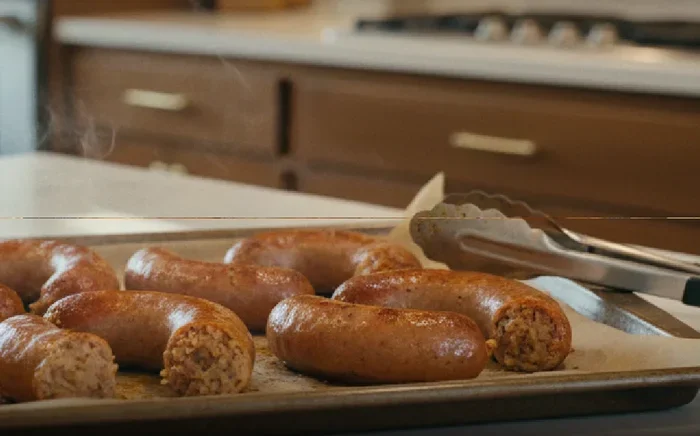
Once the oven reaches 375°F, place the prepared baking sheet on the center rack. Set a timer for 20 minutes. During this first phase, the boudin cooking temperature inside the links rises steadily. The casing begins to firm up and develop a light golden color.
After 20 minutes, open the oven and check the links. Use tongs to gently flip each boudin link over. This ensures both sides get equal exposure to the heat. Return the pan to the oven for another 10 to 15 minutes. The total boudin cooking time usually ranges from 30 to 40 minutes depending on the size of the links and your oven.
Here are some tips to keep in mind during baking:
- Do not open the oven door too often. Every time you open it, the temperature drops and cooking slows down.
- If you notice the tops browning too fast, loosely tent the pan with foil. This slows down the browning while the inside finishes cooking.
- For extra crispy boudin links, you can broil them for the last 2 to 3 minutes. Watch them closely to prevent burning.
Checking Doneness
Knowing when your boudin sausage oven bake is done is important for both taste and food safety. The boudin internal temperature should reach 160°F at the center. Use a meat thermometer inserted into the thickest part of the link for an accurate reading.
You can also check by looking and feeling. A properly baked boudin link will have a golden-brown, slightly firm casing. When you press it gently with tongs, it should feel solid but still have a slight give. The casing should not be soft or squishy. If it looks pale, give it a few more minutes.
Once done, remove the pan from the oven and let the links rest for 5 minutes. This resting period allows the juices to redistribute inside the meat. Cutting into a boudin link right out of the oven can cause the filling to spill out. A short rest keeps everything neat and juicy.
Best Oven Temperature and Timing for Boudin
Temperature Guide for Different Types
Not all boudin links are the same, and the right temperature can vary slightly depending on the type you are cooking. Here is a quick breakdown:
- Fresh Boudin: Bake at 375°F for 30 to 35 minutes. Fresh boudin has a softer casing that crisps up nicely at this temperature.
- Smoked Boudin: Bake at 350°F for 20 to 25 minutes. Since it is already cooked through the smoking process, you mainly need to warm it and crisp the casing.
- Frozen Boudin: Bake at 375°F for 45 to 55 minutes. You may need to increase the time to make sure the center is fully heated through.
- Boudin Balls (Appetizer Size): Bake at 400°F for 12 to 15 minutes. Their small size means they cook faster and can crisp up quickly.
Always use a meat thermometer to confirm the internal temperature reaches 160°F. This is the safest and most reliable way to know your boudin is ready. The boudin cooking temperature at the center matters more than the oven setting alone.
How Long to Cook Boudin in the Oven
The total boudin cooking time depends on a few factors. The size of the links matters most. Standard boudin links are usually about 6 inches long and take around 30 to 40 minutes. Thicker links may need an extra 5 to 10 minutes. Smaller links or boudin balls will be done faster.
Your oven type also plays a role. Convection ovens circulate hot air, which can reduce cooking time by about 5 minutes. Standard ovens without a fan may need the full 40 minutes. If you are ever unsure, it is better to check early and add time than to overcook the links.
Here is a simple timeline to follow:
- Preheat oven to 375°F and prep the links (5 minutes).
- Place links on the baking sheet and put them in the oven (0 minutes).
- After 20 minutes, flip the links and return to the oven.
- Bake for another 10 to 15 minutes until golden brown.
- Remove, rest for 5 minutes, and serve.
Following this timeline gives you consistent, delicious results every time you bake boudin. The total hands-on time is minimal, making it one of the easiest ways to prepare this Cajun classic.
Tips for Perfectly Crispy and Juicy Boudin
Getting a Crispy Boudin Exterior
The hallmark of great oven-baked boudin is that crispy, golden exterior. Achieving this is easier than you might think. Start with a light coat of oil on the outside of each link. This thin layer helps the heat brown the casing evenly. Use a pastry brush or a simple spray bottle to apply it.
Another trick is to place the links on a wire rack set over a baking sheet. This allows hot air to flow underneath the boudin, crisping both sides at once. Without a rack, the bottom side can get soggy from sitting in its own juices. A wire rack is a small investment that makes a big difference.
If you want an extra crunch, try this boudin sausage tip: after the initial bake, switch your oven to broil for the final 2 to 3 minutes. Keep a close eye on the links during this step. The broiler can go from perfectly crispy to burnt in seconds. This quick burst adds a beautiful golden-brown finish.
Keeping the Inside Moist
While a crispy exterior is great, you do not want a dry inside. The key is not to overcook the links. Stick to the recommended boudin cooking time and use a meat thermometer. Once the internal temperature hits 160°F, pull them out immediately.
Letting the boudin rest for 5 minutes after baking also helps retain moisture. The heat continues to distribute through the link during this time, and the juices settle in. If you cut into a boudin link too soon, the filling can be loose and wet. A short rest gives you a cleaner, juicier bite every time.
Quick Tips for Better Results
- Do not skip the resting time. Five minutes makes a noticeable difference in juiciness.
- Use parchment paper. It prevents sticking and makes cleanup a breeze.
- Space the links apart. Crowding the pan traps steam and prevents crisping.
- Add a little cayenne pepper to the oil before brushing for extra heat.
- Save the baking sheet juices. Drizzle them over the links for an extra burst of flavor.
Common Mistakes to Avoid When Baking Boudin
Overcooking the Sausage
The most common mistake people make is leaving the boudin in the oven too long. It might seem like a longer bake would make it more crispy, but the opposite happens. Overcooked boudin dries out quickly. The rice inside becomes hard and the meat turns tough. You lose the creamy texture that makes boudin so enjoyable.
To avoid this, set a timer and stick to the recommended time range. Check the links at the 30-minute mark. If the casing is already golden brown, they are likely done. Trust your thermometer. An internal temperature of 160°F is the target. Going beyond 165°F risks drying out the filling.
Skipping the Resting Period
It is tempting to pull the boudin out and start eating right away. But skipping the rest means you lose some of the juices. The filling inside is hot and full of moisture. When you cut into it immediately, those juices run out onto the plate instead of staying in the link.
Give the boudin a few minutes to settle. This small act of patience pays off in flavor and texture. You will notice the difference in every bite. It is one of those simple steps that separates good boudin from great boudin.
Other Mistakes to Watch For
- Not thawing frozen links before baking. This leads to uneven cooking and a longer bake time.
- Using too much oil. A light coating is all you need. Excess oil can make the casing greasy.
- Crowding the pan. Overlapping links steam instead of bake, resulting in a soft rather than crispy exterior.
- Ignoring your oven hot spots. Every oven has them. Rotating the pan halfway through helps ensure even browning.
Serving Ideas and Pairings for Boudin
Classic Cajun Serving Styles
Once your boudin sausage comes out of the oven, it is time to think about serving. The classic way to enjoy boudin is with saltine crackers and a side of spicy mustard. The crackers add a satisfying crunch that pairs perfectly with the soft, flavorful filling. This is the go-to style at any boudin shop in Louisiana.
Another popular option is to serve boudin alongside boudin and crackers on a platter. Add some pickled onions, hot sauce, and a few sliced green onions for color and freshness. This makes a great boudin appetizer for parties or game day. Guests can build their own bites and customize the heat level to their liking.
For a heartier meal, pair oven-baked boudin with Cajun cuisine classics. Collard greens, dirty rice, and red beans and rice all complement the rich flavors of boudin. A side of fried okra or cornbread adds texture and makes the meal feel complete. These pairings keep the Louisiana theme going and turn a simple snack into a full dinner.
Creative Ways to Enjoy Boudin
Boudin is incredibly versatile. Here are some creative ideas to try:
- Boudin Stuffed Peppers: Slice bell peppers in half, remove the seeds, and fill them with baked boudin. Top with cheese and bake until bubbly.
- Boudin Pizza: Slice boudin links and lay them on pizza dough with marinara, mozzarella, and jalapenos. Bake until the crust is golden.
- Boudin Mac and Cheese: Slice boudin into rounds and layer them over baked mac and cheese for a Cajun twist on a comfort classic.
- Boudin Breakfast: Serve sliced boudin alongside eggs, toast, and gravy for a hearty morning meal.
These ideas show how flexible oven-baked boudin can be. You can use it in many dishes beyond the traditional serving style. Once you master the oven method, you can experiment with all of these options and more.
Conclusion
Learning how do you cook boudin sausage in the oven opens up a world of flavor right in your own kitchen. The process is simple, forgiving, and produces consistently great results. You now know the right temperature, the ideal timing, and the tips that make the difference between good and great boudin. From prep to plate, every step is designed to be easy and rewarding.
Remember to let your links come to room temperature, use a light oil coating, and bake at 375°F for 30 to 40 minutes. Check the internal temperature, let them rest, and serve them your way. Whether you enjoy them with crackers, in creative dishes, or straight from the pan, oven-baked boudin is a crowd-pleaser every time.
Now that you have this guide, you can confidently cook boudin in the oven whenever the craving strikes. Try it this week and taste the difference a proper method makes. Your kitchen will smell like a Louisiana kitchen, and your taste buds will thank you. Happy baking!
Frequently Asked Questions
Can I cook boudin from frozen in the oven?
Yes, you can cook frozen boudin in the oven, but you need to adjust the time. Let the links thaw for about 30 minutes at room temperature first for the best results. If you cook them straight from frozen, add 15 to 20 minutes to the usual bake time and make sure the center reaches 160°F before serving.
What is the best temperature to bake boudin sausage?
The best boudin cooking temperature for baking is 375°F. This moderate heat cooks the meat and rice through evenly while crisping the casing. For smoked boudin, you can lower it to 350°F since it is already cooked. For boudin balls, a slightly higher 400°F works well due to their small size.
How long does it take to bake boudin in the oven?
Standard fresh boudin links take about 30 to 40 minutes at 375°F. The exact boudin cooking time depends on the size of the links and whether they are fresh, smoked, or frozen. Always use a meat thermometer to confirm the internal temperature reaches 160°F for food safety and the best texture.
Do I need to poke holes in boudin before baking?
No, you do not need to poke holes in boudin before baking. The natural casing holds together well in the oven and helps keep the juices inside. Poking holes can cause the filling to leak out and dry up. If you want a crispier result, simply brush the outside with a light coat of oil instead.
Can I reheat leftover boudin in the oven?
Absolutely. Reheating leftover boudin in the oven is the best way to keep it crispy. Set your oven to 350°F and place the links on a baking sheet for 10 to 15 minutes. This method restores the crispy exterior without making the inside dry. Avoid microwaving if possible, as it tends to make the casing soggy.
What is the difference between fresh and smoked boudin for oven baking?
Fresh boudin is raw and needs to be fully cooked in the oven at 375°F for 30 to 40 minutes. Smoked boudin is already cooked through the smoking process, so you only need to warm it and crisp the casing at 350°F for 20 to 25 minutes. Both types produce delicious results, but the timing and temperature differ slightly.