Does Brewed Coffee Need To Be Refrigerated Right Now
Brewed coffee does not always need to be refrigerated, but storing it properly makes a big difference in taste and safety. Plain black coffee can sit at room temperature for up to 24 hours without going bad. However, coffee with milk or cream should be refrigerated within two hours to prevent bacterial growth. Using an airtight container and understanding how oxidation affects your brew will help you enjoy every cup at its best.
You just brewed a full pot of coffee, but life got busy. Now there’s still half a pot sitting on the counter. The big question is simple: does brewed coffee need to be refrigerated? The answer might surprise you.
Many coffee lovers assume that all brewed coffee must go straight into the fridge. But that is not always true. Plain black coffee behaves differently than coffee with milk. The brewing method matters too. Whether you use a drip machine, a French press, or even how to make espresso using a coffee maker, storage rules apply differently.
This guide covers everything you need to know about storing brewed coffee. We will look at how long it lasts, when refrigeration is essential, and how to keep your coffee tasting great. You will also learn simple tips to avoid wasting your favorite morning ritual.
Key Takeaways
- Plain brewed coffee can stay at room temperature for up to 24 hours safely.
- Coffee with milk or dairy must be refrigerated within two hours to avoid spoilage.
- Oxidation is the main reason brewed coffee loses its fresh flavor over time.
- Airtight containers slow down flavor loss and keep coffee tasting better longer.
- Refrigerating coffee can extend its life up to 3 to 4 days when stored correctly.
- Reheating refrigerated coffee is fine, but it may taste flatter than fresh brew.
- Cold brew concentrate has a longer shelf life than hot brewed coffee.
📑 Table of Contents
- What Happens When Brewed Coffee Sits Out?
- How Long Does Brewed Coffee Last at Room Temperature?
- Should You Refrigerate Brewed Coffee?
- Best Containers for Storing Brewed Coffee
- Can You Reheat Refrigerated Brewed Coffee?
- Cold Brew vs. Hot Brewed Coffee Storage
- Common Mistakes People Make When Storing Brewed Coffee
- Quick Tips for Perfect Brewed Coffee Storage
- Final Thoughts
What Happens When Brewed Coffee Sits Out?
When hot coffee cools down on the counter, several things start happening at the same time. Understanding these changes helps you decide whether to drink it, store it, or toss it.
The Role of Oxidation
Oxidation is the number one enemy of brewed coffee. When coffee meets air, its chemical compounds start breaking down. This is the same process that happens with cut fruit or opened wine. The flavor changes. The aroma fades. What once tasted bright and complex starts tasting flat and bitter.
Here is what oxidation does to your cup:
- Reduces aromatic compounds that give coffee its rich smell.
- Creates a stale, dull taste that even extra sugar cannot fix.
- Breaks down oils that add body and depth to the brew.
The speed of oxidation depends on several factors. Exposure to light speeds it up. Heat accelerates it. Even the type of bean matters. Robusta beans oxidize faster than Arabica. But the biggest factor is simply time.
Bacterial Growth and Food Safety
From a safety standpoint, plain black coffee is surprisingly resilient. The low pH level of coffee creates an environment where most harmful bacteria struggle to grow. This means black coffee left out overnight is generally safe to drink, even if it does not taste great.
However, the story changes completely when milk enters the picture. Dairy products are perishable. They spoil quickly at room temperature. The USDA recommends discarding any dairy-containing beverage left out for more than two hours. This rule applies to your morning latte, cappuccino, or any coffee with cream.
Some people wonder if why does instant coffee make me poop relates to storage. While that is a different topic, it shows how coffee affects digestion in various ways. Proper storage ensures you are not adding harmful bacteria to your system along with your morning caffeine.
How Long Does Brewed Coffee Last at Room Temperature?
The shelf life of brewed coffee depends on whether it contains dairy and how it is stored. Here is a clear breakdown of timelines.
Plain Black Coffee
Plain black brewed coffee can sit at room temperature for about 12 to 24 hours. After that, the flavor degrades significantly. It is still safe to drink in most cases, but the taste will be noticeably worse. The coffee becomes increasingly bitter and hollow in flavor as hours pass.
Factors that shorten the shelf life of black coffee at room temperature include:
- Exposure to direct sunlight or bright kitchen lights.
- Warm room temperatures above 75°F (24°C).
- Leaving the pot uncovered instead of using a lid.
- Metal pots that retain heat and accelerate chemical changes.
Coffee with Milk or Cream
If your coffee contains any dairy, the clock starts ticking much faster. Milk-based coffee should not sit out for more than two hours. After that window, bacteria multiply rapidly and the risk of foodborne illness increases.
This includes:
- Coffee with regular milk or skim milk
- Lattes and cappuccinos
- Coffee with half-and-half or creamer
- Flavored coffee drinks with dairy components
If you are unsure whether your milky coffee has been out too long, trust your senses. Smell it. Check for curdling or separation. When in doubt, pour it out. No cup of coffee is worth a stomach ache.
Should You Refrigerate Brewed Coffee?
The short answer is: it depends. Refrigeration is not always necessary, but it is often the best choice for preserving flavor and extending shelf life.
When Refrigeration Makes Sense
You should refrigerate brewed coffee in these situations:
- The coffee contains milk or cream. This is non-negotiable for food safety.
- You want to save it for later. Refrigeration slows oxidation and keeps flavor longer.
- The room is very warm. Hot, humid environments speed up spoilage.
- You plan to make iced coffee from the refrigerated brew.
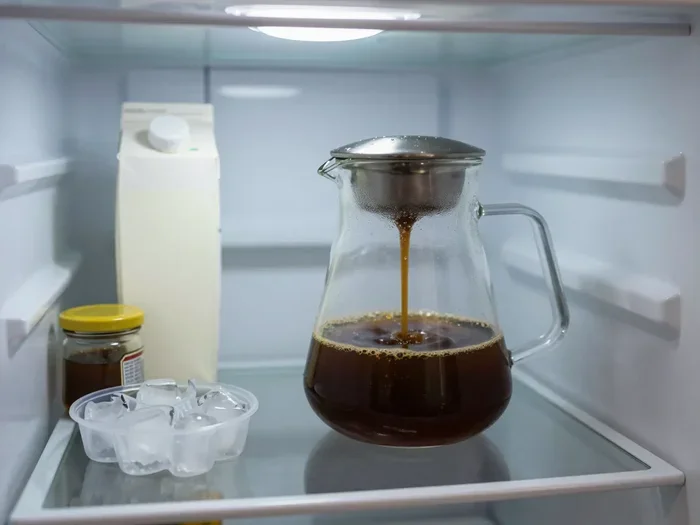
When refrigerating brewed coffee, transfer it to an airtight container. A sealed carafe or a glass jar with a tight lid works perfectly. This prevents the coffee from absorbing odors from other foods in the fridge. It also reduces the rate of oxidation significantly.
When You Can Skip the Fridge
You do not need to refrigerate plain black coffee if you plan to drink it within a few hours. If you brew a fresh pot every morning and finish it by midday, the counter is fine. Just cover it with a lid to slow down flavor loss.
Many coffee drinkers prefer the taste of coffee that has cooled naturally at room temperature. Some even argue that certain single-origin coffees taste better slightly cooled. So skipping the fridge is not always a bad choice.
Best Containers for Storing Brewed Coffee
Where you store brewed coffee matters almost as much as whether you refrigerate it. The right container preserves flavor and keeps your coffee tasting fresh.
Airtight Glass Containers
Glass is the best material for storing brewed coffee. It does not absorb flavors or chemicals. It does not stain easily. And it is non-reactive, meaning it will not alter the taste of your coffee over time.
Look for glass containers with airtight seals. A rubber gasket or silicone lid creates a tight closure that limits air exposure. This simple step can extend the freshness of your brew by several hours.
Insulated Thermal Carafes
If you want to keep coffee hot without a burner, an insulated thermal carafe is the best option. These carafes maintain temperature for hours without continuing to cook the coffee. Since heat accelerates flavor degradation, a thermal carafe preserves taste better than a hot plate.
Many people who own machines from brands like Cuisinart wonder who makes Cuisinart coffee makers and whether their carafes are suitable for storage. The good news is that most thermal carafes from quality brands work well for both keeping coffee hot and storing it temporarily.
Containers to Avoid
Not all storage options are equal. Avoid these common mistakes:
- Plastic containers without lids. They let air in and absorb coffee oils.
- Metal containers that are not stainless steel. Reactive metals can alter the flavor.
- Open cups or mugs. They offer zero protection against oxidation.
- Containers that previously held strong-smelling foods. Coffee absorbs odors easily.
Can You Reheat Refrigerated Brewed Coffee?
Yes, you can reheat coffee that has been stored in the refrigerator. But the method you use affects the final taste significantly.
Best Ways to Reheat
Microwaving is the most common method, but it is not the best. Microwaves heat coffee unevenly, creating hot spots that can scorch the flavor. If you must use a microwave, heat in short 15-second intervals and stir between each one.
The better option is to reheat on the stovetop over low heat. This warms the coffee gently and evenly. You can also pour refrigerated coffee over ice to make iced coffee, which actually tastes quite refreshing and avoids the reheating issue entirely.
How Reheating Affects Flavor
Reheated coffee will never taste exactly like fresh coffee. The reheating process accelerates oxidation even further. Aromatic compounds that survived refrigeration begin to break down again when heated. Expect a slightly flatter, more muted flavor profile.
Adding a small amount of fresh coffee to reheated coffee can help restore some brightness. Some baristas recommend this trick for office settings where batch brewing is common.
Cold Brew vs. Hot Brewed Coffee Storage
Cold brew coffee has different storage rules than hot brewed coffee. Understanding these differences helps you get the most out of each type.
Cold Brew Concentrate Shelf Life
Cold brew concentrate, when stored in the refrigerator, can last up to 7 to 10 days. The cold extraction process produces a more stable concentrate with fewer volatile compounds that degrade quickly. This makes cold brew a great option for meal prep and batch brewing.
Tips for storing cold brew concentrate:
- Keep it in a sealed glass jar in the refrigerator.
- Dilute with water or milk only when you are ready to drink.
- Use within two weeks for the best flavor.
Hot Brewed Coffee Stored Cold
You can also refrigerate hot brewed coffee. In fact, cooling it quickly and storing it cold is one of the best ways to preserve flavor. Let the coffee cool to room temperature first, then transfer it to the fridge. Never put a hot pot directly into the refrigerator, as it raises the internal temperature and affects other foods.
Refrigerated hot-brewed coffee keeps well for 3 to 4 days in an airtight container. After that, the flavor declines noticeably even though it remains safe to drink.
Common Mistakes People Make When Storing Brewed Coffee
Even the best coffee lovers make storage mistakes. Here are the most common ones and how to avoid them.
Leaving Coffee on the Warm Plate
Coffee makers with warming plates are convenient but damaging. Leaving brewed coffee on a hot plate for more than 30 minutes causes over-extraction and a burnt, bitter taste. If you are not going to drink it right away, transfer it to a thermal carafe or the fridge.
Using the Original Pot Without a Lid
Many coffee pots come with lids that do not seal tightly. Even a small gap allows air to circulate and speeds up oxidation. Always use a lid, or better yet, pour the coffee into a proper storage container.
Ignoring the Milk Factor
The single biggest mistake is forgetting that milk changes everything. People often leave a creamer cup sitting on the counter all day, assuming it is fine. Creamer, especially dairy-based creamer, spoils quickly. Always add creamer right before drinking, not before storing.
Storing Coffee Near Strong-Smelling Foods
Coffee is a sponge for odors. Storing it near onions, garlic, or leftover fish in the fridge will transfer those flavors into your coffee. Always keep coffee in a sealed container, especially in the refrigerator.
Quick Tips for Perfect Brewed Coffee Storage
Follow these simple tips to keep your brewed coffee fresh and delicious every time:
- Brew only what you will drink. The best way to avoid storage issues is to make a smaller batch.
- Use an airtight glass container. This is the gold standard for coffee storage.
- Refrigerate milky coffee immediately. Do not let dairy sit out for more than two hours.
- Label your containers with the date and time you brewed the coffee.
- Drink refrigerated coffee within 3 to 4 days for the best flavor.
- Freeze coffee ice cubes to chill iced coffee without diluting it.
- Clean your coffee maker regularly to ensure every fresh brew tastes its best.
Final Thoughts
So, does brewed coffee need to be refrigerated? The honest answer is: not always, but often it should be. Plain black coffee can safely sit out for a day, though it will taste better if consumed sooner. Coffee with milk must be refrigerated within two hours. And if you want to enjoy your brew at peak flavor for days, the fridge is your best friend.
Proper storage is one of the simplest ways to improve your coffee experience. It costs nothing and takes just a few extra seconds. Whether you are a casual coffee drinker or someone who brews multiple pots a day, these storage tips will help you waste less and enjoy more.
Next time you find yourself with leftover coffee, you will know exactly what to do. Trust your senses, follow the two-hour rule for dairy, and invest in a good airtight container. Your morning cup will thank you for it.
Frequently Asked Questions
Can I drink brewed coffee that sat out overnight?
If the coffee is plain black and has been covered, it is generally safe to drink after sitting out overnight. The flavor will be degraded, but it will not make you sick. However, if the coffee contains milk or cream, do not drink it after being left out overnight.
How can I tell if brewed coffee has gone bad?
Trust your senses. Spoiled coffee may develop a sour or rancid smell. Visible mold is a clear sign to discard it. Milk-based coffee that has curdled or separated should be thrown away immediately. When in doubt, it is safer to pour it out.
Is it safe to drink refrigerated coffee that is a week old?
Refrigerated plain black coffee can technically be consumed after a week, but the flavor will be significantly degraded. For milk-based coffee, do not exceed four days in the refrigerator. Always check for off smells or changes in texture before drinking.
Does freezing brewed coffee ruin the flavor?
Freezing brewed coffee does alter the flavor somewhat due to ice crystal formation and oxidation. However, using frozen coffee cubes to chill cold brew or iced coffee is a practical way to reduce waste without significantly impacting taste.
What is the best way to store leftover brewed coffee?
The best method is to pour the coffee into an airtight glass container and refrigerate it. This slows oxidation, prevents odor absorption, and keeps the coffee as fresh as possible for up to four days.
Can I put hot coffee directly into the fridge?
It is not recommended to put hot coffee directly into the refrigerator. The heat raises the internal temperature of the fridge, which can affect other stored foods. Let the coffee cool to room temperature first, then transfer it to the fridge for storage.