How to Choose the Best Whole Bean Coffee For French Press
Choosing the right whole bean coffee for French press makes a huge difference in flavor, aroma, and overall brewing experience. The best beans for French press are coarsely ground, freshly roasted, and selected based on your taste preferences. This guide covers everything from roast levels and bean origins to grind size and brewing tips so you can enjoy rich, full-bodied coffee every morning.
There is something truly special about a morning cup of whole bean coffee for French press. The rich, full-bodied flavor and the satisfying ritual of pressing your own brew make French press coffee a favorite among enthusiasts. But here is the thing: the quality of your cup depends heavily on the beans you choose. Not all coffee beans are created equal when it comes to immersion brewing.
If you have ever wondered why your French press coffee tastes bitter, weak, or just plain off, the answer might be in the beans. Whole bean coffee for French press needs to meet specific criteria. From grind size to roast level, every detail counts. This guide will walk you through everything you need to know to pick the perfect beans for your French press.
Whether you are a coffee beginner or a seasoned brewer, this article has something for you. We will cover roast types, bean origins, grind sizes, and practical tips that will transform your daily coffee routine. Let us dive in and find the best beans for your French press.
Key Takeaways
- Coarse Grind is Essential: French press requires a coarse, even grind to prevent over-extraction and grit in your cup.
- Freshness Matters: Always use freshly roasted whole beans and grind them just before brewing for the best flavor.
- Roast Level Affects Taste: Medium and dark roasts tend to work best for French press, delivering bold and rich flavors.
- Bean Origin Shapes Flavor: Single-origin beans from regions like Ethiopia, Colombia, and Brazil offer unique tasting notes.
- Invest in a Burr Grinder: A quality burr grinder ensures consistent coarse grounds for optimal extraction.
- Brewing Temperature is Key: Water between 195°F and 205°F produces the best results for French press coffee.
- Experiment and Enjoy: Try different beans, ratios, and steeping times to find your perfect cup.
📑 Table of Contents
- Why Whole Bean Coffee Matters for French Press
- Understanding Roast Levels for French Press
- Choosing the Right Bean Origin
- The Perfect Grind Size for French Press
- Brewing Tips for the Best French Press Coffee
- Common Mistakes to Avoid
- Expert Insights on Bean Selection
- How to Store Your Whole Beans Properly
- Top Bean Recommendations for French Press
- Conclusion
Why Whole Bean Coffee Matters for French Press
Using whole beans instead of pre-ground coffee is one of the most impactful changes you can make. Whole beans retain their natural oils and aromatic compounds much longer. Once you grind coffee, those delicate flavors start to fade within minutes. For French press brewing, this freshness is absolutely critical.
French press coffee relies on immersion brewing. The grounds sit in hot water for several minutes, extracting flavors slowly and evenly. Pre-ground coffee often has inconsistent particle sizes, which leads to uneven extraction. Some grounds over-extract and turn bitter, while others under-extract and taste sour. Whole beans ground just before brewing solve this problem entirely.
Think of it this way. When you place a turkey in the oven, you want even heat distribution for the best results. The same principle applies to coffee. Consistent grind size means consistent extraction, and consistent extraction means a balanced, delicious cup every time.
The Role of Coffee Freshness
Freshness is the single biggest factor in coffee flavor. Beans that were roasted two weeks ago will taste noticeably different from beans roasted yesterday. Look for a roast date on the bag, not just an expiration date. The ideal window for French press coffee is within two to four weeks of the roast date.
Storing your beans properly also matters. Keep them in an airtight container away from light, heat, and moisture. Do not store them in the freezer, as moisture and odors can damage the beans. A cool, dark pantry works perfectly for most coffee drinkers.
Understanding Roast Levels for French Press
The roast level of your beans has a direct impact on the flavor profile of your French press coffee. Light, medium, and dark roasts each bring something different to the cup. Understanding these differences helps you choose beans that match your personal taste.
Light Roast Beans
Light roast beans are roasted for a shorter time, preserving more of the original characteristics of the bean. You will notice bright, fruity, and floral flavors in a light roast. These coffees tend to have higher acidity and a lighter body.
Light roasts can work well in a French press, but they require careful attention to brewing time and temperature. Because the beans are denser, they need slightly longer extraction. However, if you over-extract, the acidity can become overwhelming. If you enjoy complex, tea-like coffee, light roast whole beans are worth exploring.
Medium Roast Beans
Medium roast strikes a beautiful balance. The beans develop more sweetness and body while still retaining some of the origin flavors. You will taste notes of caramel, chocolate, and nuts in a well-made medium roast French press coffee.
For most people, medium roast is the sweet spot for French press brewing. It extracts evenly, produces a smooth and satisfying cup, and pairs well with a wide range of bean origins. If you are unsure where to start, a medium roast is a safe and delicious choice.
Dark Roast Beans
Dark roast beans are roasted longer, which brings out bold, smoky, and bittersweet flavors. The original origin characteristics take a back seat to the roast itself. You will taste notes of dark chocolate, toasted caramel, and sometimes even a hint of smokiness.
Dark roast is a classic choice for French press lovers who want a strong, robust cup. The longer roast breaks down the bean structure, making extraction easier. However, be careful not to over-brew, as dark roasts can turn bitter quickly. Keep your steeping time to around four minutes for the best results.
Choosing the Right Bean Origin
Just like wine, coffee has a sense of place. The region where coffee is grown affects its flavor, aroma, and body. This concept is called terroir, and it plays a huge role in how your French press coffee will taste.
African Beans
Coffee from Ethiopia and Kenya is famous for its bright, fruity, and floral flavors. Ethiopian beans often taste like blueberries and strawberries, while Kenyan beans have a wine-like acidity. These coffees are exciting and complex, making them a favorite for French press brewing.
If you enjoy a lively, vibrant cup of coffee, try a single-origin Ethiopian whole bean. The coarser grind of the French press brings out the fruity notes beautifully.
South American Beans
Colombian and Brazilian coffees are the backbone of the specialty coffee world. They tend to have nutty, chocolatey, and caramel-like flavors with a smooth body. These beans are incredibly versatile and work well in almost any brewing method.
For a classic, comforting French press experience, a Colombian or Brazilian roast is hard to beat. The flavors are familiar and satisfying, making them a great everyday choice.
Asian and Pacific Beans
Coffee from Sumatra, Papua New Guinea, and Vietnam often has earthy, spicy, and herbal flavors. These beans have a heavy body and low acidity, which makes them excellent for immersion brewing. The French press brings out the rich, syrupy texture that these beans are known for.
If you like your coffee bold and earthy, give a Sumatran whole bean a try. It is a completely different experience from the fruity African beans or the nutty South American varieties.
The Perfect Grind Size for French Press
Grind size is arguably the most important variable in French press brewing. Too fine, and your coffee will be gritty and over-extracted. Too coarse, and it will taste weak and under-extracted. The target is a coarse, even grind that resembles sea salt or breadcrumbs.
When you compare grinding coffee to seasoning a prime rib roast, precision matters in both cases. Just as the right seasoning brings out the best in a roast, the right grind size brings out the best in your coffee. Inconsistent grounds lead to inconsistent flavors, and nobody wants that.
Why Burr Grinders Are Essential
A burr grinder crushes beans between two surfaces, creating a uniform particle size. This consistency is what French press coffee needs. Blade grinders, on the other hand, chop beans randomly, producing a mix of fine dust and large chunks. The result is a cup that is simultaneously bitter and weak.
Investing in a good burr grinder is one of the best decisions you can make for your coffee. Even an affordable burr grinder will produce far better grounds than a high-end blade grinder. Your French press will thank you.
Adjusting Grind Size for Your Taste
Not everyone likes their French press coffee the same way. If your coffee tastes bitter or harsh, try grinding slightly coarser. If it tastes thin or sour, grind a touch finer. Small adjustments make a big difference, so do not be afraid to experiment.
Keep in mind that the water temperature and steeping time also interact with grind size. A coarser grind needs slightly hotter water or a longer steep. A finer grind works well with slightly cooler water or a shorter steep. Think of it as a balancing act, much like monitoring the internal temperature of pork tenderloin to get it just right.
Brewing Tips for the Best French Press Coffee
Choosing great beans is only half the equation. How you brew them matters just as much. These tips will help you get the most out of your whole bean coffee for French press.
Start with Clean, Filtered Water
Coffee is about 98% water, so the quality of your water directly affects the taste. Use filtered water that is free of chlorine and off-flavors. Avoid distilled water, as it lacks the minerals that help extract flavor from the grounds.
Heat Your Water to the Right Temperature
The ideal brewing temperature for French press coffee is between 195°F and 205°F. Boiling water (212°F) can scorch the grounds and create bitter flavors. If you do not have a thermometer, bring your water to a boil and then let it sit for 30 to 45 seconds before pouring.
Use the Right Coffee-to-Water Ratio
A good starting ratio is 1:15, which means 1 gram of coffee for every 15 grams of water. For a standard 8-cup French press, this translates to about 50 to 60 grams of coffee and 750 to 900 ml of water. Adjust to taste from there.
Steep for the Right Amount of Time
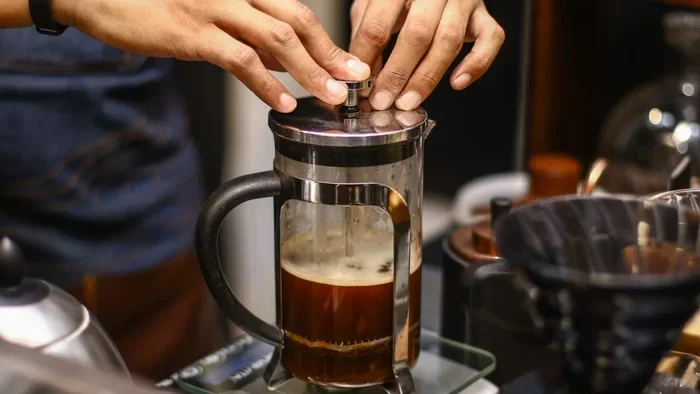
Let the coffee steep for four minutes before pressing the plunger down slowly. If you press too fast, you will agitate the grounds and create a muddy cup. If you steep too long, the coffee will become over-extracted and bitter.
Pour and Enjoy Immediately
French press coffee continues to extract even after you press it. Pour all of the coffee into your cup right away. Leaving it in the press will make it increasingly bitter over time.
Common Mistakes to Avoid
Even experienced coffee drinkers make mistakes. Here are some common errors that can ruin your French press experience.
- Using pre-ground coffee: Pre-ground coffee loses flavor fast and produces inconsistent results in a French press.
- Grinding too fine: Fine grounds slip through the metal filter and create a gritty, unpleasant texture.
- Using boiling water: Water that is too hot scorches the grounds and brings out harsh, bitter flavors.
- Steeping too long: Over-steeping leads to over-extraction, which makes the coffee taste bitter and hollow.
- Skipping the bloom: Wetting the grounds for 30 seconds before adding the rest of the water helps release trapped CO2 and improves extraction.
- Not cleaning the press: Old coffee oils build up in the French press and go rancid, affecting the taste of every new brew.
Expert Insights on Bean Selection
Professional baristas and coffee roasters agree that the best beans for French press share a few key characteristics. They are freshly roasted, coarsely ground, and selected for their body and flavor complexity. Single-origin beans are often preferred because they allow you to taste the unique qualities of a specific region.
Many experts recommend trying a medium-dark roast for French press brewing. This roast level offers the perfect balance of body, sweetness, and origin character. It extracts cleanly in the immersion method and produces a cup that is rich without being overwhelming.
Another expert tip is to buy beans in small quantities and consume them within three to four weeks of roasting. This ensures maximum freshness and flavor. Look for roasters who print the roast date on the bag and use quality packaging that lets out CO2 while keeping air out.
How to Store Your Whole Beans Properly
Proper storage keeps your beans fresh longer and protects their flavor. Here is what you need to know.
- Use an airtight container: Oxygen is the enemy of fresh coffee. A sealed container with a one-way valve is ideal.
- Keep it cool and dark: Heat and light accelerate the degradation of coffee flavors. Store your beans in a pantry, not on the counter near the stove.
- Do not refrigerate or freeze: Moisture and absorbing odors from other foods can damage the beans. A cool, dark cupboard is the best option.
- Buy in small batches: Purchase only as much coffee as you will use within two to three weeks for peak freshness.
Top Bean Recommendations for French Press
Not sure where to start? Here are some excellent whole bean options that work beautifully in a French press.
- Ethiopian Yirgacheffe: Bright, fruity, and floral with a tea-like body. Perfect for those who enjoy complex flavors.
- Colombian Supremo: Smooth, nutty, and caramel-sweet. A reliable everyday choice for French press lovers.
- Sumatran Mandheling: Bold, earthy, and full-bodied. Ideal for those who like their coffee strong and rich.
- Brazilian Santos: Chocolatey and low-acid with a creamy mouthfeel. Great for beginners and experts alike.
- Guatemalan Antigua: Smoky, spicy, and slightly sweet with a medium body. A versatile option for any time of day.
Each of these beans brings something unique to the table. The beauty of French press brewing is that it highlights the natural characteristics of the bean. You can truly taste the difference between a light Ethiopian roast and a dark Sumatran roast. Experiment with different origins and find your personal favorite.
Conclusion
Choosing the best whole bean coffee for French press comes down to freshness, grind size, roast level, and personal taste. Start with freshly roasted beans, grind them coarsely just before brewing, and pay attention to water temperature and steeping time. The effort you put into selecting the right beans will reward you with a richer, more satisfying cup of coffee every single morning.
Remember, there is no single “best” bean for everyone. Your perfect cup of French press coffee is the one that tastes best to you. Use this guide as a starting point, experiment with different beans and brewing variables, and enjoy the journey of discovering your ideal cup. Happy brewing!
Frequently Asked Questions
What is the best whole bean coffee for French press?
Medium to medium-dark roast whole beans work best for French press because they offer a balance of body, sweetness, and flavor complexity. Single-origin beans from Ethiopia, Colombia, and Sumatra are excellent choices. The key is to use freshly roasted beans and grind them coarsely just before brewing.
Can I use pre-ground coffee in a French press?
You can, but the flavor will be significantly worse. Pre-ground coffee loses its freshness quickly, and the inconsistent particle size leads to uneven extraction. For the best results, always buy whole beans and grind them yourself with a burr grinder set to a coarse setting.
How coarse should I grind my beans for French press?
The grind should be coarse, similar to sea salt or breadcrumbs. A coarse grind prevents over-extraction and keeps grit out of your cup. If your coffee tastes bitter, try grinding even coarser. If it tastes weak or sour, grind slightly finer.
How long should I steep French press coffee?
The standard steeping time is four minutes. Let the coffee and water sit together for four minutes, then press the plunger down slowly and steadily. Steeping longer than five minutes usually results in over-extraction and a bitter taste.
Does the water temperature matter for French press coffee?
Yes, water temperature is very important. The ideal range is 195°F to 205°F. Water that is too hot will scorch the grounds and create bitter flavors. Water that is too cool will under-extract the coffee and leave it tasting sour and weak.
How much coffee should I use for French press?
A good starting ratio is 1:15, meaning one gram of coffee for every 15 grams of water. For a standard 8-cup French press, use about 50 to 60 grams of coffee. Adjust the ratio based on your taste preference, using more coffee for a stronger brew and less for a lighter one.
=== SEO TITLE ===
How to Choose the Best Whole Bean Coffee For French Press
=== META TITLE ===
Best Whole Bean Coffee For French Press: Expert Guide
=== URL SLUG ===
how-to-choose-best-whole-bean-coffee-french-press