How Do Oven Racks Go in Oven for Perfect Cooking Results
Understanding how do oven racks go in oven is one of the simplest ways to improve your cooking results every single time. The right rack position affects heat distribution, browning, and overall cooking performance. This guide walks you through each step clearly so you can place your racks with confidence and cook like a pro.
Have you ever wondered why your cookies burn on the edges but stay raw in the middle? Or why your roast chicken comes out unevenly browned? The answer might be simpler than you think. It often comes down to one thing: how do oven racks go in oven and where you actually place them.
Getting your oven rack in the right spot is one of the easiest ways to level up your cooking. Yet so many people overlook it. They just shove the rack in wherever and hope for the best. That approach works sometimes, but it works a whole lot better when you know what you are doing.
In this guide, we will walk you through everything you need to know about oven rack placement. We will cover the different positions, when to use each one, and how to avoid the mistakes that ruin dishes. By the end, you will feel confident every time you slide a rack into your oven.
Key Takeaways
- Correct rack placement matters: Where you set your rack changes how food cooks, browns, and heats through.
- Middle rack is the default winner: For most baking and roasting tasks, the center position delivers the most even results.
- Adjust for different cooking methods: Broiling, baking, and roasting each need a different rack position for best outcomes.
- Avoid touching the oven walls: Racks should slide in and out freely without scraping against the interior.
- Check your oven manual: Every oven model has slight differences in rack placement and safe positions.
- Use oven-safe accessories only: Not all pans and trays work on every rack level safely.
- Small changes make big differences: Moving the rack just one level up or down can transform your cooking.
📑 Table of Contents
Understanding Your Oven Racks
Before we dive into placement, let us talk about what oven racks actually are and how they work. Most ovens come with two to four adjustable racks. These are the metal grids that sit inside the oven cavity. They hold your baking sheets, roasting pans, and cookware at different heights.
Each rack slides in through the sides of the oven. They rest on small metal supports or clips attached to the inner walls. The supports have small notches or grooves that let you adjust the height. This is how you control which level your food sits on.
The material of your rack matters too. Most are made from chrome-plated steel or stainless steel. These materials handle high heat well and resist rusting. Some older ovens have porcelain-coated racks, which also work but need more careful handling.
Types of Oven Racks
Not all racks are the same. Here are the common types you might find:
- Standard wire racks: These are the most common. They have a simple grid design and work for almost everything.
- Non-stick coated racks: These make cleanup easier but can scratch over time.
- Heavy-duty racks: Found in some higher-end ovens. They hold more weight without bending.
- Broiler racks: Some ovens include a special thin rack designed for the broiler position.
Knowing what type of rack you have helps you understand its limits. Always check what your oven manual says about weight capacity and safe use.
Where Should Oven Racks Be Placed
Now let us get to the heart of the matter. How do oven racks go in oven in terms of position? The answer depends on what you are cooking and which cooking method you are using.
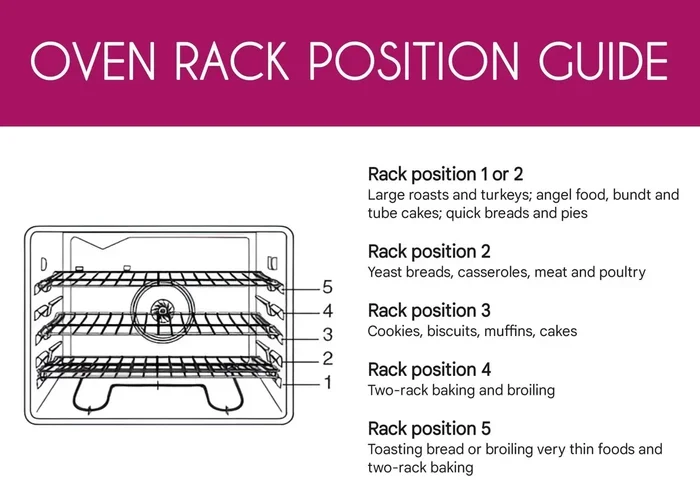
The three main positions are the lower third, the center, and the upper third of the oven. Each one creates a different heat environment. Understanding this is the key to better cooking.
The Middle Rack Position
The middle rack is the go-to spot for most cooking tasks. It sits right in the center of the oven cavity. This position allows hot air to circulate evenly around your food from all sides.
For baking cookies, cakes, casseroles, and most everyday dishes, the middle rack is your best friend. It provides balanced heat and reduces the risk of burning on the top or bottom. If you are ever unsure where to place your rack, start here.
The Lower Rack Position
Placing the rack in the lower third of the oven is ideal for tasks that need strong bottom heat. Think of pizza, artisan bread, and deep-dish pies. The lower position puts your food closer to the bottom heating element, which promotes crispiness and browning on the base.
This position also works well when you are cooking multiple trays at once. The lower rack handles direct heat better, while the upper rack catches the rising heat. This setup helps everything cook more evenly.
The Upper Rack Position
The upper third position puts your food closer to the top heating element. This is perfect for tasks that need strong top-down heat. Broiling, browning the tops of casseroles, and melting cheese all benefit from this placement.
However, you need to be careful here. Food on the upper rack can burn quickly because it is so close to the heat source. Keep a close eye on dishes in this position. Set a timer and check frequently.
Comparison: Rack Positions for Common Cooking Tasks
| Cooking Task | Best Rack Position | Why It Works |
|---|---|---|
| Baking cookies | Middle rack | Even heat prevents burning on edges |
| Roasting vegetables | Middle rack | Balanced air circulation for even browning |
| Baking bread | Lower rack | Direct bottom heat creates a crispy crust |
| Broiling steak | Upper rack or broiler pan | Strong top-down heat sears the surface |
| Baking a cake | Middle rack | Prevents doming and uneven rising |
| Pizza | Lower rack | Crispy bottom from direct heat |
| Casserole with cheese topping | Upper rack (last 5 minutes) | Browns and bubbles the top layer |
| Reheating leftovers | Middle rack | Gentle, even heat warms food through |
How to Insert and Adjust Oven Racks
Knowing how do oven racks go in oven physically is just as important as knowing where to place them. Let us walk through the process step by step.
Step-by-Step Rack Insertion
Follow these simple steps every time you adjust your racks:
- Make sure the oven is cool. Never adjust racks while the oven is hot. The metal racks can retain heat and burn your hands.
- Slide the rack out slowly. Pull it toward you gently. Do not tilt it too much or it might scrape the oven walls.
- Check the support clips. Look at the inner walls for the small metal tabs or grooves. These are where the rack rests.
- Position the rack at your desired height. Align the rack ends with the notches on the support clips.
- Slide the rack back in evenly. Push it in straight. Make sure both sides go in at the same pace.
- Test the fit. Give the rack a gentle tug. It should feel snug but still slide smoothly.
Tips for Smooth Rack Movement
Sometimes racks get stuck or feel stiff. Here are a few quick tips:
- Clean the support grooves regularly. Food spills and grease build up and cause sticking.
- Do not force a stuck rack. Look for debris or warping that might be blocking it.
- Warm up a cold oven slightly before adjusting if the racks feel tight. But never do this while cooking.
- Check for bent or damaged racks. A warped rack will not sit level and can affect cooking.
Best Rack Positions for Different Cooking Methods
Different cooking methods need different approaches to rack placement. Let us break this down by method so you always know exactly where your rack should go.
Baking
For most baking tasks, the middle rack is the clear winner. Baking works best with even heat from all around. Placing your rack in the center ensures that hot air flows around your pans uniformly.
If you are baking two trays at the same time, you can use the upper and lower thirds. Rotate the trays halfway through for even results. This is a great trick for cookies, muffins, and scones.
Roasting
Roasting meat and vegetables benefits from the middle rack for most recipes. The even heat helps proteins cook through without drying out the edges.
For a crispy roast chicken with golden skin, try the lower-middle position. The slightly lower placement encourages more bottom heat, which crisps up the skin beautifully.
Broiling
Broiling is a high-heat, top-down cooking method. Most ovens have a dedicated broiler drawer or the broiler element sits at the very top of the oven cavity.
For broiling, place the rack as close to the top element as your oven manual allows. Usually this means the highest position. The intense direct heat sears the surface quickly. Keep a close watch because broiling can go from perfect to burnt in seconds.
Convection Cooking
Convection ovens use a fan to circulate hot air. This changes the game a bit for rack placement. Because the fan pushes air around, food cooks more evenly regardless of position.
However, the middle rack is still the safest default for convection cooking. If you are using multiple trays, you can space them out more evenly than in a standard oven. The fan helps bridge the gap between rack levels.
Slow and Low Cooking
For low-temperature cooking like slow-roasting or dehydrating, the middle rack works best. The gentle, consistent heat from all sides helps food cook slowly and evenly without hot spots.
Common Mistakes with Oven Rack Placement
Even experienced cooks make mistakes with rack placement. Here are the most common ones and how to fix them.
Placing the Rack Too Close to the Heating Element
This is the number one mistake people make. Putting your rack too close to the top or bottom element causes direct radiant heat. This leads to burned tops or scorched bottoms. Always leave some space between your food and the heating element.
Overcrowding the Oven
Stuffing too many pans onto one rack blocks air circulation. This creates hot and cold spots. Your food will cook unevenly as a result. Give each pan enough room for air to flow around it.
Ignoring the Oven Manual
Every oven is a little different. Some ovens have specific rack placement guidelines. Always check your oven manual for the manufacturer’s recommendations. It can save you from damage and poor cooking results.
Forgetting to Rotate Pans
Even on the middle rack, ovens have slight hot spots. Rotating your pans halfway through cooking helps compensate. This simple habit makes a huge difference in evenness.
Using the Wrong Rack for the Job
Using the upper rack for a cake or the lower rack for broiling short ribs will give you disappointing results. Match your rack position to the cooking method. It really is that simple.
Quick Tips for Perfect Cooking Results
Here are some fast, actionable tips to help you get the most out of your oven every time.
- Preheat your oven fully. A preheated oven ensures your food starts cooking at the right temperature from the moment it goes in.
- Use an oven thermometer. Many ovens run hot or cold. A standalone thermometer gives you an accurate reading of the actual temperature inside.
- Invest in light-colored baking sheets. Dark pans absorb more heat and can cause over-browning on the bottom.
- Never cover the oven vents. Airflow is essential for even cooking. Keep racks and pans away from the vent openings.
- Let racks cool before washing. Sudden temperature changes can warp thin metal racks. Let them reach room temperature first.
- Use oven-safe cookware only. Not all pans are safe for oven use. Check the manufacturer’s label before placing them on a rack.
- Experiment with one change at a time. If your results are not perfect, move the rack one level and try again. Small adjustments lead to big improvements.
Expert Insight: The One Rack Rule
Many professional chefs follow what they call the “one rack rule.” This means using only one rack at a time for most cooking tasks. The logic is simple. One rack allows maximum air circulation, which leads to more even cooking and better browning.
Of course, there are exceptions. When you need to bake multiple batches of cookies or cook several sheet pan dinners, using two racks makes sense. In those cases, rotate and switch rack positions halfway through for the best results.
How Oven Design Affects Rack Placement
Not all ovens are built the same way. Understanding your oven’s design helps you make smarter decisions about rack placement.
Traditional ovens have heating elements at the top and bottom. These ovens rely on natural convection, where hot air rises and cooler air sinks. This creates a temperature gradient. The top of the oven is hotter, and the bottom is cooler.
Convection ovens add a fan that forces air movement. This reduces the temperature gradient significantly. In a convection oven, rack placement matters less for evenness, but the rack still affects browning and crispiness.
Some modern ovens have hidden baking elements. These are built into the oven floor instead of being exposed at the bottom. Ovens with hidden elements tend to have more even heat distribution. This makes rack placement a bit more forgiving.
Steam ovens and combination ovens introduce even more variables. These ovens use steam alongside dry heat. The rack position can affect how much steam reaches your food. Always refer to the specific oven manual for guidance in these cases.
Key Takeaways
- Correct rack placement matters: Where you set your rack changes how food cooks, browns, and heats through.
- Middle rack is the default winner: For most baking and roasting tasks, the center position delivers the most even results.
- Adjust for different cooking methods: Broiling, baking, and roasting each need a different rack position for best outcomes.
- Avoid touching the oven walls: Racks should slide in and out freely without scraping against the interior.
- Check your oven manual: Every oven model has slight differences in rack placement and safe positions.
- Use oven-safe accessories only: Not all pans and trays work on every rack level safely.
- Small changes make big differences: Moving the rack just one level up or down can transform your cooking.
Conclusion
So, how do oven racks go in oven? The answer is both physical and strategic. Physically, you slide them in through the sides, align them with the support notches, and push them in until they feel secure. Strategically, you choose the right height based on what you are cooking.
Getting oven rack placement right is one of the simplest ways to improve your cooking. It does not require any special tools or expensive equipment. It just requires a little knowledge and a bit of attention.
Start with the middle rack for everyday cooking. Move to the lower rack for crispy bread and pizza. Use the upper rack for broiling and browning. Follow these guidelines and you will notice the difference immediately.
Remember, every oven is a little different. Take the time to learn your specific oven. Read the manual. Experiment with positions. Once you understand how your oven works, you will cook with more confidence and get better results every single time.
The next time you preheat your oven, take an extra ten seconds to think about rack placement. That small habit will pay off in a big way. Your food will taste better, look better, and cook more evenly. And that is what cooking is all about.
Frequently Asked Questions
Which oven rack position is best for baking?
The middle rack is almost always the best position for baking. It allows hot air to circulate evenly around your food, which prevents burning and ensures consistent results. This applies to cakes, cookies, muffins, and most baked goods.
Can you put an oven rack in the wrong position and damage your oven?
Placing a rack incorrectly will not usually damage the oven. However, setting it too close to the heating element can cause the rack to warp over time. It can also lead to uneven cooking or burning. Always follow your oven manual for safe placement guidelines.
How many oven racks should I use at once?
For best results, use one rack at a time. This allows maximum airflow and even cooking. If you need to cook multiple items, use two racks and rotate the pans halfway through. Avoid overcrowding, which blocks heat circulation.
Is the top or bottom rack hotter in an oven?
In most traditional ovens, the top is slightly hotter because heat rises. The bottom rack tends to be a bit cooler. This is why the middle rack offers the most balanced temperature for general cooking tasks.
Should I remove oven racks when self-cleaning?
Most manufacturers recommend removing racks before a self-cleaning cycle. The extreme heat during self-cleaning can warp or discolor racks. Check your oven manual to confirm the manufacturer’s recommendation for your specific model.
How do I know if my oven rack is oven-safe?
Most standard oven racks that come with your oven are oven-safe. If you are using a third-party rack or accessory, check the product label for oven-safe temperature limits. Never place plastic, wood, or non-oven-safe materials on an oven rack.