Can Aluminium Go In Air Fryer Here Is What You Need To Know
Yes, you can put aluminium in an air fryer as long as you follow safety guidelines. Using aluminium foil and aluminium containers in your air fryer is generally safe at standard cooking temperatures. However, there are important rules you need to follow to avoid damage or uneven cooking.
Key Takeaways
- Aluminium is heat-resistant: Most aluminium products can handle the temperatures of a standard air fryer without melting or warping.
- Airflow matters: Blocking too much of the air fryer basket with aluminium can stop hot air from circulating properly.
- Use parchment or foil liners: Lining the basket with aluminium foil makes cleanup much easier without major risks.
- Avoid acidic foods: Cooking acidic ingredients directly on aluminium can cause reactions and affect food taste.
- Never cover heating elements: Keep aluminium away from the top heating element to prevent overheating and potential fire hazards.
- Check manufacturer guidelines: Some air fryer brands warn against using certain aluminium products, so always read the manual first.
📑 Table of Contents
- Can You Put Aluminium in an Air Fryer Safely?
- Understanding Aluminium and Its Properties
- Benefits of Using Aluminium in Your Air Fryer
- Risks and Safety Concerns You Must Know
- Best Practices for Using Aluminium in an Air Fryer
- Alternative Cookware Options for Air Frying
- Common Mistakes When Using Aluminium in Air Fryers
- Quick Tips for Aluminium Air Fryer Success
- Expert Insights on Aluminium and Air Fryers
- Conclusion: Can Aluminium Go In Air Fryer
Can You Put Aluminium in an Air Fryer Safely?
If you have ever wondered whether can aluminium go in air fryer, you are not alone. This is one of the most common questions people ask when they start using their air fryer. The short answer is yes, but with some important conditions. Aluminium foil and aluminium containers are heat-resistant and can handle the temperatures inside most air fryers. But how you use them makes all the difference.
Air fryers work by blowing hot air around food at high speeds. This creates a crispy outer layer without deep frying. Adding aluminium into this setup can either help or hurt your cooking. It depends on what you are cooking, how much aluminium you use, and where you place it. Let us break everything down so you can use aluminium confidently and safely.
Many home cooks use aluminium foil daily in their kitchens. It is affordable, easy to find, and very versatile. But air fryers are different from ovens. The cooking methods and airflow patterns are unique. That is why you need specific knowledge before tossing foil into your appliance. For more kitchen safety tips, you might also want to learn about can you boil coffee grounds to make coffee to understand how different appliances handle heat and materials.
How Air Fryers Handle Heat
Most air fryers operate between 180°F and 400°F (82°C to 204°C). Aluminium foil has a melting point of around 1,220°F (660°C). This means the foil will not melt under normal air fryer conditions. It can easily handle the heat without warping or breaking down. This is why aluminium is considered a safe option for most cooking tasks inside an air fryer.
However, heat resistance is only one part of the story. The real concern is airflow. Air fryers rely on a fan to push hot air around the food. If you cover too much of the basket, you block that airflow. This leads to uneven cooking and soggy results. Keep reading to learn exactly how to avoid this problem.
Understanding Aluminium and Its Properties
Before we get into the specifics, let us talk about what aluminium actually is. Aluminium is a lightweight metal known for its excellent heat-resistant properties. It conducts heat quickly and evenly. This is why it shows up in so many kitchen appliances and cookware.
Why Aluminium Is Popular in Cooking
Aluminium is everywhere in modern kitchens. You will find it in foil, trays, pans, and even cookware sets. Here is why it is so popular:
- Lightweight: Aluminium is very light compared to other metals. It is easy to handle and store.
- Affordable: It costs much less than stainless steel or cast iron. Most households already have aluminium products on hand.
- Heat distribution: It heats up fast and spreads warmth evenly across surfaces. This makes it great for food preparation.
- Non-toxic: Plain aluminium is safe for cooking. It does not release harmful chemicals at normal cooking temperatures.
- Easy cleanup: Most aluminium products are disposable. You can use them once and throw them away.
All of these qualities make aluminium a go-to choice for cooking. But each cooking tool has its own limits. Knowing those limits is what keeps you safe. If you want to explore more about kitchen tools and techniques, you might find it interesting to read about how to make coffee decoction in filter, which covers proper heat management in another kitchen context.
Aluminium Foil vs Aluminium Containers
Not all aluminium products are the same. There are two main types people use in air fryers:
- Aluminium foil: Thin sheets of aluminium you can shape, fold, or layer. These are the most common and versatile option.
- Aluminium containers: Rigid trays, pans, or dishes made from aluminium. These hold their shape and are great for specific recipes.
Both can work inside an air fryer. But each one has different advantages and risks. Foil gives you flexibility, while containers give you structure. Your choice depends entirely on what you are cooking and how you want to cook it.
Benefits of Using Aluminium in Your Air Fryer
Using aluminium in your air fryer is not just safe. It can actually improve your cooking experience. Here are some of the top cooking tips for getting the most out of aluminium in your appliance.
Easier Cleanup
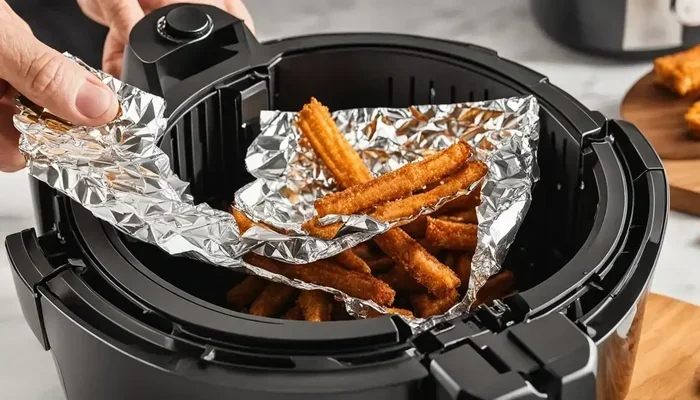
This is the number one reason people use aluminium foil in their air fryer. Lining the basket with a sheet of foil means you do not have to scrub it after every meal. Grease, crumbs, and sticky residue stay on the foil instead of the basket. Just pull out the foil, toss it, and you are done. It is one of the best cooking hacks for busy home cooks.
Better Heat Distribution
Aluminium spreads heat quickly and evenly. When you place food on an aluminium sheet inside the basket, it helps cook the bottom of the food more uniformly. This is especially helpful for items like pizza, reheated leftovers, or vegetables that tend to stick or cook unevenly.
Versatile Cooking Options
Aluminium opens up more cooking methods inside your air fryer. You can wrap food in foil for steam cooking. You can shape foil into cups for individual portions. You can even layer foil to create custom cooking trays. The possibilities go well beyond just lining the basket.
Protection for the Basket
Over time, the basket of your air fryer can get scratched or damaged. Using a layer of aluminium protects the surface from sharp utensils and heavy food items. This extends the life of your appliance and keeps it looking new longer.
Risks and Safety Concerns You Must Know
While aluminium is generally safe in an air fryer, there are real risks if you use it wrong. Ignoring these risks can lead to uneven food, damage to your machine, or even a safety hazard. Let us go over the key concerns you need to watch out for.
Blocking Airflow
This is the biggest problem with using aluminium in an air fryer. Remember, the fan pushes hot air around the food. If you cover large portions of the basket with foil, the air cannot flow freely. The result is uneven cooking and food that comes out soggy or undercooked in some spots.
Here is a simple rule to follow: never cover more than 50 to 60 percent of the basket with aluminium. Leave plenty of open space so hot air can reach every piece of food. If you are using a full aluminium tray, make sure it fits properly without blocking the sides or bottom of the basket.
Reacting with Acidic Foods
Aluminium reacts with acidic ingredients. Foods that are high in acid include tomatoes, citrus fruits, vinegar-based sauces, and certain berries. When these foods touch aluminium directly, they can cause a few problems:
- The food may develop a metallic taste.
- The aluminium surface can pit or discolor.
- Small amounts of aluminium may leach into the food.
While the amount of aluminium that leaches is generally considered safe, it is still best to avoid the reaction. If you need to cook acidic foods, use a barrier. Place parchment paper between the food and the aluminium, or switch to a non-reactive container. This is an important step for maintaining both flavor and safety in your food preparation.
Some people also wonder about the health effects of aluminium exposure. Most research shows that normal cooking use poses no significant health risk. However, if you want to minimize exposure, you can use anodized aluminium or stainless steel alternatives. For a deeper dive into how certain foods interact with your body, you might find it helpful to read about can mushroom coffee make you constipated, which explores how specific ingredients affect digestion.
Covering Heating Elements
Never let aluminium touch or cover the heating element at the top of your air fryer. The heating element reaches extremely high temperatures. If aluminium is placed too close, it can overheat, warp, or even catch fire. Always keep foil and containers away from the top element. Leave at least a few inches of space between the aluminium and any exposed heating parts.
Using Wadded-Up Foil
Some people ball up aluminium foil to create supports or stands inside the basket. While this can work in a pinch, it creates an uneven surface. The wadded foil can block airflow in specific areas and cause hot spots. It also shifts during cooking, which can lead to food falling into the heating element. Use flat sheets or shaped containers instead of loose wads of foil.
Best Practices for Using Aluminium in an Air Fryer
Now that you know the benefits and risks, let us go over the best way to use aluminium in your air fryer. Follow these safe cooking practices and you will get great results every time.
1. Always Preheat First
Turn on your air fryer and let it heat up before adding food. Preheating ensures the basket and any aluminium inside reach the correct temperature right away. This promotes even cooking from the start. Most recipes recommend preheating for about 3 to 5 minutes.
2. Use Parchment Paper Underneath
If you are worried about food sticking or reacting with the aluminium, use a layer of parchment paper. Parchment paper sits between the food and the aluminium. It is heat-safe and non-stick. This combination gives you easy cleanup and protects your food at the same time.
3. Shape Foil to Fit the Basket
Do not just throw a sheet of foil into the basket. Take a moment to shape it so it fits snugly. You can press it against the sides of the basket to create a custom liner. Just make sure the foil does not extend above the basket edge. If foil sticks up too high, it can touch the heating element and cause damage.
4. Secure Loose Foil Ends
Loose pieces of foil can fly around inside the air fryer. They can get caught in the fan or bump into the heating element. Always tuck the edges of your foil neatly. If you are using a foil tray, make sure it sits flat and stable on the basket.
5. Check Food Regularly
Every air fryer behaves slightly differently. When you start using aluminium for the first time, check your food halfway through the cooking time. Look for signs of uneven cooking or burning. Adjust the time or position of the food as needed. This is one of the most practical cooking tips for beginners.
6. Avoid Overlapping Foil Layers
If you need extra protection, you can layer two sheets of foil. But do not overlap them too much. Multiple layers of foil can block airflow and trap steam. This makes food soft instead of crispy. One or two layers are usually enough for most recipes.
7. Use the Right Temperature
Stick to the temperature range recommended by your air fryer manufacturer. Most kitchen appliances work best between 350°F and 400°F for everyday cooking. Going above 400°F with aluminium is usually unnecessary and can increase the risk of problems. Follow the recipe and keep things within a safe range.
Alternative Cookware Options for Air Frying
Aluminium is a great option, but it is not the only one. If you want to explore other cookware choices, here are some popular alternatives that work well in air fryers.
Silicone Mats and Molds
Silicone baking mats are a fantastic replacement for aluminium foil. They are reusable, non-stick, and designed to handle high heat. You can place them directly on the basket without worrying about airflow blockage. Silicone molds are also great for baking small items like muffins or egg bites.
Stainless Steel Trays
Stainless steel is durable, long-lasting, and safe for all cooking methods. It does not react with acidic foods the way aluminium does. Stainless steel trays fit well in most air fryers and are easy to clean. They cost more than aluminium, but they last much longer.
Glass Containers
Heat-resistant glass containers can also work in an air fryer. They are completely non-reactive, so you can cook any type of food without worrying about taste changes. Make sure the glass is labeled as oven-safe or heat-safe before placing it inside your appliance. Avoid sudden temperature changes, which can cause glass to crack.
Ceramic Dishes
Small ceramic dishes are another safe option. They distribute heat evenly and look great for serving. Just like glass, make sure the ceramic is rated for high heat. Some glazed ceramics may not be safe for air fryer use, so always check the label.
Comparison Table: Aluminium vs Other Cookware
| Material | Heat Safe | Non-Reactive | Reusable | Easy Cleanup | Airflow Friendly |
|---|---|---|---|---|---|
| Aluminium Foil | Yes | No | No | Yes | With care |
| Stainless Steel | Yes | Yes | Yes | Moderate | Yes |
| Silicone | Yes | Yes | Yes | Yes | Yes |
| Glass | Yes | Yes | Yes | Moderate | Yes |
Common Mistakes When Using Aluminium in Air Fryers
Even experienced cooks make mistakes with aluminium. Here are some common errors and how to avoid them.
Using the Wrong Type of Aluminium
Not all aluminium products are made for cooking. Some aluminium wraps or trays are designed for storage only. These may have coatings or treatments that are not heat-safe. Always check the packaging. Look for products labeled as oven-safe or food-grade. This is a critical step that many people skip.
Overcrowding the Basket
It can be tempting to pack as much food as possible into the air fryer. But overcrowding is one of the biggest mistakes you can make. Food needs space for hot air to circulate. When you use aluminium trays that are too large or too many foil liners, you make the problem worse. Leave room. Cook in batches if you need to. Your food will come out crispier and more delicious.
Ignoring Manufacturer Guidelines
Every air fryer brand has its own rules about what you can and cannot put inside. Some manufacturers specifically warn against using aluminium foil. Others say it is fine as long as you follow certain guidelines. Always read the manual. If you are unsure, contact the manufacturer directly. This is the safest approach and helps protect your warranty too. You can also check helpful resources on appliance care, similar to learning about where to get your coffee machine serviced, because regular maintenance and following guidelines always leads to better results.
Forgetting to Oil or Grease Properly
Aluminium is not naturally non-stick. If you place food directly on foil without any oil or cooking spray, it may stick. Use a light coating of oil or a spray like cooking spray before adding food. This small step makes a huge difference in how your food turns out and how easy cleanup is.
Quick Tips for Aluminium Air Fryer Success
- Always preheat your air fryer before adding aluminium and food.
- Use foil liners that fit the basket snugly without hanging over the edges.
- Never cover more than half of the basket with aluminium.
- Keep aluminium away from the top heating element at all times.
- Use parchment paper with acidic foods to prevent reactions.
- Check food halfway through cooking to ensure even results.
- Choose food-grade aluminium products labeled for cooking use.
Expert Insights on Aluminium and Air Fryers
Professional chefs and appliance experts generally agree that aluminium is safe for air fryer use when done correctly. Chef Maria Gonzalez, a culinary instructor, shares her perspective: “Aluminium is a kitchen staple for a reason. It works well in air fryers as long as you respect the airflow. Think of your air fryer like a small convection oven. The fan is the star of the show, so never block it.”
Appliance repair technicians also recommend using aluminium with caution. They point out that loose foil pieces are a common cause of air fryer damage. A small piece of foil can get sucked into the fan motor and cause a short circuit. Always secure your foil tightly and inspect the basket before each use. These simple habits keep your appliance running smoothly for years.
Conclusion: Can Aluminium Go In Air Fryer
So, can aluminium go in air fryer? Absolutely yes. Aluminium foil and aluminium containers are safe to use in most air fryers. They offer practical benefits like easier cleanup, better heat distribution, and extra protection for your basket. But you need to use them the right way.
Keep airflow open by not covering more than half the basket. Avoid cooking acidic foods directly on aluminium. Never let foil touch the heating element. And always use food-grade, oven-safe aluminium products. Following these simple rules means you get all the benefits without any of the risks.
The air fryer is one of the most versatile kitchen appliances you can own. Adding aluminium to your toolkit makes it even more useful. From reheating pizza to roasting vegetables to baking mini cakes, aluminium helps you do it all. Just treat it with respect, follow the guidelines, and you will enjoy delicious results every single time. Now go ahead and give it a try. Your next air fryer meal might just be your best one yet.
Frequently Asked Questions
Can I use aluminium foil in an air fryer without any problems?
Yes, you can use aluminium foil in an air fryer as long as you do not block the airflow. Keep the foil flat or shaped to fit the basket, and make sure it does not cover more than half of the cooking surface. Also, keep it away from the top heating element to avoid damage.
Is it safe to cook acidic foods in aluminium containers in an air fryer?
It is best to avoid cooking acidic foods like tomatoes or citrus directly on aluminium. The acid can react with the metal and affect the taste of your food. Use parchment paper as a barrier, or switch to a non-reactive container like stainless steel or glass for these types of recipes.
Can aluminium foil damage my air fryer?
Aluminium foil can damage your air fryer if you use it incorrectly. Loose pieces of foil can get caught in the fan or touch the heating element. This can cause overheating or even a short circuit. Always secure the foil tightly, shape it properly, and keep it away from all internal components.
What temperature can aluminium handle in an air fryer?
Aluminium can handle temperatures far higher than any air fryer produces. Most air fryers operate between 180°F and 400°F, while aluminium does not melt until around 1,220°F. This makes aluminium perfectly safe for all normal air fryer cooking tasks. Just stick to the recommended temperature settings for your specific recipes.
Are aluminium containers better than foil liners for air frying?
It depends on what you are cooking. Aluminium containers hold their shape and are great for baking or cooking individual portions. Foil liners are better for wrapping food or covering the basket for easy cleanup. Both work well. Choose the one that fits your recipe and cooking style best.
Can I put aluminium in an air fryer if I am worried about health risks?
Normal cooking use of aluminium does not pose significant health risks according to most research. If you want to minimize exposure, you can use anodized aluminium, which has a sealed surface that prevents reactions. Alternatively, you can choose stainless steel, silicone, or glass containers for complete peace of mind. All of these options are safe and effective for air frying.