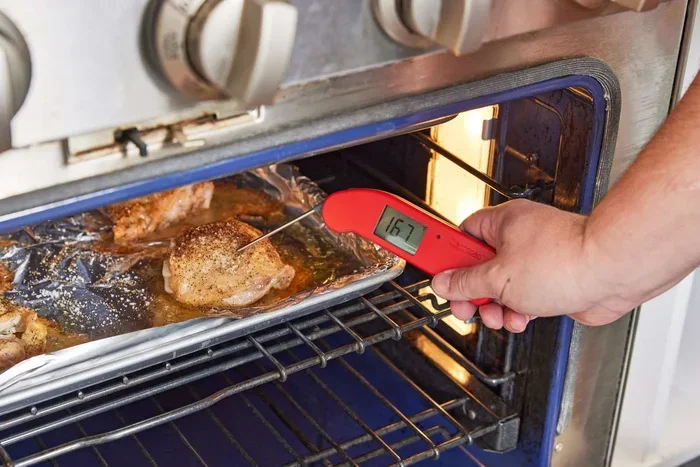
How To Use A Meat Thermometer In The Oven For Juicy Meat
Using a meat thermometer in the oven is the easiest way to cook juicy, safe, and perfectly done meat every single time. Whether you are roasting chicken, beef, or pork, a meat thermometer removes all the guesswork. This guide covers everything from choosing the right thermometer to placing it correctly and hitting the perfect internal temperature. You will learn simple steps that turn even a beginner into a confident cook.
Key Takeaways
- Always use a meat thermometer: It is the only reliable way to know your meat is safe and juicy.
- Place the probe in the thickest part: Avoid bones, fat, and gristle for an accurate reading.
- Know your target temperatures: Different meats need different internal temperatures for safety and quality.
- Let meat rest after cooking: Resting keeps juices inside and makes the meat more flavorful.
- Choose the right type of thermometer: Instant-read, dial, and wireless options each have their strengths.
- Avoid common mistakes: Not calibrating, touching bone, and opening the oven too often are top errors.
📑 Table of Contents
- Why A Meat Thermometer Is The Best Tool For Oven Cooking
- Types Of Meat Thermometers You Can Use In The Oven
- How To Place The Thermometer Correctly For Accurate Readings
- Internal Temperature Guide For Different Meats
- Common Mistakes People Make With A Meat Thermometer
- Quick Tips For Juicy Meat Every Time You Use The Oven
- Expert Insights On Oven Meat Thermometer Use
- Conclusion
Why A Meat Thermometer Is The Best Tool For Oven Cooking
Cooking meat in the oven can feel tricky. You set a timer. You check the color. You press it with your finger. But none of that tells you what is really happening inside. That is where a meat thermometer changes everything.
A food thermometer gives you a precise reading of the internal temperature. This means you know exactly when your meat is done. No more guessing. No more dry, overcooked chicken. No more wondering if the pork chop is safe to eat.
Using a meat thermometer also keeps your kitchen safe. Undercooked meat can carry harmful bacteria. A simple temperature check protects your family from foodborne illness. It is one of the easiest food safety habits you can build.
Here is the best part. Once you start using a thermometer for meat, you will never go back. Your roasts will be juicier. Your steaks will be cooked to perfection. Your chicken will always have that perfect pink center. It really is a game changer.
Meat thermometer use is not just for professionals. Home cooks at every level benefit from this simple tool. Whether you are making a weeknight dinner or a holiday roast, a good probe makes a huge difference.
Types Of Meat Thermometers You Can Use In The Oven
Dial Thermometers
A dial thermometer has a round face with a needle that shows the temperature. You can leave it in the meat while it cooks in the oven. These are affordable and easy to read. They work well for roasts and whole chickens. However, they can be slightly less accurate than digital versions.
Instant-Read Digital Thermometers
An instant read thermometer gives you a fast and precise reading in seconds. You insert the probe, wait a moment, and read the number. These are great for checking doneness near the end of cooking. You cannot leave them in the oven during the entire cook time with most models. They are compact, fast, and very popular among home cooks.
Wireless and Bluetooth Thermometers
A wireless meat thermometer lets you monitor the temperature from your phone. You place the probe in the meat, set it in the oven, and walk away. The app sends alerts when the meat hits the target cooking temperature. These are perfect for busy people who want set-it-and-forget-it convenience. They are more expensive but incredibly useful.
Oven-Safe Probe Thermometers
An oven-safe probe thermometer is built to stay in the meat for the entire cooking process. The cable connects to a digital display that sits outside the oven. These are ideal for long roasts and slow cooking. You get continuous temperature monitoring without opening the oven door.
Comparison Table
- Dial Thermometer: Leave in oven, affordable, less precise
- Instant-Read Digital: Fast reading, portable, not for full cook time
- Wireless/Bluetooth: Phone alerts, set and forget, higher cost
- Oven-Safe Probe: Continuous monitoring, great for roasts, needs external display
How To Place The Thermometer Correctly For Accurate Readings
Where you put the probe matters a lot. Wrong placement leads to false readings. And false readings mean overcooked or undercooked meat. Let me walk you through the right way to do this.
The Thickest Part Is Your Target
Always insert the probe into the thickest part of the meat. For a chicken breast, that is the center. For a roast, aim for the middle of the thickest section. This spot takes the longest to cook, so it is the best indicator of doneness.
Avoid Bones, Fat, And Gristle
Bone conducts heat differently than meat. If the probe touches a bone, you will get a false high reading. Fat and gristle also give inaccurate results. Keep the probe surrounded by solid meat for the most reliable internal temperature reading.
Insert From The Side For Thinner Cuts
For thinner cuts like pork chops or steaks, insert the probe from the side. This lets you reach the center without going through the meat completely. Think of it like going in sideways through the fattest part. This gives you a true reading without a big hole in your steak.
Do Not Let The Probe Touch The Pan
If your meat sits in a pan or dish, make sure the probe does not touch the bottom. The pan can be hotter than the meat, which throws off the oven temperature reading. Hold the probe in the center of the meat only.
Internal Temperature Guide For Different Meats
Different meats need different cooking temperatures to be safe and delicious. Here is a simple guide to help you hit the right target every time.
Chicken And Turkey
Whole chicken and turkey should reach an internal temperature of 165°F (74°C). Check the thickest part of the thigh and the center of the breast. If you are cooking a turkey roast, the same 165°F rule applies. Let the meat rest for at least 15 minutes before carving.
Beef Steak And Roast
Beef is more flexible. For a medium-rare steak, aim for 130°F to 135°F (54°C to 57°C). Medium is 135°F to 145°F (57°C to 63°C). Medium-well comes in at 145°F to 155°F (63°C to 68°C). A well-done steak reaches 160°F and above (71°C+). Remember that the temperature will rise a few degrees during resting.
Pork Chops And Roasts
The USDA now says pork is safe at 145°F (63°C) with a three-minute rest. This gives you a slightly pink and juicy center. Older recipes called for 160°F, but modern pork is safe at the lower temperature. A pork roast benefits from resting too, which lets the juices redistribute.
Lamb
Lamb follows a similar range to beef. Rare is 120°F (49°C). Medium-rare is 130°F to 135°F (54°C to 57°C). Medium is 135°F to 145°F (57°C to 63°C). Well-done lamb is 160°F and above (71°C+). Many people prefer lamb at medium-rare for the best flavor and texture.
Ground Meats
Ground beef, pork, and turkey all need to reach 160°F to 165°F (71°C to 74°C). Because ground meat has more surface area, bacteria can spread throughout. Always use a meat probe to verify the safe internal temperature for ground products.
Common Mistakes People Make With A Meat Thermometer
Not Calibrating Your Thermometer
Over time, thermometers can drift out of alignment. This means they show the wrong temperature reading even when they look fine. Test yours by dipping the probe in ice water. It should read 32°F (0°C). If it does not, adjust it or replace it. A poorly calibrated food thermometer gives you bad data.
Leaving The Probe In Too Early
Some people insert the probe at the start and forget about it. But if you are using an instant-read thermometer, you should only use it at the end of cooking. Leaving any probe in the meat for too long can give false readings. Know which type of thermometer for oven use you have and follow its instructions.
Opening The Oven Door Too Often
Every time you open the oven door, heat escapes. This affects your oven temperature and slows down cooking. Instead of relying on visual cues, trust your thermometer and keep the door closed. Use a wireless probe if you want to check without opening the door at all.
Forgetting To Rest The Meat
Resting is not optional. When you pull meat from the oven, the internal temperature continues to rise. This is called carryover cooking. If you cut into it right away, juices run out and the meat dries out. Let beef rest for 5 to 10 minutes. Let chicken rest for 15 minutes. Let roasts rest for 10 to 20 minutes.
Probing The Same Spot Twice
Moving the probe around gives you different readings because heat is not evenly distributed. Find the right spot in the thickest part and stay there. Poking around creates holes and lets juices escape, which leads to drier meat.
Quick Tips For Juicy Meat Every Time You Use The Oven
Want the best results from your meat thermometer and oven? Follow these simple tips.
- Bring meat to room temperature before cooking. Take it out of the fridge 30 minutes ahead. This helps it cook more evenly.
- Preheat your oven fully before putting the meat in. A hot oven starts the cooking process right.
- Use a roasting rack to allow hot air to circulate around the meat. This promotes even cooking time and better browning.
- Oil the probe before inserting. This makes it easier to place and reduces resistance.
- Clean your thermometer between uses with warm soapy water. Hygiene matters for food safety.
- Write down target temperatures for the meats you cook most often. Keep a small chart on your fridge for quick reference.
- Invest in a good probe. A reliable digital thermometer pays for itself in better meals and less wasted food.
Expert Insights On Oven Meat Thermometer Use
Professional chefs will tell you that a thermometer is the single most important tool in the kitchen. It takes the guesswork out of meat doneness and gives you confidence. You do not need years of experience to cook great meat. You just need a good probe and the right knowledge.
Food safety experts emphasize the importance of checking temperature in multiple spots for larger cuts. For a whole chicken, check the thigh and the breast. For a large roast, check the center and the area near the bone. Each spot can vary by a few degrees. Multiple checks ensure your food thermometer gives you a true picture.
Another expert tip is to use the thermometer as a resting check. After pulling meat from the oven, take one final reading. This confirms the safe internal temperature has been reached and gives you peace of mind before serving.
BBQ enthusiasts love wireless thermometers because they can monitor low and slow cooks from inside the house. A BBQ thermometer with a long probe and wireless display is perfect for smokers and slow ovens alike. It lets you focus on other tasks while your meat cooks to perfection.
Conclusion
Using a meat thermometer in the oven is simple, fast, and absolutely worth it. It transforms how your meat turns out. You get juicier results, safer food, and more confidence in the kitchen. From the right probe placement to knowing your target internal temperature, every step matters.
Start by picking the right type of thermometer for your needs. Dial, instant-read, wireless, or oven-safe probe, each has its place. Then learn where to insert it and what temperatures to aim for. Avoid the common mistakes that trip up most beginners. And always let your meat rest before cutting.
Once you make meat thermometer use a habit, you will wonder how you ever cooked without one. Your roasts will be juicier. Your weeknight dinners will be more consistent. Your family and guests will notice the difference. So grab your food thermometer, preheat that oven, and start cooking with confidence today.
Frequently Asked Questions
Can I leave a meat thermometer in the oven while cooking?
It depends on the type. Dial thermometers and oven-safe probe thermometers are designed to stay in the oven during cooking. Instant-read thermometers should only be inserted near the end. Wireless thermometers also stay in the oven with the probe inside the meat. Always check your thermometer’s manual for oven-safe guidelines.
What is the best placement for a meat thermometer in a roast?
Insert the probe into the thickest part of the roast, away from bone, fat, and gristle. The center of the thickest section gives the most accurate internal temperature reading. For irregularly shaped roasts, check in two or three spots to ensure even cooking temperature throughout.
How often should I calibrate my meat thermometer?
You should calibrate your meat thermometer at least once a month. Test it in ice water, which should read 32°F (0°C). If the reading is off, adjust it according to the manufacturer’s instructions or replace it. A well-calibrated food thermometer ensures safe and accurate meat doneness every time.
Does meat temperature rise after removing it from the oven?
Yes, this is called carryover cooking. The internal temperature rises by 5°F to 10°F after you pull the meat out. This is why you should remove meat a few degrees before it hits the target. During resting, the heat spreads evenly and the juices redistribute for a juicier result.
Is a wireless thermometer worth the extra cost?
If you cook large or long roasts often, a wireless meat thermometer is worth it. You can monitor oven temperature from your phone without opening the door. This keeps heat consistent and gives you set-it-and-forget-it convenience. For casual cooks, an instant-read thermometer works great for most meals.
What is the safest internal temperature for chicken in the oven?
Chicken is safe to eat when the internal temperature reaches 165°F (74°C). Check both the thickest part of the thigh and the center of the breast. Using a reliable meat probe ensures you hit the safe internal temperature without overcooking the bird. Always let the chicken rest for at least 15 minutes before serving.
=== CONCLUSION ===
A meat thermometer is one of the simplest and most effective tools you can add to your kitchen. It takes the guesswork out of oven cooking and delivers consistent, juicy results every time. From choosing the right type to placing the probe correctly and hitting the right internal temperature, this guide has covered everything you need.
Start using a thermometer for meat today and notice the difference in your cooking. Your roasts will be more flavorful. Your chicken will be perfectly moist. Your steaks will be cooked exactly how you like them. Meat thermometer use is a small habit that makes a big impact.
Share this guide with a friend who loves to cook. And remember, the best oven temperature for juicy meat is the one you measure with a reliable probe. Happy cooking.