How To Bake Baked Beans In The Oven For Best Results
How to bake baked beans in the oven delivers a rich, caramelized flavor that stovetop or slow cooker methods can’t match. This guide walks you through the simple ingredients, perfect oven temperature, and baking time for tender, sweet-and-savory beans. You’ll learn how to customize your oven-baked beans with bacon, onion, and spices, plus tips for avoiding common mistakes.
There is something deeply satisfying about a pot of oven-baked beans bubbling away in the kitchen. The gentle heat wraps around the beans, thickening the sauce into a glossy, sweet-and-savory glaze that no stovetop pot can quite replicate. If you have ever wondered how to bake baked beans in the oven for the best results, you are in the right place.
This method turns humble canned beans into a hearty homemade baked beans dish that works as a side, a main, or a crowd-pleasing potluck centerpiece. The process is simple, the ingredients are few, and the flavor is incredible. I will walk you through every step, from choosing the right pan to nailing the perfect baking time. You will also learn quick tips, common mistakes, and ways to customize your beans to suit any taste.
Whether you are cooking for a family dinner or a backyard barbecue, oven-baked beans deliver comfort in every bite. Let us get started with the basics of why the oven is the best place for this classic dish.
Key Takeaways
- Oven baking transforms canned beans: The dry heat creates a thick, glossy sauce and smoky depth.
- Low and slow is the secret: Baking at 325°F for 2-3 hours keeps beans tender.
- You only need a few pantry staples: Canned beans, molasses, ketchup, brown sugar, and bacon.
- Customize freely: Add mustard, garlic, onion, or jalapeños for extra flavor.
- Avoid common pitfalls: Don’t skip the parboiling step and don’t over-bake.
- Make-ahead friendly: Oven-baked beans taste even better the next day and reheat beautifully.
📑 Table of Contents
- Why Baking Baked Beans In The Oven Is A Game Changer
- Ingredients You’ll Need For Perfect Oven Baked Beans
- How To Bake Baked Beans In The Oven: Step-by-Step
- Customizing Your Baked Beans With Flavors And Add-ins
- Common Mistakes To Avoid When Baking Beans
- Serving And Storing Your Oven-Baked Beans
- Conclusion
Why Baking Baked Beans In The Oven Is A Game Changer
You might be used to simmering beans on the stove or using a slow cooker. Both methods work, but the oven offers a hands-off, even heat that produces a unique texture. The dry, surrounding warmth caramelizes the sugars in the sauce, creating a rich crust on the beans while keeping the inside tender. This is not just another baked beans recipe; it is a flavor upgrade.
Oven-Baked Beans vs. Stovetop Beans
Stovetop beans require constant stirring and monitoring. The heat is direct and can cause the sauce to stick or burn at the bottom. Oven-baked beans, on the other hand, sit in a covered dish surrounded by gentle heat. The sauce reduces slowly, thickening naturally without much effort. You can set a timer and forget about it for a couple of hours.
The Benefits of Slow Oven Baking
Baking beans in the oven allows the flavors to meld deeply. The molasses, brown sugar, and tomato base have time to penetrate each bean. This slow process also breaks down the starches in the beans, giving the sauce a velvety body. The result is a classic baked beans dish with a depth of flavor that feels like it simmered all day.
| Method | Hands-On Time | Texture | Flavor Depth |
|---|---|---|---|
| Oven-Baked Beans | 15 minutes prep | Tender, glazed, slightly thickened | Deep, caramelized, smoky |
| Stovetop Simmer | 45+ minutes stirring | Soft, sauce can be thin | Good, but less layered |
| Slow Cooker | 10 minutes prep | Very soft, sometimes mushy | Mellow, even |
As you can see, the oven strikes a perfect balance between ease and flavor. It is the ideal method for baked beans in oven that truly shine.
Ingredients You’ll Need For Perfect Oven Baked Beans
Great homemade baked beans start with a handful of simple ingredients. You do not need a long grocery list. Most of what you need is probably already in your pantry. The key is using quality pantry staples and a few fresh aromatics.
The Base: Canned Beans and Sweeteners
Start with two cans of white beans, such as navy beans or great northern beans. You can also use pork and beans if you want a ready-made base with a slightly different texture. For the sweet part, you will need molasses, brown sugar, and ketchup. These three create the classic baked beans flavor profile. The molasses adds a rich, dark sweetness, while the brown sugar gives a subtle caramel note. The ketchup provides tang and tomato depth.
- 2 cans (15 oz each) white beans, drained and rinsed
- 1/4 cup molasses (or substitute with dark corn syrup)
- 1/4 cup brown sugar, packed
- 1/4 cup ketchup (or tomato paste for a thicker sauce)
Savory Add-Ins and Spices
The savory backbone of any baked beans recipe comes from mustard, onion, and garlic. Yellow mustard adds a sharp bite that balances the sweetness. A diced onion and minced garlic bring aroma and depth. Salt and black pepper season everything. If you like a smoky touch, add a dash of smoked paprika or a splash of Worcestershire sauce. These small additions elevate the beans from simple to spectacular.
- 2 tablespoons yellow mustard
- 1 medium onion, finely diced
- 2 cloves garlic, minced
- 1 teaspoon salt (adjust to taste)
- 1/2 teaspoon black pepper
- 1/2 teaspoon smoked paprika (optional)
- 1 tablespoon Worcestershire sauce (optional)
You can also add a splash of apple cider vinegar at the end to brighten the flavors. This little trick keeps the beans from tasting too heavy.
How To Bake Baked Beans In The Oven: Step-by-Step
Now that you have your ingredients ready, it is time to learn how to bake baked beans in the oven like a pro. The process is straightforward, but a few small details make all the difference. Follow these steps for perfectly tender, flavorful beans every single time.
Preparing the Beans
First, preheat your oven to 325°F. This lower temperature is the key to even cooking. While the oven warms, drain and rinse the canned beans under cold water. This removes excess sodium and the starchy liquid that can make the sauce cloudy. Pat the beans dry gently with a paper towel if needed, though they will release moisture during baking.
Next, dice your onion and mince the garlic. If you are using bacon, cook it in a skillet until crispy, then crumble it. Save a tablespoon of the bacon fat for the sauce. This adds a smoky richness that is hard to beat.
Mixing the Sauce
In a large mixing bowl, combine the molasses, brown sugar, ketchup, mustard, and Worcestershire sauce if using. Whisk everything together until smooth. The sauce should be pourable but slightly thick. This is your flavor base, so taste it now. It should taste sweet, tangy, and a little salty. Adjust the brown sugar or molasses to your preference.
Add the drained beans, diced onion, garlic, and cooked bacon to the sauce. Stir gently until every bean is coated. This is the moment where the magic begins. The beans are now ready for their oven bath.
Baking Time and Temperature
Transfer the bean mixture into a baking dish or a deep casserole pan. A 9×13-inch dish works perfectly for two cans of beans. Stir everything together in the dish so the sauce is evenly distributed. Cover the dish tightly with aluminum foil. The foil traps steam, which helps the beans cook gently and absorb the sauce.
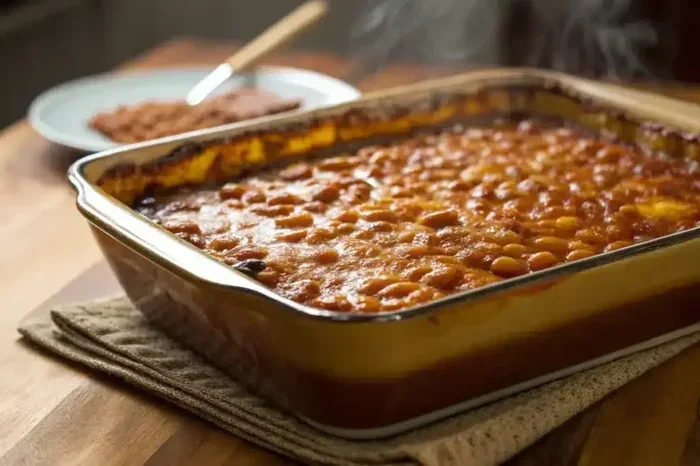
Place the covered dish in the preheated oven. Bake for 2 hours. After 2 hours, remove the foil and stir the beans carefully. The sauce should have thickened and the beans should be tender. Return the uncovered dish to the oven and bake for an additional 30 to 45 minutes. This uncovered time allows the top to caramelize and develop a beautiful, glossy finish.
Your oven-baked beans are done when the sauce is thick and coats the back of a spoon. The beans should be plump and creamy inside. Let them rest for 10 minutes before serving. This resting time allows the flavors to settle and the sauce to set.
Quick Tips for Perfect Oven-Baked Beans
- Use a glass or ceramic baking dish. These materials distribute heat evenly and help the sauce caramelize on top.
- Do not rush the process. Low and slow baking is the secret to tender beans. Higher temperatures can dry them out.
- Stir only once halfway. Stirring too often can break the beans and make the sauce thin.
- Add a splash of bean liquid. If the sauce looks too thick before the final bake, stir in a tablespoon or two of the reserved bean water.
Customizing Your Baked Beans With Flavors And Add-ins
One of the best things about making oven-baked beans is how easy they are to customize. The base recipe is a canvas, and you can add your favorite ingredients to create a unique baked beans recipe that suits your family. Here are some popular variations to try.
Meat Lovers Additions
Bacon is the classic add-in, but you can mix and match meats. Crumbled sausage, diced ham, or even pulled pork all work wonderfully. Brown the meat first and add it to the sauce along with the beans. The meat juices infuse the beans with extra savory depth. For a smoky twist, add a few drops of liquid smoke. This gives the beans a barbecue-like flavor without a grill.
- Bacon and onion: The traditional pairing. Cook the bacon until crispy, then sauté the onion in the bacon fat.
- Sausage and bell pepper: Add diced bell peppers for a sweet, crunchy contrast.
- Beef chunks: Use small cubes of beef stew meat. Brown them first for a rich, hearty bean dish.
Vegetarian and Vegan Twists
You do not need meat to enjoy delicious oven-baked beans. For a vegetarian version, skip the bacon and add extra vegetables. Diced mushrooms, chopped celery, and roasted red peppers bring great texture and flavor. Use vegetable broth instead of water to deglaze the pan, and add a splash of soy sauce or tamari for umami. For a vegan version, make sure your ketchup and Worcestershire sauce are vegan-friendly, and use maple syrup instead of honey if needed.
- Smoky vegan beans: Add smoked paprika and a touch of chipotle powder for a spicy kick.
- Sweet and tangy: Stir in a tablespoon of apple cider vinegar and a dash of hot sauce at the end.
- Buffalo-style beans: Mix in a few tablespoons of hot sauce and a sprinkle of blue cheese crumbles before the final bake.
Spicy and Regional Variations
Baked beans vary across regions and cultures. For a Southern twist, add a spoonful of sorghum syrup and a pinch of cayenne pepper. For a British-style pork and beans adaptation, use baked beans sauce concentrate and a touch of tomato paste. You can also experiment with different beans. Cannellini beans or great northern beans hold their shape well, while cranberry beans add a beautiful speckled look and creamy texture.
Common Mistakes To Avoid When Baking Beans
Even simple recipes can go wrong if you overlook small details. Knowing the common pitfalls helps you avoid them and ensures your oven-baked beans turn out perfectly every time.
Overbaking and Texture Issues
The biggest mistake is overbaking. Beans can go from perfectly tender to mushy and dry if left too long. The sauce can also reduce too much and turn thick and sticky. Stick to the recommended baking time, and check the beans after 2 hours. If the sauce looks thick but the beans still have a slight bite, they are done. The residual heat will continue to cook them as they rest.
Another texture issue is using beans that were not drained well. Excess liquid makes the sauce watery and prevents caramelization. Always drain and rinse your canned beans thoroughly. If you are using dried beans, make sure they are fully cooked before baking. Raw dried beans will not soften properly in the oven.
Skipping the Parboil (for Dried Beans)
If you are using dried beans instead of canned, do not skip the parboiling step. Dried beans need to be soaked and partially cooked before they go into the oven. Baking raw dried beans at a low temperature for hours may not fully cook them, leaving a hard center that is unpleasant to bite into. Always simmer dried beans on the stovetop until they are just tender, then transfer them to the baking dish with the sauce.
Not Tasting the Sauce
The sauce is the soul of your baked beans recipe. Before you pour it over the beans, taste it. The flavors should be bold and balanced. If it tastes too sweet, add a splash of vinegar or a pinch of salt. If it is too tangy, stir in a little more brown sugar. This small step makes a huge difference in the final dish.
Serving And Storing Your Oven-Baked Beans
Oven-baked beans are a versatile dish that works in many settings. Knowing how to serve and store them helps you enjoy them to the fullest.
Best Side Dishes to Pair With Beans
Homemade baked beans are a staple at barbecues and potlucks. They pair beautifully with grilled meats, cornbread, coleslaw, and potato salad. For a cozy weeknight dinner, serve them alongside roasted chicken and steamed green beans. You can also use them as a topping for baked potatoes or as a filling for a bean casserole.
- Grilled sausages and burgers: The sweet beans complement the smoky meat perfectly.
- Cornbread: A classic combination that feels like comfort food at its finest.
- Roasted vegetables: Asparagus, Brussels sprouts, or carrots add a fresh contrast.
How to Store and Reheat
Oven-baked beans taste even better the next day. The flavors have time to meld and deepen. Let the beans cool completely, then transfer them to an airtight container. They will keep in the refrigerator for up to 5 days. To reheat, place the beans in a baking dish, cover with foil, and warm in a 325°F oven for about 20 minutes. You can also reheat them in a saucepan on the stovetop over low heat, stirring occasionally. Add a splash of water or broth if the sauce has thickened too much.
You can also freeze oven-baked beans for up to 3 months. Portion them into freezer-safe containers, leaving some space for expansion. Thaw overnight in the refrigerator and reheat in the oven or microwave. The texture may soften slightly, but the flavor remains excellent.
Expert Insights on Oven-Baked Beans
According to culinary experts, the secret to outstanding baked beans in oven is patience. The long, slow baking allows the beans to absorb the sauce fully. Chef and food writer Michael Ruhlman often emphasizes that comfort foods like baked beans reward gentle cooking. Do not be tempted to raise the oven temperature to speed things up. The low heat is what creates that signature creamy texture and glossy sauce that makes oven-baked beans so irresistible.
Another expert tip is to add a small piece of dried chili or a bay leaf during baking. Remove it before serving, but it imparts a subtle warmth that enhances the overall flavor profile. These small touches turn a simple bean dish into a memorable meal.
Conclusion
How to bake baked beans in the oven is a skill that anyone can master with this straightforward guide. The oven gives you a hands-off way to create rich, caramelized, and deeply flavorful beans that will impress your family and friends. From the simple pantry ingredients to the low-and-slow baking process, every step builds toward a dish that is greater than the sum of its parts.
Remember to use quality canned beans, balance your sweet and savory elements, and resist the urge to rush the bake. Customize your oven-baked beans with bacon, spices, or extra vegetables to make the recipe your own. Avoid common mistakes like overbaking or skipping the parboil, and you will be rewarded with a baked beans recipe that becomes a go-to favorite in your household.
So preheat that oven, gather your ingredients, and enjoy the wonderful aroma of homemade baked beans filling your kitchen. These beans are perfect for a cozy dinner, a summer barbecue, or a make-ahead side dish. Once you try this method, you will never go back to the stovetop again. Happy baking!
Frequently Asked Questions
Can I use dried beans instead of canned beans for oven-baked beans?
Yes, you can use dried beans, but you must cook them partially before baking. Soak the beans overnight, then simmer them on the stovetop until they are just tender. Drain them and add them to the sauce before baking in the oven. This ensures they cook through completely without turning to mush.
What temperature should I bake baked beans at?
The ideal temperature is 325°F. This low heat allows the beans to cook slowly and absorb the sauce evenly. Baking at a higher temperature can cause the sauce to dry out and the beans to become tough or overly thickened.
How long do oven-baked beans take to cook?
Total baking time is about 2.5 to 3 hours. Cover the dish with foil for the first 2 hours, then remove the foil and bake for an additional 30 to 45 minutes uncovered. This uncovered time helps the sauce thicken and develop a beautiful, glossy finish on top.
Can I make baked beans in the oven without meat?
Absolutely. You can easily make a vegetarian or vegan version by skipping the bacon and adding extra vegetables like onions, garlic, mushrooms, or bell peppers. Use vegetable broth and ensure your condiments are vegan-friendly. The beans will still be rich and flavorful.
How do I reheat leftover oven-baked beans?
The best way is to reheat them in the oven. Place the beans in a baking dish, cover with foil, and warm at 325°F for about 20 minutes. You can also reheat them on the stovetop over low heat, adding a splash of water or broth to loosen the sauce if needed.
Can I freeze oven-baked beans?
Yes, oven-baked beans freeze well for up to 3 months. Let them cool completely, then transfer to freezer-safe containers. Thaw overnight in the refrigerator before reheating. The texture may soften slightly, but the flavor remains excellent and the beans work great in casseroles or as a side dish.