How To Set Your Coffee Grinder And Get Great Results
Setting your coffee grinder correctly transforms ordinary beans into a flavorful cup. You’ll learn how to adjust burr and blade grinders, choose the right grind size for each brew method, and avoid common mistakes. This step-by-step guide makes it simple to dial in your perfect coffee every morning.
This is a comprehensive guide about How To Set Coffee Grinder.
Key Takeaways
- Match grind size to brew method: coarse for French press, medium for drip, fine for espresso.
- Adjust in small increments: tiny turns make a big difference in flavor and extraction.
- Clean your grinder regularly: oily residue builds up and turns coffee rancid.
- Use fresh, quality beans: stale beans won’t taste good no matter how you grind them.
- Know your grinder type: burr grinders give consistent particles; blade grinders need careful pulsing.
- Troubleshoot common issues: static, clogging, and uneven grind all have simple fixes.
Every great cup of coffee starts with the grind. The size of the particles controls how water extracts flavor. Too coarse and the coffee tastes weak and sour. Too fine and it turns bitter and harsh. A properly set coffee grinder unlocks the full potential of your beans.
Many people skip this step and just guess. That’s like baking a cake without measuring flour. You might get lucky, but you’ll never hit the sweet spot consistently. This guide gives you the exact steps to set your grinder like a pro. We’ll cover both burr and blade models so everyone can follow along.
Understanding Your Coffee Grinder Types
Not all grinders work the same way. Knowing which type you own helps you set it correctly. There are two main kinds: burr grinders and blade grinders. Each has a different mechanism and needs a different approach.
Burr Coffee Grinder
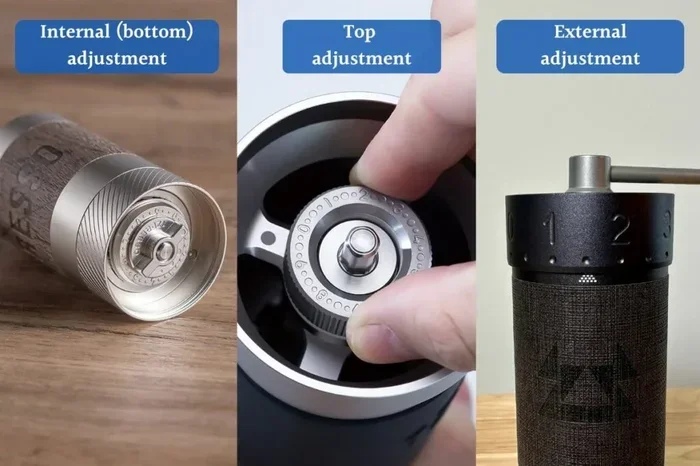
A burr grinder uses two revolving surfaces to crush beans into uniform particles. You can adjust the distance between the burrs to change the grind size. This gives you precise control over your coffee. Most serious coffee lovers prefer burr models because of the consistency they deliver. Setting a burr grinder involves turning a dial or knob, usually numbered from 1 to 10 or more. The lower numbers mean a finer grind; the higher numbers mean coarser.
Some grinders use a slide adjustment instead of a dial. You simply push the hopper or the burr housing to move it. The process is still the same: make small changes and test the result. A good burr grinder will produce a predictable grind size every time.
Blade Coffee Grinder
A blade grinder uses a spinning metal blade to chop beans. It’s like a tiny food processor. Because the blade spins wildly, the particles end up in many different sizes. Some pieces are powder-fine, while others remain large chunks. This inconsistency can lead to uneven extraction.
You can still get a decent cup from a blade grinder, but you have to work a bit harder. Instead of a dial, you control the grind by how long you pulse the machine. Short pulses give a coarser result. Longer, continuous grinding makes it finer. You’ll need to shake the grinder gently between pulses to redistribute the beans. This technique takes practice, but it works well for everyday coffee.
How To Adjust The Grind Settings
Now that you know your grinder type, let’s talk about the actual adjustment process. Whether you have a dial, a slide, or a pulse method, the goal is the same: achieve the particle size that matches your brewing method. I’ll walk you through it step by step.
Step-By-Step Adjustment For Burr Grinders
- Unplug the grinder and remove the hopper.
- Locate the adjustment dial or slide at the bottom of the burr set.
- Turn the dial one small increment in the direction you want. For finer, turn toward the low number. For coarser, turn toward the high number.
- Replace the hopper and run the grinder for a few seconds to clear any old grounds.
- Grind a small test batch and examine the texture.
- Repeat the process until the grind feels right for your brew method.
Always make just one small change at a time. The difference between a perfect grind and a ruined cup can be just a tiny fraction of a millimeter. Patience is your best friend here.
Step-By-Step Adjustment For Blade Grinders
- Add the right amount of beans to the grinder. A small batch works best.
- Pulse the machine in short bursts of one second each.
- After every few pulses, stop and check the texture by rubbing a pinch between your fingers.
- Shake the grinder gently to move larger pieces to the blade area.
- Continue pulsing until you reach the desired consistency.
- For a more even result, try using a burr grinder instead.
Blade grinders can overheat if you run them continuously. Give the machine a break every few pulses. This protects the motor and keeps the beans from getting too warm, which can affect the taste.
Grind Size Chart For Every Brew Method
The right grind size depends entirely on how you brew your coffee. Think of it like this: water spends more time with coarser grinds and less time with finer grinds. The chart below shows the ideal settings for popular methods.
| Brew Method | Grind Size | Setting on Burr Grinder (Typical) |
|---|---|---|
| French Press | Coarse | 4–6 |
| Pour Over (V60) | Medium-Coarse | 6–8 |
| Drip Coffee Maker | Medium | 7–9 |
| AeroPress | Medium-Fine | 8–10 |
| Espresso | Fine | 10–12 |
| Turkish Coffee | Extra Fine | 12–14 |
These numbers are starting points. Every grinder is different, so use them as a guide. Adjust up or down one notch and taste the difference. Your coffee maker, water temperature, and bean roast all play a role too.
Quick Tips For Better Grinding
Small habits make a big impact on your coffee quality. Here are some quick tips to keep in mind every time you grind.
- Weigh your beans: Use a kitchen scale for consistency. Scoops can be inaccurate.
- Grind just before brewing: Coffee starts losing flavor within minutes of grinding.
- Store beans properly: Keep them in an airtight container away from light and heat.
- Clean the burrs regularly: Oily residue builds up and turns old. A quick brush after each use helps.
- Use room-temperature beans: Cold beans can create static and grind unevenly.
- Don’t overfill the hopper: This can cause the grinder to jam and produce inconsistent sizes.
If you ever need to clean your kitchen appliances more broadly, you might find our guide on how to clean oven with dishwasher tablet without scrubbing helpful for tackling tough grease in the kitchen. For owners of multiple Krups appliances, check out how to set clock on Krups toaster oven to keep all your devices running smoothly.
Cleaning And Maintenance For Your Coffee Grinder
A clean grinder tastes better. Oils from coffee beans go rancid over time and taint your next cup. Regular cleaning removes this buildup and keeps the burrs sharp. Most manufacturers recommend a deep clean every one to two weeks, depending on how often you use it.
Daily Cleaning Routine
After each use, dump the used grounds from the catch cup or filter. Use a small brush to sweep out any trapped particles from the burrs or blade area. A soft toothbrush works perfectly for this. Wipe the hopper with a dry cloth. Never use water inside the grinding chamber because it can rust the metal parts and ruin the motor.
Monthly Deep Clean
Once a month, remove the burr set or blade assembly following your manual’s instructions. Wash the removable parts with warm soapy water and dry them completely before reassembling. For the inside chamber, you can use a vacuum with a small nozzle to suck out loose grounds. Some people even use a grinder cleaning tablet that you run through with just beans. This removes all the invisible oil residue.
If you have a Kitchenaid oven, you might already know the convenience of the Aqualift self-clean feature. While that’s for your oven, keeping your coffee grinder clean follows a similar principle of regular maintenance. You can learn more about that feature in our article on how to use Aqualift self clean on Kitchenaid oven. The same habit of regular care applies to all your kitchen tools.
Troubleshooting Static And Clumping
Have you ever noticed your coffee grounds sticking to the sides of the catch cup? That’s static electricity, especially common in dry climates. A quick fix is to rub a tiny bit of coconut oil on the outside of the grinder’s plastic parts before you grind. This reduces static and helps the grounds fall freely. You can also add a piece of bread to the grinder and run it for a few seconds. The bread absorbs the static charge and leaves the chamber cleaner.
Common Mistakes To Avoid When Setting Your Coffee Grinder
Even experienced coffee lovers make mistakes. Here are the most common ones and how to fix them.
- Turning the dial too far at once: This leads to an inconsistent grind. Small nudges only.
- Ignoring bean freshness: Stale beans won’t produce a good cup no matter what setting you use. Buy whole beans and grind right before brewing.
- Using the same grind for every method: Espresso needs a fine grind, while French press needs coarse. Mixing them up leads to over-extraction or under-extraction.
- Grinding too much at once: Excess beans cause overheating and uneven particle size. Stick to a single cup’s worth for best results.
- Neglecting to clean the grinder: Old oils make new coffee taste bitter and flat.
- Forgetting to calibrate after a change: If you switch bean roasts or origins, the ideal grind size might shift slightly. Always taste and adjust.
Avoiding these pitfalls keeps your coffee tasting fresh and delicious. It’s easy to build a better routine once you know what to watch for.
Expert Insight: The Science Behind Grind Size
Coffee extraction is a balancing act. Water dissolves flavor compounds from the grounds during brewing. A coarse grind exposes less surface area, so extraction happens slower. A fine grind exposes more surface area, speeding up extraction. The goal is to extract about 18–22% of the coffee’s soluble material. Too little and the coffee tastes sour and weak. Too much and it turns bitter and astringent.
The grind size controls the rate of extraction. Think of it like a tea bag. A large tea bag with big leaves steeps slower than crushed leaves. The same principle applies to your coffee grinder. By setting the right particle size, you control the flavor profile of the final cup. This is why setting your coffee grinder correctly is the single most important thing you can do at home.
Conclusion
Setting your coffee grinder doesn’t have to be intimidating. With the right knowledge and a little practice, you can dial in the perfect grind for every brew method. Start by identifying your grinder type, then follow the step-by-step adjustments. Use the grind size chart as your guide, and always taste your coffee to make small refinements. Keep your grinder clean and use fresh beans for the best flavor. A well-set grinder turns an ordinary morning routine into a ritual of great taste. Now go ahead, set your coffee grinder, and enjoy the difference in every cup.
FAQs
What is the best grind size for a drip coffee maker?
A medium grind works best for most drip coffee makers. It looks like regular sand and produces a balanced cup. If your coffee tastes bitter, try a slightly coarser setting. If it tastes weak or sour, go a little finer.
Can I use a blade grinder for espresso?
It’s possible but not ideal. Blade grinders create uneven particles, which leads to inconsistent extraction in espresso. You might get some over-extracted and some under-extracted flavors in the same cup. A burr grinder is strongly recommended for espresso because it delivers the fine, uniform grind needed for proper extraction.
How often should I clean my coffee grinder?
Do a quick brush-out after every few uses. Perform a deep clean with warm soapy water and disassembly once a month if you brew daily. If you notice oily residue or a rancid smell, clean it immediately. Regular cleaning keeps the flavor fresh and the burrs sharp.
Why does my coffee taste sour after grinding?
Sour coffee usually means the grind is too coarse or the extraction time is too short. Try adjusting your coffee grinder one notch finer. Make sure your water temperature is hot enough and your brew time is long enough for the grind size you’re using.
Should I store my coffee beans in the grinder hopper?
It’s convenient but not the best for flavor. Beans stay fresh longer in an airtight container in a cool, dark place. Storing them in the hopper exposes them to heat from the motor and air, which can stale them faster. Only keep a few days’ worth in the hopper if you must.
Can I use a coffee grinder for spices?
Yes, many people use their coffee grinder for spices like peppercorns, cumin, or cinnamon sticks. Always clean the grinder thoroughly after grinding spices so the flavors don’t transfer to your coffee. A quick grind of dry rice can help absorb any lingering oils and odors.
Frequently Asked Questions
What is How To Set Coffee Grinder?
How To Set Coffee Grinder is an important topic with many practical applications.