How To Make Ribeye Steak In Oven With Juicy Results
Making a ribeye steak in oven is easier than you think and delivers juicy, flavorful results that rival any steakhouse. This guide walks you through every step from seasoning to slicing, so you can cook ribeye steak in oven like a pro at home. You’ll learn the best tools, temperatures, and timing to get a perfect steak crust and tender, juicy interior every single time.
There’s something magical about a perfectly cooked ribeye steak straight from the oven. The aroma fills your kitchen, the edges turn golden brown, and when you cut into it, juice runs down the plate. Whether you’re a seasoned home cook or someone who barely turns on the stove, making ribeye steak in oven is one of the most rewarding things you can do in the kitchen.
This guide is built for anyone who wants juicy steak results without the stress. We’ll walk through every step in plain, simple language. You’ll learn how to pick the right cut, season it well, use the right oven temperature, and check for doneness. By the end, you’ll feel confident enough to make this ribeye steak recipe your go-to dinner plan. Let’s get into it.
Key Takeaways
- Oven-baked ribeye steak gives you a juicy, evenly cooked steak with minimal effort and maximum flavor.
- Using a meat thermometer is the single best way to nail the perfect internal temperature every time.
- Letting your steak rest after cooking keeps all the juicy juices locked inside the meat.
- A reverse sear method in the oven produces a beautiful steak crust and evenly pink center.
- Quality steak seasoning, steak butter, and proper thick cut steak selection make a huge difference in taste.
- Cast iron pans and oven-safe skillets are the best tools for achieving a great sear before or after baking.
📑 Table of Contents
Why Oven-Baked Ribeye Steak Is A Game Changer
You might wonder why anyone would choose an oven over a hot grill. The truth is, oven baked steak offers a level of control that outdoor grilling just can’t match. When you cook ribeye steak in oven, the heat surrounds the meat evenly. There are no hot spots, no flare-ups, and no guesswork about which side faces the flame.
Here are a few reasons why oven cooking works so well for thick cut steak:
- Even heat distribution means the steak cooks from edge to center without drying out the outer layers.
- Oven broil settings give you a high-heat finish that mimics the char of a grill.
- You can cook multiple steaks at once, making it perfect for dinner parties or family meals.
- The reverse sear method works beautifully inside an oven, giving you a perfect steak crust every time.
- It’s a low-stress way to cook steak because the oven does most of the work for you.
Many people think seared steak can only happen on a stovetop or outdoor grill. That’s simply not true. With the right technique, your oven-baked ribeye steak will have a gorgeous browned exterior and a tender, juicy center. Once you try it, you may never go back to grilling.
What You’ll Need: Ingredients And Tools
Before you start, make sure you have everything ready. Gathering your tools and ingredients ahead of time makes the whole process smoother and more enjoyable. Here’s your checklist for the perfect oven ribeye steak.
Ingredients You’ll Need
- One thick cut ribeye steak (at least 1.5 inches thick for best results)
- Coarse sea salt or kosher salt
- Freshly cracked black pepper
- Garlic powder or fresh minced garlic
- Unsalted butter for steak butter
- Fresh thyme or rosemary (optional but recommended)
- A drizzle of olive oil
Tools You’ll Need
- Cast iron skillet or an oven-safe baking pan
- A reliable meat thermometer (this is non-negotiable)
- Tongs for flipping the steak
- A wire cooling rack (for the reverse sear method)
- A cutting board and sharp knife for slicing
- Aluminum foil for resting steak
The meat thermometer deserves special mention. It is the one tool that will completely change your steak game. Without it, you’re guessing. With it, you know exactly when your ribeye steak has reached the right internal temperature. A cheap instant-read thermometer works perfectly fine. You don’t need anything fancy.
When it comes to the steak itself, look for ribeye roast cuts with good marbling. The white streaks of fat running through the meat are what give you that rich, buttery flavor and juicy texture. Thicker cuts (1.5 to 2 inches) work best for oven cooking because they give you more room for error and a better steak crust.
Step-By-Step: How To Cook Ribeye Steak In Oven
Now for the fun part. This is where we turn a raw ribeye steak into a mouthwatering meal. Follow these steps closely and you’ll get amazing results every time.
Step 1: Prep Your Steak
Take your thick cut steak out of the refrigerator about 30 to 45 minutes before cooking. Leting it come to room temperature helps it cook more evenly. Cold steak going straight into a hot oven creates uneven results with a cold center.
Pat the steak dry with paper towels. This is an important step that many people skip. Dry meat sears better and develops a deeper steak crust. Season generously on both sides with coarse salt, black pepper, and garlic powder. Don’t be shy with the salt. It’s what brings out the natural flavor of the beef.
Step 2: Preheat The Oven
Set your oven to 275°F (135°C) for the reverse sear method. This low temperature slowly brings the steak up to the desired internal temperature without overcooking the edges. If you prefer a more traditional approach, you can skip this step and go straight to searing on the stovetop.
While the oven heats, place a cast iron skillet or oven-safe pan on the counter. You’ll want everything ready to go when the steak hits the heat. Preparation is the secret ingredient in great cooking.
Step 3: Slow Cook In The Oven
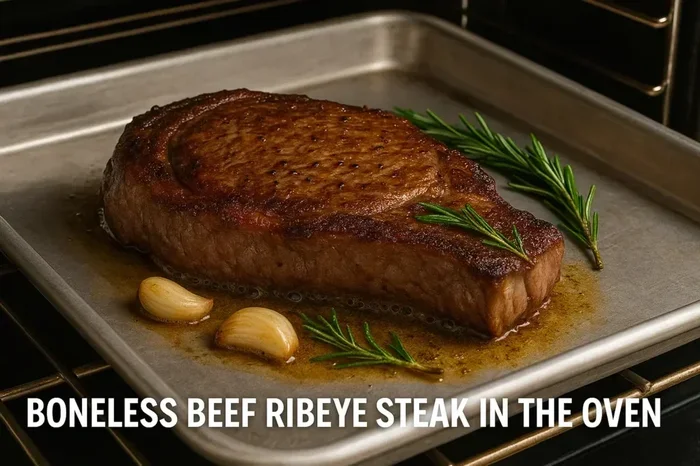
Place the seasoned ribeye steak on a wire rack set over a baking sheet. The rack allows hot air to circulate around the meat, which promotes even cooking. Slide the tray into the preheated oven and let it cook for about 20 to 30 minutes depending on thickness.
Use your meat thermometer to check the temperature. You want to pull the steak out when it’s about 10 to 15 degrees below your target steak doneness. Here’s a quick reference:
- Rare: pull at 115°F, target 125°F
- Medium Rare: pull at 125°F, target 135°F
- Medium: pull at 135°F, target 145°F
- Medium Well: pull at 145°F, target 155°F
This approach is what makes oven baked steak so reliable. The slow, gentle heat gives you precise control over the final result.
Step 4: Sear For The Perfect Crust
While the oven does its work, heat a cast iron skillet over high heat on the stovetop. Add a small amount of olive oil and wait until it just starts to smoke. This is your signal that the pan is hot enough for a great sear.
Carefully place the ribeye steak in the hot skillet. You should hear a loud sizzle. That sizzle is the sound of flavor developing. Let it sear for about 1 to 2 minutes on each side without moving it. Use tongs to hold the steak and sear the edges too for about 30 seconds each.
For extra flavor, add a tablespoon of butter, a few sprigs of fresh thyme, and crushed garlic cloves to the pan during the last minute of searing. Tilt the pan slightly and spoon the steak butter over the meat repeatedly. This is called basting, and it adds incredible richness and aroma to your ribeye steak recipe.
Step 5: Rest The Steak
Once seared, transfer the steak to a cutting board and tent it loosely with aluminum foil. Resting steak for 5 to 10 minutes is absolutely essential. During this time, the juices redistribute throughout the meat. If you cut too early, all that precious juice runs out onto the board instead of staying inside the steak.
Don’t skip this step. Patience here is what separates a good steak from a great one. The resting steak period also allows the internal temperature to rise slightly, a phenomenon known as carryover cooking.
Step 6: Slice And Serve
Use a sharp knife to slice against the grain. Cutting against the grain shortens the muscle fibers, making each bite more tender. Serve your juicy steak on a warm plate with a side of roasted vegetables, mashed potatoes, or a simple green salad.
Drizzle any remaining steak butter from the pan over the top for extra flavor. Your oven ribeye steak is now ready to enjoy. Take a moment to appreciate the beautiful steak crust and the juicy, pink center before you dig in.
Common Mistakes To Avoid When Cooking Steak In Oven
Even experienced home cooks make mistakes with ribeye steak in oven. Knowing what to avoid saves you from dry, tough, or undercooked results. Here are the most common pitfalls and how to steer clear of them.
Skipping The Room Temperature Rest
Putting a cold steak straight into the oven creates uneven cooking. The outside can overcook while the center stays cold. Always take your thick cut steak out at least 30 minutes before cooking. This simple step makes a noticeable difference in steak doneness and overall quality.
Not Using A Meat Thermometer
guessing the doneness of your steak is a recipe for disappointment. The internal temperature is the only reliable way to know when your steak is done. Invest in a good meat thermometer and use it every time. Your oven baked steak will thank you with consistent, perfect results.
Overcooking During The Sear
The stovetop sear should be quick, lasting only 1 to 2 minutes per side. Leaving the steak in the hot pan too long dries out the edges. Remember, the oven already brought the steak close to your target temperature. The sear is just for flavor and texture, not for cooking the steak through.
Cutting Too Soon After Cooking
We mentioned this in the resting section, but it’s worth repeating. Cutting into your ribeye steak immediately after cooking releases all the juices. Give it time to rest and you’ll be rewarded with a much juicier, more flavorful bite. Five to ten minutes of patience makes a world of difference.
Using The Wrong Cut Or Thickness
Thin steaks dry out quickly in the oven. For the best results, choose a ribeye roast cut that’s at least 1.5 inches thick. Thicker cuts give you a wider window for achieving the perfect internal temperature without overcooking. A thick cut steak is more forgiving and produces better results overall.
Expert Tips For The Juiciest Oven Steak
Want to take your ribeye steak in oven game to the next level? These expert tips will help you achieve restaurant-quality results at home every single time.
Dry brine your steak the night before. Salt the steak generously and leave it uncovered in the fridge overnight. The salt draws out moisture, which then gets reabsorbed into the meat. This process seasons the steak deeply and creates a drier surface that sears beautifully. When you cook ribeye steak in oven the next day, you’ll notice a dramatic improvement in flavor and crust.
Use compound butter for extra richness. Mix softened butter with minced garlic, chopped herbs, and a pinch of salt. Roll it into a log using plastic wrap and refrigerate until firm. Place a pat of this steak butter on top of your hot steak just before serving. It melts slowly over the meat, adding incredible depth of flavor to every bite.
Let the oven preheat fully. A properly preheated oven is essential for even cooking. Give your oven at least 15 to 20 minutes to reach the target temperature. Rushing this step leads to uneven oven baked steak results and longer cooking times.
Experiment with wood-fired finishing. If you want to add a smoky dimension to your seared steak, try finishing it over a wood fire or adding a few wood chips to a smoking pan. This gives you the best of both worlds: the precision of oven cooking and the smoky flavor of outdoor grilling.
Keep notes on every cook. Write down what you did, how long you cooked it, and what the internal temperature was when you pulled the steak. Over time, you’ll build a personal reference guide that takes the guesswork out of every future ribeye steak recipe attempt.
How To Store And Reheat Leftover Ribeye Steak
Sometimes you make more steak than you can eat in one sitting. That’s not a problem. Leftover ribeye steak can be stored and reheated without losing much of its juiciness and flavor.
Let the steak cool to room temperature, then wrap it tightly in plastic wrap or aluminum foil. Store it in the refrigerator for up to 3 days. When you’re ready to eat it again, reheat gently in a low oven at 250°F for about 10 to 15 minutes. You can also reheat it in a cast iron skillet on low heat for a couple of minutes per side.
The key to reheating leftover oven ribeye steak is low and slow heat. High heat dries out the meat quickly. Gentle warming preserves the juicy steak texture and keeps the steak crust from turning rubbery. A light brush of olive oil before reheating helps keep the surface moist.
Conclusion
Making ribeye steak in oven is one of the simplest and most satisfying things you can do in the kitchen. With the right cut, the right seasoning, and the right technique, you can achieve juicy steak results that rival any restaurant. The reverse sear method gives you incredible control, and the steak crust you get from a hot cast iron skillet is absolutely unbeatable.
Remember to use a meat thermometer, let your steak rest, and never rush the process. Good cooking takes patience, but the rewards are worth every minute. Whether you’re cooking for yourself, your family, or a group of friends, a perfectly oven-baked ribeye steak always impresses.
Now that you have all the tools and knowledge, it’s time to put them into action. Pick up a quality thick cut steak, fire up your oven, and enjoy the process. The best ribeye steak recipe is the one you make with confidence and a little bit of love. Happy cooking, and enjoy every bite.
Frequently Asked Questions
What temperature should I cook ribeye steak in the oven?
For the best results, start by cooking your ribeye steak at 275°F (135°C) for the slow, even heat of the reverse sear method. This low temperature gently brings the steak up to your desired internal temperature without overcooking the edges. After the oven phase, finish with a hot sear on the stovetop for 1 to 2 minutes per side to develop a beautiful steak crust.
How long should I cook a ribeye steak in the oven?
Cooking time depends on the thickness of your thick cut steak and your target steak doneness. As a general rule, a 1.5-inch thick ribeye steak takes about 20 to 30 minutes at 275°F. Always use a meat thermometer to check the internal temperature and pull the steak out about 10 to 15 degrees below your target, since the temperature will rise during the sear and resting period.
Do I need to sear ribeye steak after cooking it in the oven?
Yes, searing is highly recommended for the best oven baked steak results. The sear adds a flavorful steak crust through the Maillard reaction, which creates complex flavors and a gorgeous brown exterior. A quick 1 to 2 minute sear per side in a hot cast iron skillet with a little oil and steak butter makes a huge difference in taste and presentation.
How do I know when my ribeye steak is done?
The most reliable way to check steak doneness is with a meat thermometer. Insert it into the thickest part of the steak, avoiding bone or fat. For rare, aim for 125°F; for medium rare, 135°F; for medium, 145°F; and for medium well, 155°F. Remember that the internal temperature will rise by about 5 to 10 degrees during the sear and while the steak rests.
Can I use a regular baking pan instead of cast iron for oven steak?
You can, but cast iron is the preferred choice for several reasons. It retains heat exceptionally well, provides an excellent sear when you finish on the stovetop, and distributes heat evenly for consistent oven ribeye steak results. If you don’t have cast iron, any oven-safe baking pan or heavy-bottomed skillet will work. Just make sure it can handle high heat for the searing step.
What’s the best way to rest a ribeye steak after cooking?
Transfer your ribeye steak to a cutting board and tent it loosely with aluminum foil. Resting steak for 5 to 10 minutes allows the juices to redistribute throughout the meat, resulting in a much juicier and more flavorful bite. During this time, the internal temperature will also rise slightly due to carryover cooking, which brings the steak to its final perfect steak doneness.