How To Cook Porchetta In Oven Easy And Get Perfect Results
Want to make How To Cook Porchetta In Oven Easy and impress everyone? This guide shows you exactly how to get perfectly crispy crackling and juicy, flavorful pork every single time. You’ll learn the simple dry brine, the ideal oven temperature, and how to carve like a pro. By the end, you’ll have a traditional Italian pork roast that’s easier than you think.
If you’ve ever wanted to make a How To Cook Porchetta In Oven Easy centerpiece for your dinner table, you’re in the right place. Porchetta is an Italian pork roast that smells incredible while it cooks. The crispy crackling and juicy meat will have everyone asking for seconds. Best of all, you don’t need a special roaster or outdoor grill. Your home oven can handle this traditional dish with ease.
This guide walks you through every step, from picking the right cut of pork to slicing the perfect serving. I’ll share the exact spice blend, the brining method, and the oven temperature that guarantees success. Whether it’s a holiday meal or a weekend project, you’ll find everything you need right here.
Key Takeaways
- Start with a dry brine: Salt the pork overnight for juicy, well-seasoned meat and crispy skin.
- Score the skin deeply: Cut through the fat layer to help the skin puff up into perfect crackling.
- Roast low and slow, then finish hot: A two-stage roast ensures tender meat and golden, crispy skin.
- Use a meat thermometer: Pull the porchetta at 145°F for safe, juicy results every time.
- Rest before carving: Let the roast rest 20 minutes so the juices redistribute.
- Serve with simple sides: Roasted vegetables, crusty bread, and a bright arugula salad complement the rich pork.
- Leftovers make amazing sandwiches: Thinly sliced porchetta on a roll with mustard is a next-day treat.
📑 Table of Contents
What Is Porchetta And Why It’s A Crowd-Pleaser
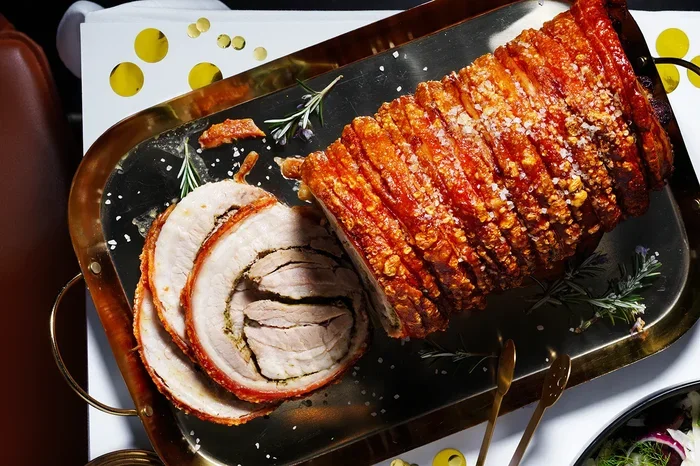
Porchetta is a traditional Italian pork roast. The whole pig is deboned, stuffed with herbs, and rolled into a tight cylinder. Modern versions often use a pork belly or pork loin roast, which is much easier to find. The result is a dish with tender, aromatic meat and shatteringly crispy skin. It’s a showstopper at any gathering.
The Origins Of This Italian Classic
The history of porchetta goes back centuries in central Italy. Street vendors would roast the whole pig over wood fires. The scent would fill the entire neighborhood. Today, home cooks can recreate that magic in a standard oven. The technique has stayed the same: salt, herbs, and patience. The pork roast becomes the star of the table.
Why Oven Roasting Works So Well
Oven roasting gives you complete control. You can monitor the oven temperature easily. You don’t need to worry about flare-ups or uneven charcoal heat. The dry heat surrounds the pork evenly. This method produces a consistent crispy skin and juicy interior. It’s the most reliable way to cook porchetta at home.
The Essential Ingredients For Authentic Porchetta
The magic of porchetta comes from a few simple ingredients. You don’t need exotic spices. The flavor builds from salt, garlic, and fresh herbs. Each component plays a specific role in the final result. Here’s what you’ll need for a classic Italian pork roast.
Choosing The Right Cut Of Pork
Look for a pork belly roast with the skin on. The fat layer is essential. It renders during cooking and keeps the meat moist. A boneless pork loin also works well. Aim for a piece that’s about 3 to 5 pounds. A uniform shape helps it roast evenly. Avoid pre-cut pieces that look uneven.
- Pork belly with skin: Best for traditional crackling.
- Boneless pork loin: Easier to slice, slightly leaner.
- Weight: 3–5 pounds is ideal for most ovens.
The Flavor-Boosting Spice Blend
The seasoning is simple but powerful. Fennel seeds are the backbone of porchetta. They add a mild, sweet aroma. Fresh garlic and rosemary bring earthy depth. Black pepper and sea salt draw out moisture. Some recipes add orange zest for brightness. I like to keep it classic. The pork should taste like itself, just better.
Quick Tips
- Toast fennel seeds lightly before grinding. This releases their oils.
- Use fresh rosemary, not dried. It has a brighter flavor.
- Don’t skip the salt. It’s the key to a good dry brine.
How To Prep The Pork The Night Before
Great porchetta starts the day before you cook it. The overnight prep allows the flavors to penetrate deeply. This step is non-negotiable if you want crispy, flavorful skin. Take the pork out of the fridge about an hour before you start seasoning. This lets it come to room temperature.
Dry Brining For Juicy Meat
Dry brining is the secret to juicy pork. Simply coat the entire roast with kosher salt. Place it on a rack set over a tray. Put it in the fridge uncovered overnight. The salt draws out moisture, then the meat reabsorbs it. This seasons the meat all the way through. It also dries the surface, which is crucial for crispy crackling.
A meat thermometer will be your best friend later. But right now, just let the salt do its work. The pork will look slightly wet in the morning. That’s perfect.
Scoring And Seasoning The Skin
After the brine, pat the pork completely dry. Use a sharp knife to score the skin. Cut through the skin and into the fat, but not into the meat. Make parallel cuts about half an inch apart. This helps the fat render and the skin to puff up. Now rub the spice blend over the entire surface. Push some of the mixture into the scores.
Let the seasoned pork sit on the counter for 30 minutes before roasting. This relaxes the meat and helps the skin dry out even more. A dry surface is the foundation of great crackling.
Step-By-Step Oven Roasting Guide
How To Cook Porchetta In Oven Easy relies on a two-stage roasting method. This approach gives you tender meat inside and perfectly crispy skin outside. You’ll start at a lower temperature and finish with a blast of heat. It’s simple, but the results are restaurant-quality.
Setting The Right Oven Temperature
Preheat your oven to 325°F for the first phase. This gentle heat slowly renders the fat. The pork cooks evenly without drying out. Place the roast on a rack in a roasting pan. The rack allows air to circulate underneath. Pour a cup of water into the bottom of the pan. This keeps the oven humid and prevents drippings from burning.
The Low-And-Slow Phase
Slide the pan into the oven. Now you wait. The slow roast takes about 30 minutes per pound. Resist the urge to open the door too often. Every time you open it, you lose heat and steam. The pork will gradually turn golden. The internal temperature will rise steadily. This is the phase where the meat becomes tender and flavorful.
The Final Crispy Finish
After about 2.5 hours, check the internal temperature. When it reaches 135°F, increase the oven heat to 450°F. This high heat crisps the skin quickly. Roast for another 20–30 minutes. Watch it closely. The skin should bubble and turn deep golden brown. The crispy crackling is ready when it sounds hollow when tapped.
| Pork Weight | Roasting Time | Internal Temp |
|---|---|---|
| 3–4 lbs | 2.5–3 hours | 145°F |
| 5–6 lbs | 3.5–4 hours | 145°F |
| 7–8 lbs | 4.5–5 hours | 145°F |
Remove the porchetta from the oven. Tent it loosely with foil and let it rest for 20 minutes. This step is critical. The juices will redistribute, and the meat will be much easier to slice. A sharp, long knife will give you clean, thin slices.
Expert Insight
Chef Maria Rossi says, “The rest is just as important as the roast. If you cut too soon, the juices run out and the meat dries up. Patience here pays off.”
Common Mistakes That Can Ruin Your Porchetta
Even with a great recipe, small errors can affect the outcome. I’ve seen these mistakes many times. Knowing them helps you avoid disappointment. Here’s what to watch out for when you cook porchetta in oven.
Skipping The Dry Brine
Some people rush straight to seasoning and roasting. This is a big mistake. Without a dry brine, the meat stays bland and the skin won’t crisp properly. The salt needs time to work its magic. Always brine overnight. It’s the single easiest way to improve your results.
Not Scoring The Skin Deeply Enough
Shallow scores won’t let the fat escape. The skin will puff unevenly and stay chewy in spots. Cut deep enough to reach the fat layer. You want those parallel lines to open up during roasting. This creates the classic bubbled, crispy texture everyone loves.
Cutting Into The Meat Too Early
It’s tempting to slice right away. The aroma is irresistible. But the meat needs time to rest. Cutting early releases all those juices onto the cutting board instead of staying in the roast. Wait at least 20 minutes. Use that time to prepare your serving platter and sides.
Slicing, Serving, And Storing Leftovers
Now that your porchetta is rested and ready, it’s time to serve. The way you slice it matters a lot. Thin, even slices showcase the crispy skin and juicy meat. I like to cut against the grain for the most tender bite. A sharp carving knife makes this job a pleasure.
How To Carve Like A Pro
Place the roast on a stable cutting board. Hold it steady with a fork. Start at one end and slice thin, about a quarter-inch thick. Try to get a bit of crackling on each slice. That’s the best part. Arrange the slices on a warm platter. Garnish with fresh rosemary sprigs and lemon wedges.
Best Accompaniments For Your Porchetta
Porchetta is rich and savory, so you want bright, simple sides. A roasted vegetable medley works wonderfully. Think carrots, parsnips, and red onions. Crusty bread is essential for soaking up the juices. A peppery arugula salad with lemon vinaigrette cuts through the richness. For a festive touch, serve it with roasted apples or pears.
- Roasted root vegetables: Carrots, parsnips, and beets.
- Crusty bread: Ciabatta or a rustic sourdough.
- Greens: Arugula salad with lemon and olive oil.
- Fruit: Roasted apples or a simple citrus segment.
Storing And Reheating Leftovers
Leftover porchetta keeps well in the fridge for up to four days. Store it in an airtight container. The crackling may soften slightly, but it will still taste great. To reheat, I recommend slicing first and warming it in a skillet. A hot pan with a little oil brings back the crispness. Avoid the microwave, which can make the skin rubbery. The oven works too, but the skillet is faster.
How To Cook Porchetta In Oven Easy isn’t just about the cooking. It’s about enjoying the process and the leftovers. A cold slice of porchetta on a sandwich is honestly better than the hot version. The flavors meld and deepen overnight. Keep this in mind when you’re planning your meal.
Frequently Asked Questions
Can I Use A Pork Loin Instead Of Pork Belly?
Yes, a pork loin roast works well. It will be leaner than traditional porchetta. The crackling still forms beautifully if you score the skin and dry-brine overnight. The meat may be slightly less juicy, but the flavor remains excellent. This is a great option if you prefer a lighter roast.
How Do I Know When The Pork Is Done?
Use a meat thermometer inserted into the thickest part of the meat. The internal temperature should reach 145°F. The pork will be tender and the juices will run clear. If you don’t have a thermometer, the meat should pull away from the bone easily. Always let it rest before checking the final temperature.
Can I Make Porchetta In A Convection Oven?
Absolutely. A convection oven circulates hot air, which can help the skin crisp more evenly. Reduce the temperature by 25°F and check for doneness a bit earlier. The convection setting is excellent for achieving uniform crispy crackling. Just keep an eye on it during the final high-heat phase.
What’s The Best Way To Reheat Leftover Porchetta?
Slicing the porchetta and reheating it in a hot skillet is the best method. The direct heat refreshes the crispy skin without steaming it. You can also use the oven at 350°F for about 10 minutes. Avoid the microwave, which makes the skin tough and chewy. The skillet method gives you the closest result to fresh.
Can I Freeze Cooked Porchetta?
Yes, you can freeze cooked porchetta for up to three months. Wrap it tightly in plastic wrap and then foil. Thaw it overnight in the refrigerator before reheating. The texture may change slightly, but the flavor stays great. It’s perfect for making quick sandwiches or adding to pasta dishes later.
What Sides Pair Best With Porchetta?
Roasted seasonal vegetables, crusty bread, and a bright arugula salad are ideal. The rich pork benefits from acidic, fresh elements. A simple lemon-dressed salad cuts through the fat beautifully. For a heartier meal, serve it with creamy polenta or roasted potatoes. The options are flexible and very forgiving.