Does an Air Fryer Use Less Electricity Than Your Oven
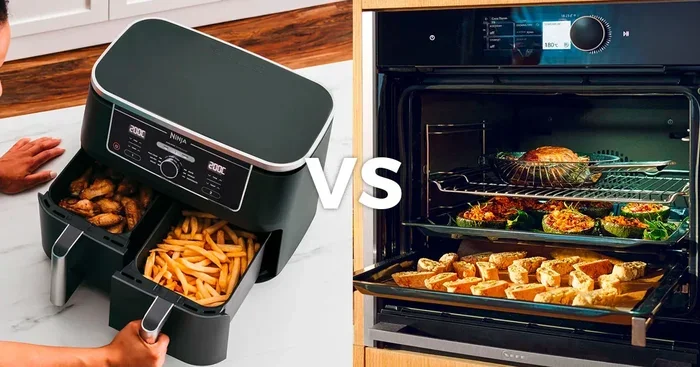
Yes, an air fryer typically uses significantly less electricity than a traditional oven. Due to their compact size, rapid heating elements, and shorter cooking times, air fryers consume far less power while delivering crispy, delicious results. In this guide, we break down the real numbers behind air fryer energy consumption so you can confidently cut costs.
Key Takeaways
- Air fryers use 50-80% less electricity than full-size ovens for most everyday cooking tasks.
- Average air fryer wattage ranges from 1,400 to 1,700 watts, while ovens typically draw 2,000 to 5,000 watts.
- Shorter cooking times mean your air fryer spends less energy running per meal.
- Preheating is faster and uses less power with an air fryer compared to a conventional oven.
- Batch cooking in an air fryer can further reduce your overall energy footprint each week.
- Right-sizing your air fryer for the job prevents wasted energy and overcooked food.
📑 Table of Contents
- Does an Air Fryer Use Less Electricity Than Your Oven?
- What Is an Air Fryer and How Does It Work?
- Does an Air Fryer Use Less Electricity Than an Oven? The Real Numbers
- Factors That Affect Air Fryer Electricity Use
- How Air Fryers Save You Money
- Common Myths About Air Fryer Energy Use
- Tips to Maximize Energy Savings with Your Air Fryer
- Conclusion
Does an Air Fryer Use Less Electricity Than Your Oven?
If you have ever looked at your electric bill and wondered where all that power is going, you are not alone. Many home cooks are now asking whether their kitchen appliances are costing them more than they realize. The big question on everyone’s mind is this: does an air fryer use less electricity than a regular oven?
The short answer is yes. An air fryer is one of the most energy-efficient cooking appliances you can own. It heats up fast, uses less total power, and often finishes meals in half the time of a traditional oven. But the full picture is a little more detailed. In this article, we will look at the real numbers behind air fryer power usage, compare it directly to oven energy costs, and show you exactly how much money you can save by switching.
Whether you already own an air fryer or are thinking about buying one, this guide will give you everything you need to make a smart, budget-friendly choice. Let us dig into the numbers and put this question to rest once and for all.
What Is an Air Fryer and How Does It Work?
Before we compare energy use, it helps to understand what makes an air fryer tick. An air fryer is a small countertop appliance that circulates hot air around your food at high speed. This rapid heat distribution cooks the outside of your food quickly, giving you that satisfying crunch without deep frying.
The Science Behind Air Frying
Inside every air fryer is a heating element and a fan. The element heats the air, and the fan pushes it in a circular motion around the food basket. This constant flow of hot air cooks food evenly from all sides. Because the cooking chamber is small, the air heats up much faster than it would inside a full-size oven.
Think of it this way. If you try to warm up a small room, a space heater works faster than turning on the central furnace. The same principle applies here. A compact cooking space requires less total energy to reach the target temperature. That is the core reason air fryer electricity use stays so low compared to larger appliances.
Why It Matters for Energy Use
The smaller the cooking space, the less energy needed to heat it. This is basic physics, but it has a huge impact on your appliance electricity usage. A standard oven has to warm up a large cavity, which means the heating element runs longer and draws more watts. An air fryer skips all that wasted effort.
To put things in perspective, some people compare how different kitchen appliances draw power. For instance, understanding how a Bunn commercial coffee maker operates reveals that even small appliances have notable energy demands. An air fryer, by comparison, is designed to be lean with its power draw while still delivering excellent cooking results.
Does an Air Fryer Use Less Electricity Than an Oven? The Real Numbers
Now let us get into the actual data. This is where things get interesting. When you compare the wattage and runtime of an air fryer versus an oven, the savings become very clear.
Breaking Down the Numbers
Most full-size ovens draw between 2,000 and 5,000 watts when they are actively heating. A typical air fryer, on the other hand, uses between 1,400 and 1,700 watts. That is already a significant difference. But here is where it gets even better.
Because an air fryer heats up so quickly, it also has a much shorter cooking time. Where a roast might take 60 minutes in an oven, the same dish could finish in 25 to 35 minutes in an air fryer. That reduced runtime means the appliance is pulling power for far less time overall. When you combine lower wattage with shorter cook times, the total electricity consumption drops dramatically.
Consider this example. If you use an oven at 3,000 watts for one hour, you use 3.0 kilowatt-hours (kWh) of electricity. If you use an air fryer at 1,500 watts for 30 minutes, you use only 0.75 kWh. That is roughly a 75% reduction in energy use for that single meal.
Wattage Comparison Table
Here is a simple breakdown to visualize the difference:
- Full-Size Electric Oven: 2,000 to 5,000 watts, preheating in 10 to 15 minutes, cooking times of 30 to 60+ minutes
- Convection Oven: 1,500 to 2,500 watts, preheating in 5 to 10 minutes, cooking times of 20 to 45 minutes
- Air Fryer (Standard): 1,400 to 1,700 watts, preheating in 1 to 3 minutes, cooking times of 10 to 30 minutes
- Air Fryer (Compact): 800 to 1,200 watts, preheating in 1 to 2 minutes, cooking times of 8 to 20 minutes
As you can see, the air fryer sits at the low end for both wattage and cooking duration. Even a convection oven, which is already more efficient than a standard oven, still uses more energy than most air fryers for the same type of meal.
Cost Per Meal Comparison
Let us make this practical. Say your electricity rate is $0.13 per kWh. Cooking a batch of chicken wings in the oven might cost you around $0.39 in electricity. Making the same wings in an air fryer could cost as little as $0.08 to $0.12. Over a month of regular cooking, those savings add up fast. Many households report cutting their cooking energy costs by 50% or more simply by shifting daily meals to an air fryer.
Factors That Affect Air Fryer Electricity Use
Not all air fryer sessions are created equal. Several factors influence exactly how much power consumption your unit has. Understanding these variables helps you get the most efficiency from every cook.
Cooking Time and Temperature
The two biggest factors are how long the unit runs and how hot it needs to get. Higher temperatures and longer cook times naturally mean more electricity. For example, reheating leftover pizza at 350°F for 5 minutes uses very little energy compared to roasting a whole chicken at 400°F for 25 minutes.
The good news is that air fryers excel at short, high-heat cooking tasks. Most everyday meals fall into this efficient range. You are not trying to slow-cook a stew, so the appliance rarely runs for extended periods.
Size and Capacity
Larger air fryers generally use more electricity than smaller ones. A personal-sized air fryer with a 2-quart basket might only draw 800 to 1,000 watts. A family-sized 5- to 6-quart model typically runs between 1,400 and 1,700 watts. Choosing the right-size appliance for your household is key to keeping energy costs low.
It is tempting to buy a bigger unit so you can cook more at once. But if you live alone or cook for two, a compact model will save you money on both the purchase price and your electric bill.
Frequency of Use
How often you cook also matters. Using your air fryer every day for multiple meals will naturally increase your total monthly energy use. However, even with daily use, the per-meal cost is so low that the overall impact on your bill remains modest compared to oven cooking.
It is also worth noting that the standby power draw of most modern air fryers is negligible. When the unit is off, it is not sipping electricity. Some people worry about appliance energy waste when devices sit idle, but air fryers are generally very efficient even in standby mode.
How Air Fryers Save You Money
Beyond the raw energy numbers, there are several practical ways an air fryer puts money back in your pocket. Let us look at the biggest savings drivers.
Faster Cooking Times
This is the single biggest advantage. An air fryer can cook a meal in roughly half the time of a conventional oven. That speed translates directly into lower energy use. Less time running means less electricity consumed per meal. For busy weeknight cooking, this is a huge win on both time and cost.
You might be surprised how much faster things actually cook. A batch of frozen fries that takes 25 minutes in the oven could be done in 12 minutes in an air fryer. That kind of efficiency really stacks up over weeks and months of regular use.
Less Heat in Your Kitchen
This might not seem like an energy saving at first, but it is. A traditional oven heats up your entire kitchen, which can make your air conditioning work harder during summer months. An air fryer produces much less ambient heat because it is compact and cooks so quickly. This means your cooling system does not have to compensate as much, potentially lowering your total home energy costs even further.
For those living in hot climates or apartments without great ventilation, this is a surprisingly valuable perk. It is one of those hidden savings that people often overlook when thinking about energy-efficient cooking.
Lower Utility Bills Over Time
When you add up the per-meal savings across an entire year, the numbers are impressive. If you replace just two or three oven-cooked meals per week with air fryer versions, you could save $20 to $40 or more on your electricity bill over the course of a year. Some users report even bigger savings, especially if they were previously using a large or older oven that was not very energy efficient.
Common Myths About Air Fryer Energy Use
There are a few misconceptions floating around that can cloud your understanding. Let us clear them up.
Myth 1: Air Fryers Run All the Time
Some people think that because air fryers are popular, they must be power-hungry. The truth is that an air fryer only consumes electricity when it is actively cooking. Once the cycle ends, the power draw drops to nearly zero. Unlike a refrigerator or a router, there is no constant background energy drain. It is a truly on-demand appliance.
Myth 2: They Are Just Small Ovens
While air fryers share some similarities with ovens, they are not the same when it comes to energy. As we covered above, the compact cooking chamber, rapid heating, and shorter cook times all work together to make an air fryer far more thermally efficient than even a standard convection oven. Calling it a small oven understates just how optimized the design is for speed and economy.
This is similar to how understanding how a coffee machine in a hotel room works reveals that compact appliances can be surprisingly effective without guzzling power. Size and efficiency are not always inversely related, and the air fryer proves that point perfectly.
Myth 3: Air Fryers Cannot Cook Full Meals
This is more of a capability myth than an energy one, but it matters because people sometimes avoid air fryers and stick with their ovens out of habit. Modern air fryers can handle full meals, roasted vegetables, casseroles, and even baked goods. The cooking efficiency is there whether you are making a snack or a complete dinner.
Tips to Maximize Energy Savings with Your Air Fryer
Ready to get the most out of your air fryer while keeping your electric bill low? Here are some practical strategies that work.
Batch Cooking Strategies
One of the best ways to save energy is to cook multiple servings in a single session rather than running the machine several times. Prepare larger batches of your favorite foods and store leftovers for quick reheats. Air fryers reheat food beautifully, often better than a microwave, so you get great taste with minimal added energy cost.
Just be mindful not to overcrowd the basket. Proper airflow is essential for efficient cooking. If the fan cannot circulate hot air freely, your food takes longer to cook and wastes energy in the process.
Right-Sizing Your Appliance
As mentioned earlier, picking the correct size matters. If you typically cook for one or two people, a 3- to 4-quart air fryer is plenty. You will use less electricity per cook and get better results because the food fits in the basket properly. Oversized units running small loads waste energy and often produce unevenly cooked food.
Think about your actual cooking habits rather than what looks like a good deal. A countertop appliance that matches your real needs will always be more efficient than one that is bigger than necessary.
Quick Tips for Maximum Efficiency
- Skip preheating when possible. Many air fryer recipes turn out great without a preheat step, saving 1 to 3 minutes of energy use per cook.
- Use the correct temperature. Follow recipe guidelines closely. Running at unnecessarily high temperatures wastes power and can burn your food.
- Clean your air fryer regularly. Grease and food buildup on the heating element reduce efficiency over time. A clean unit cooks more evenly and uses less energy.
- Cook multiple dishes at once. Some air fryers come with stacked baskets. You can cook two items simultaneously, cutting your total cook time and energy use in half for that meal.
- Choose the air fryer over the oven for small portions. Heating a full oven for two chicken thighs is wasteful. Use the air fryer for any meal that fits inside its basket.
Expert Insights on Air Fryer Efficiency
Energy analysts and appliance reviewers consistently rank air fryers among the most efficient cooking devices available today. Many point out that the combination of rapid heating, compact design, and short cook times gives the air fryer a unique advantage. Unlike a convection oven that still requires a large cavity to heat, the air fryer focuses all its energy directly on the food. This targeted approach is what makes the difference in real-world energy savings.
Some experts also recommend thinking of your air fryer as a complement to your oven rather than a replacement. Use the oven for large roasts, holiday meals, and dishes that truly need the extra space. Use the air fryer for everyday cooking. This balanced approach gives you the best of both worlds and keeps your overall appliance electricity usage as low as possible.
Conclusion
So, does an air fryer use less electricity than your oven? The evidence clearly says yes. With lower wattage, shorter cooking times, and a compact design that heats up almost instantly, an air fryer is one of the most budget-friendly and energy-efficient appliances you can add to your kitchen. Whether you are cooking for yourself or feeding a family, the savings on your electric bill can be significant over time.
The key is to use it wisely. Right-size your appliance, batch cook when you can, and reach for the air fryer before firing up the oven for everyday meals. These small habits add up to real money saved and less energy wasted. If you have been on the fence about getting an air fryer, the energy and cost savings alone make a strong case for taking the leap. Your wallet, and your kitchen, will thank you.
Frequently Asked Questions
Does an air fryer use more electricity than a microwave?
An air fryer generally uses more electricity than a microwave because it relies on heating elements and fans rather than microwave radiation. However, air fryers cook foods with better texture and crispiness, and for many meals they are still more efficient than ovens. If you want speed above all else, a microwave wins on energy. If you want great-tasting results, the air fryer is worth the slightly higher electricity use.
How much does it cost to run an air fryer per day?
Running a standard air fryer for about 30 minutes a day typically costs between $0.05 and $0.15 depending on your local electricity rate and the wattage of your unit. This is very affordable compared to daily oven use. Over a month, daily air fryer use might add only $1.50 to $4.50 to your electric bill, which is a modest increase for the convenience and cooking quality it provides.
Is it cheaper to use an air fryer or an oven for one serving?
It is almost always cheaper to use an air fryer for a single serving. Ovens waste a lot of energy heating a large cavity for just one plate of food. An air fryer heats a small compartment quickly and uses less total electricity. For any meal that fits in the basket, the air fryer will be the more cost-effective and energy-efficient choice every single time.
Do air fryers use a lot of electricity when preheating?
No, preheating an air fryer uses very little electricity because the cooking chamber is small and the heating element is powerful relative to the space. Most air fryers preheat in one to three minutes, consuming only a fraction of a kilowatt-hour. Skipping the preheat step when a recipe allows can reduce energy use even further without hurting your results.
Can an air fryer really replace an oven to save money?
An air fryer can replace your oven for many daily cooking tasks and save you money in the process. It is best for smaller portions, reheating, roasting vegetables, and making crispy foods. However, for large meals like a Thanksgiving turkey or a full sheet pan dinner, the oven is still necessary. Using the air fryer for everyday cooking and the oven only for special occasions is the smartest way to cut cooking energy costs.
Does the type of air fryer affect how much electricity it uses?
Yes, the type and size of your air fryer matter. Compact personal models use less electricity than large family-sized units. Analog models with manual settings sometimes use slightly less power than digital models with touchscreens and preset programs. Choosing a basic, appropriately sized air fryer without extra electronic features is the simplest way to keep power consumption to a minimum while still getting excellent cooking performance.