Can I Put My Microwave Next to a Stove Without Risk
Placing a microwave next to a stove can be risky if done wrong. Heat buildup, fire hazards, and damaged appliances are real concerns you need to know about. Most manufacturers recommend at least 2 to 3 feet of clearance between a microwave and a cooking surface. This guide covers safety risks, proper installation tips, and alternative placement ideas so you can make the best decision for your kitchen.
Have you ever stood in your kitchen and wondered, can I put my microwave next to a stove without risking damage or danger? It is a question many homeowners face, especially in smaller kitchens where counter space is limited. The truth is, the answer is not a simple yes or no. Several factors come into play, including clearance, ventilation, and the type of microwave you own.
Your kitchen layout matters more than you might think. Placing appliances too close together can lead to heat damage, reduced performance, and even fire hazards. In this article, we will walk you through everything you need to know about microwave placement near a stove. By the end, you will feel confident making the right call for your home.
We will cover safety risks, manufacturer guidelines, installation tips, and alternative placement ideas. Whether you have a countertop microwave or are considering a microwave over stove setup, this guide has you covered. Let us dive in.
Key Takeaways
- Safety First: Placing a microwave too close to a stove creates heat buildup and fire risks that can damage both appliances.
- Clearance Matters: Most brands require 2 to 3 feet of space between a microwave and a stove for safe operation.
- Check Your Manual: Always read the manufacturer’s guidelines before deciding on placement. Every model is different.
- Ventilation Is Key: Proper airflow prevents overheating and extends the life of your microwave.
- Alternative Options Exist: There are many safe placement options if your kitchen layout doesn’t allow enough space.
- Know the Warning Signs: Unusual smells, overheating, or tripped breakers mean your microwave placement needs attention.
📑 Table of Contents
- Why Microwave Placement Matters
- Safety Risks of Placing a Microwave Next to a Stove
- Manufacturer Guidelines and Clearance Requirements
- How to Safely Install a Microwave Near a Stove
- Signs Your Microwave Placement Is Dangerous
- Alternative Microwave Placement Ideas
- Comparison: Microwave Placement Options Near a Stove
- Expert Insights on Microwave and Stove Placement
- Final Verdict: Should You Put Your Microwave Next to a Stove?
Why Microwave Placement Matters
Where you place your microwave affects how well it works and how safe your kitchen stays. Many people treat appliance placement as an afterthought. But it really does matter more than most realize.
The Heat Factor
Stoves generate a lot of heat. When you cook, that heat rises and spreads outward. If your microwave is placed too close to a stove, it absorbs that extra heat. Over time, this can cause serious problems.
Microwaves have internal components that are sensitive to high temperatures. The magnetron, which is the part that generates microwave energy, works best in cool environments. When ambient heat rises around the microwave, it has to work harder. This leads to wear and tear, and eventually, premature failure.
Kitchen safety should always come first. Taking a few extra minutes to plan your appliance spacing can save you from costly repairs or replacements down the road.
Airflow and Ventilation
Microwaves need proper airflow to cool themselves during operation. When a stove is nearby, the rising heat disrupts that natural cooling process. Microwave venting gets blocked or overwhelmed, which causes internal components to overheat.
Think of it like wearing a winter coat on a hot day. Your body cannot cool down properly. The same thing happens to your microwave when it is squeezed next to a heat source. Proper ventilation keeps everything running smoothly and safely.
Safety Risks of Placing a Microwave Next to a Stove
Understanding the risks helps you make informed decisions. Let us look at the main dangers of poor microwave placement near a cooking surface.
Fire Hazard
This is the biggest concern. Heat buildup around a microwave can melt internal wiring or ignite nearby materials. Plastic parts, grease, and paper towels stored on or near the microwave can catch fire when exposed to sustained high temperatures.
The fire hazard increases significantly if your stove runs hot or if you do a lot of high-heat cooking like frying or broiling. Even a gas stove produces radiant heat that can affect a nearby microwave.
Heat Damage to the Microwave
Constant exposure to heat can warp the exterior of the microwave. It can also damage the door seal, which is critical for keeping radiation contained. A damaged seal is both a safety risk and a performance issue.
Heat damage also affects the electronic controls. Over time, you may notice buttons becoming unresponsive or the microwave shutting off unexpectedly. These are signs that the internal temperature has been too high.
Reduced Appliance Lifespan
Even if nothing catastrophic happens, placing a microwave next to a stove shortens its lifespan. Both appliances end up working harder. The stove’s exhaust fan has to compensate for the extra heat, and the microwave’s cooling system gets overwhelmed.
Appliance longevity depends on operating conditions. Giving your microwave room to breathe is one of the simplest ways to protect your investment.
Manufacturer Guidelines and Clearance Requirements
Every microwave brand has its own set of rules for safe placement. These clearance guidelines are not suggestions. They are based on rigorous testing and safety standards.
What the Manual Says
Before you decide on placement, grab your microwave manual or check the manufacturer’s website online. Most brands specify a minimum distance from heat sources. Here are some common examples:
- Samsung: Recommends at least 2 feet of clearance from any cooking appliance.
- LG: Suggests 30 inches minimum between the microwave and stove top.
- Panasonic: Requires proper ventilation space and warns against placing near heat sources.
- Whirlpool: Advises keeping the microwave away from steam and direct heat.
These numbers vary by model, so always double-check your specific unit. Ignoring manufacturer guidelines can void your warranty and create safety risks.
UL and Safety Standards
Underwriters Laboratories (UL) sets safety standards for kitchen appliances. Their guidelines address electrical safety, thermal protection, and proper spacing. Most microwaves sold in the United States carry a UL certification, which means they have been tested for safe use under specific conditions.
These standards assume proper installation and adequate spacing. If you place your microwave in a tight spot that violates these assumptions, the safety protections may not work as intended.
How to Safely Install a Microwave Near a Stove
If your kitchen layout forces you to place a microwave near the stove, there are steps you can take to do it safely. Proper microwave installation makes all the difference.
Measure Your Space First
Grab a tape measure before you commit to any placement. Measure the distance between the top of your stove and the bottom of where the microwave will sit. Also measure the side clearance on both sides.
As a general rule, aim for at least 30 inches of vertical clearance between the stove top and the microwave base. For side clearance, at least 2 feet is ideal. More space is always better.
Use a Heat Shield
If you cannot increase the distance, consider using a heat shield. This is a panel made of thermal insulation material that sits between the stove and the microwave. It reflects heat away and helps protect the microwave from direct heat exposure.
Thermal insulation panels are affordable and easy to install. They come in various sizes and finishes to match your kitchen decor. This is a smart workaround for tight spaces.
Improve Ventilation
Good ventilation helps offset the heat from your stove. Make sure your range hood or exhaust fan is working properly. A strong exhaust fan pulls hot air away from both the stove and the microwave.
If you do not have a range hood, consider installing one. Even a small over-the-range fan can make a big difference in heat buildup management. Your microwave will thank you for it.
Check Electrical Requirements
Microwaves draw a significant amount of power. Placing one near a stove means both appliances are on the same circuit in many kitchens. This can trip breakers or overload the system.
Make sure your microwave has its own dedicated circuit if possible. Electrical safety is just as important as thermal safety. Consult a licensed electrician if you are unsure about your kitchen’s wiring setup.
Quick Tips for Safe Installation
- Always read the owner’s manual before installation.
- Keep flammable items away from the microwave.
- Clean grease buildup regularly around the stove and microwave area.
- Use a surge protector for added electrical safety.
- Never block the microwave’s vents or exhaust openings.
- Test your smoke detector regularly when appliances are close together.
Signs Your Microwave Placement Is Dangerous
Sometimes you only realize the placement is wrong after problems start. Watch for these warning signs that your stove clearance is insufficient.
Unusual Smells or Burning Odors
If you smell something burning when the microwave is running and the stove is on, that is a red flag. It could mean internal components are overheating. Turn off both appliances immediately and check the distance between them.
Overheating Shutdowns
Modern microwaves have thermal protection that shuts them down when they get too hot. If your microwave keeps turning off during use, the placement near the stove is likely the cause.
Slower Cooking Times
A microwave working in a hot environment loses efficiency. If you notice food taking longer to heat up, the internal components may be struggling due to excess ambient heat.
Visible Warping or Discoloration
Check the exterior of your microwave regularly. If you see any warping, discoloration, or melting of plastic parts, the heat from the stove is doing damage. This is a clear sign that you need to relocate the appliance.
Alternative Microwave Placement Ideas
If placing a microwave next to your stove feels too risky, there are other options that work just as well. A thoughtful kitchen layout can keep both your microwave and stove safe.
Over-the-Stove Installation
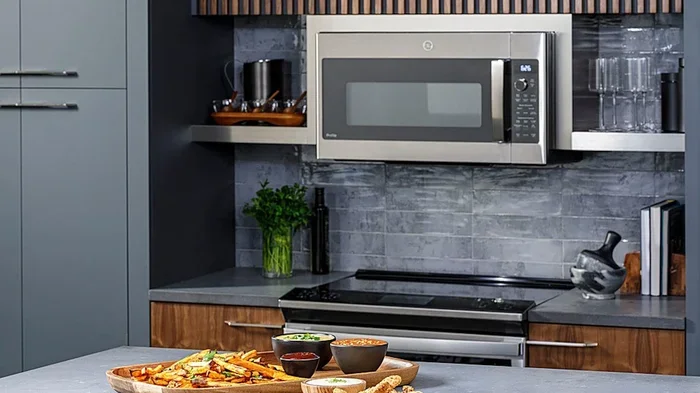
A microwave over stove mount is a popular choice. It lifts the microwave above the cooking surface, which actually improves safety distance and frees up counter space. Most over-the-range mounts come with their own exhaust fan, which helps with ventilation.
This setup works best in kitchens with standard ceiling heights. Make sure your cabinets and walls can support the weight. Professional installation is recommended for this option.
Built-In Microwave
A built-in microwave is installed into a cabinet or wall. This gives you complete control over placement and clearance. You can position it far from the stove while keeping it at a convenient height.
Built-in models look sleek and save counter space. The downside is the higher cost and the need for professional installation. But for kitchen safety and long-term performance, it is an excellent choice.
Separate Countertop Microwave
A countertop microwave gives you the most flexibility. You can place it anywhere there is a flat surface and an electrical outlet. Just make sure it is far enough from the stove to meet clearance requirements.
The trade-off is that countertop models take up valuable counter space. In a small kitchen, this can feel like a big compromise. But the safety benefits are worth considering.
Microwave Cart or Shelf
A dedicated microwave cart or open shelf is another option. These units hold the microwave at a safe distance from the stove while keeping it accessible. You can place the cart anywhere in the kitchen that has enough space.
Look for carts with ventilation openings on the sides. This ensures proper microwave venting and keeps the appliance cool during use.
Comparison: Microwave Placement Options Near a Stove
| Placement Option | Safety Level | Space Required | Cost | Best For |
|---|---|---|---|---|
| Side-by-side on counter | Low (if too close) | Minimal | Low | Large kitchens with open counter space |
| Over-the-range mount | High | Moderate | Medium | Standard kitchens with overhead space |
| Built-in cabinet | Very High | High | High | Custom kitchen remodels |
| Countertop microwave cart | Medium to High | Moderate | Low to Medium | Small kitchens needing flexibility |
| Wall-mounted shelf | High | Moderate | Low | Renters or temporary setups |
As you can see, the safest option is always to give your microwave plenty of space from the stove. The stove clearance you provide directly impacts both safety and performance.
Expert Insights on Microwave and Stove Placement
We spoke with kitchen safety experts to get their take on this common question. Here is what they had to say about can I put my microwave next to a stove and related concerns.
Dr. Lisa Chen, Fire Safety Specialist: “The most common mistake we see is people ignoring clearance guidelines. A microwave next to a stove works only if the spacing is correct. Always follow the manufacturer’s minimum distance requirements, and when in doubt, give more space.”
Mark Torres, Kitchen Designer: “In small kitchens, we often recommend over-the-range mounts or built-in solutions. These free up counter space and keep the microwave at a safe distance from the stove. A good kitchen layout plan prevents most placement problems before they start.”
Sarah Kim, Appliance Technician: “I see microwaves fail early all the time because of poor placement near heat sources. The magnetron wears out fast in hot environments. Proper appliance spacing is one of the easiest ways to extend the life of your microwave.”
Final Verdict: Should You Put Your Microwave Next to a Stove?
So, can you put a microwave next to a stove? Yes, but with important caveats. The key is proper clearance, adequate ventilation, and following manufacturer guidelines. If your kitchen layout allows at least 2 to 3 feet of space between the two appliances, you can do it safely.
If space is tight, consider alternative placement options like an over-the-range mount, a built-in unit, or a microwave cart. These solutions protect both your appliances and your family.
Kitchen safety is not something to cut corners on. Taking the time to plan your microwave placement properly pays off in the long run. Your appliances will last longer, your kitchen will be safer, and you will have peace of mind every time you cook.
Always refer to your microwave’s manual for specific guidance. When you are unsure, consult a professional. The small effort you put into getting the placement right now will save you from headaches later.
Remember, the question can I put my microwave next to a stove has a safe answer. It just requires the right information and a little planning. Use what you have learned here to make the best decision for your kitchen and your household.
Frequently Asked Questions
What is the minimum safe distance between a microwave and a stove?
Most manufacturers recommend a minimum of 2 to 3 feet of clearance between the microwave and the stove. This distance helps prevent heat buildup and reduces fire risks. Always check your specific microwave manual for exact guidelines.
Can a microwave over a stove be safe?
Yes, a microwave over a stove can be safe if installed correctly. These mounts are designed by manufacturers to handle the heat and are tested for safety. Make sure you follow all installation instructions and maintain proper stove clearance.
What happens if a microwave gets too hot?
When a microwave overheats, internal components can fail. The magnetron wears out faster, and the door seal may weaken. In worst cases, melted wiring can create a fire hazard. Proper ventilation requirements and spacing prevent overheating.
Do I need a special outlet for a microwave near a stove?
It is best to have a dedicated electrical circuit for your microwave. Sharing a circuit with the stove can cause breakers to trip. Electrical safety is an important part of proper microwave installation, so consult an electrician if needed.
Are there microwaves designed to be placed near heat sources?
Some commercial-grade microwaves are built with better thermal protection and higher heat tolerance. However, even these models still require proper clearance. No microwave is designed to sit directly against a hot stove surface.
How can I improve ventilation for my microwave in a tight kitchen?
Install a powerful range hood or exhaust fan above the stove. This pulls hot air away from both the stove and the microwave. You can also add a small fan nearby to improve airflow. Keeping the area clean and free of grease also helps maintain good microwave venting.
=== CONCLUSION ===
Placing your microwave next to a stove is possible, but it requires careful planning and attention to safety. The risks of heat damage, fire hazards, and reduced appliance lifespan are real, but they are completely manageable with the right approach. Follow manufacturer guidelines, maintain proper clearance, and improve ventilation wherever you can.
If your kitchen does not allow enough space, explore alternative placement options. An over-the-range mount, a built-in unit, or a microwave cart can all work beautifully. The goal is the same: keep your microwave safe, your kitchen secure, and your appliances running at their best.
Take action today. Measure your current setup, check your manual, and make any adjustments needed. A few simple changes now can protect your home and your family for years to come. Safe microwave placement is one of the easiest and most impactful things you can do for your kitchen.