How To Clean Braun Coffee Maker With Vinegar Step By Step
Cleaning your Braun coffee maker with vinegar is simple, affordable, and keeps your machine running smoothly. This step-by-step guide walks you through the entire process, from descaling the internal components to scrubbing the carafe and accessories. You’ll learn the right vinegar ratio, timing, and pro tips to make your coffee taste great again.
There’s nothing quite like waking up to the smell of fresh coffee brewing from your Braun coffee maker. But over time, mineral deposits, coffee oils, and residue can build up inside your machine. This affects the taste of your coffee and can even reduce the lifespan of your appliance. The good news is that you don’t need expensive commercial cleaners to fix this. White vinegar is a powerful, natural, and budget-friendly solution that works wonders on coffee makers. In this guide, we’ll walk you through every step of the process so your Braun machine stays in top shape. Whether you’re a daily coffee drinker or brew a cup now and then, this guide has you covered.
Keeping your coffee maker clean isn’t just about taste. It’s also about hygiene and performance. A dirty machine can harbor bacteria, mold, and mineral scale that interfere with brewing temperature and pressure. Using vinegar to clean your Braun coffee maker is a method that has been trusted by homeowners and coffee enthusiasts for decades. It’s safe, non-toxic, and incredibly effective at breaking down buildup. We’ll show you exactly how to do it right, what supplies you need, and how often you should repeat the process. By the end of this article, you’ll feel confident tackling the job yourself.
Key Takeaways
- White vinegar is the best and cheapest descaling agent for removing mineral buildup from your Braun coffee maker.
- Descale your Braun coffee maker every 1-3 months depending on how often you use it and your water hardness.
- Never mix vinegar with harsh chemicals — stick to simple solutions for safe and effective cleaning.
- Clean the carafe, filter basket, and water reservoir regularly to prevent coffee residue and mold buildup.
- Rinse thoroughly after descaling to remove any vinegar taste and ensure your coffee stays fresh.
- Run plain water cycles after descaling to flush out all vinegar traces from the brewing system.
📑 Table of Contents
- Why You Should Clean Your Braun Coffee Maker With Vinegar
- What You’ll Need Before You Start
- Step-By-Step Cleaning Process
- How To Descale The Brewing System
- Cleaning The Carafe And Accessories
- How Often Should You Clean Your Braun Coffee Maker
- Quick Tips For The Best Results
- Common Mistakes To Avoid
- Expert Insights On Coffee Maker Maintenance
- Final Thoughts
Why You Should Clean Your Braun Coffee Maker With Vinegar
Vinegar is one of the most effective household cleaning agents available. It’s acidic nature helps dissolve mineral deposits, also known as limescale, that accumulate inside your coffee maker over time. These deposits come from the calcium and magnesium in your tap water. They stick to the heating element, internal tubes, and brewing components. If left unchecked, they can slow down your machine, reduce brewing temperature, and make your coffee taste bitter or off.
Here are some key reasons to use vinegar for your Braun coffee maker cleaning routine:
- It’s affordable. A bottle of white vinegar costs just a few dollars and lasts for multiple cleaning cycles.
- It’s non-toxic. Unlike harsh chemical descalers, vinegar is safe for your home and the environment.
- It’s effective. Vinegar dissolves mineral buildup quickly and thoroughly without damaging internal parts.
- It removes odors. Vinegar neutralizes stale coffee smells and any lingering bacteria inside the machine.
- It’s easy to use. You don’t need special tools or skills. Just vinegar and water.
Regular Braun coffee maker cleaning with vinegar also helps maintain the flavor profile of your coffee. When mineral scale builds up, it interferes with how water heats and flows through the system. This means your coffee might not brew at the right temperature, leading to a weak or sour taste. By descaling regularly, you ensure every cup tastes as it should. If you’re new to using your Braun machine, you might also want to check out how to make espresso using a coffee maker for general usage tips.
What You’ll Need Before You Start
Before you begin the cleaning process, gather your supplies. The good news is that you don’t need anything fancy or expensive. Here’s a simple list of everything you’ll need:
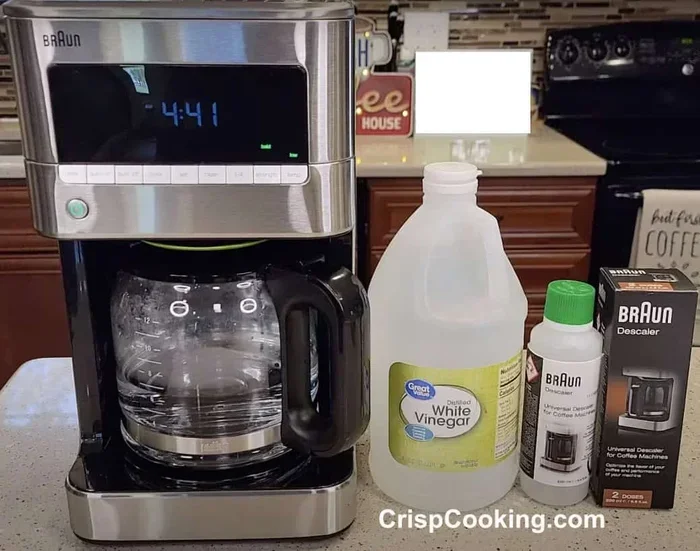
- White distilled vinegar — this is the key ingredient. Do not use apple cider vinegar or other types, as they can leave residue or alter the taste.
- Fresh, clean water — filtered water is ideal but tap water works fine for rinsing.
- A soft cloth or sponge — for wiping down the exterior and removable parts.
- A mild dish soap — for washing the carafe and accessories by hand.
- A small brush or old toothbrush — useful for scrubbing hard-to-reach areas like the filter basket.
- A dry towel — for drying parts after washing.
Preparing Your Workspace
Set up your cleaning station before you start. Make sure you have a clean, flat surface to work on. Place a towel or tray underneath the machine to catch any spills. Unplug your Braun coffee maker before you begin any cleaning. Safety always comes first. Remove the carafe, filter basket, and any other removable parts. Having everything ready will make the process smooth and stress-free.
Step-By-Step Cleaning Process
Now let’s get into the heart of the guide. Follow these steps carefully to get the best results from your vinegar descaling session.
Step 1: Empty and Rinse the Machine
Start by making sure your coffee maker is empty. Remove any leftover coffee grounds from the filter basket. Dump any water remaining in the reservoir. Give the carafe a quick rinse with warm water. This prepares the machine for the vinegar solution and ensures nothing gets in the way of the cleaning process.
Step 2: Mix the Vinegar Solution
Fill the water reservoir with a mixture of half white vinegar and half water. For most Braun coffee makers, this means about 2 to 3 cups of vinegar and 2 to 3 cups of water. The exact ratio isn’t critical, but keeping it at 50/50 ensures the vinegar is strong enough to dissolve buildup without being too harsh. If your machine has a very large reservoir, adjust the amounts proportionally.
Step 3: Run a Brew Cycle
Place the carafe back on the warming plate. Turn on the machine and let it run a full brew cycle with the vinegar solution. Let about half of the solution brew through, then turn the machine off. Let it sit for 30 to 60 minutes. This soaking time allows the vinegar to break down mineral deposits inside the tubes and heating element. After the waiting period, turn the machine back on and let the rest of the solution brew through.
Step 4: Rinse Thoroughly
Discard the vinegar solution from the carafe. Fill the reservoir with fresh, clean water. Run a full brew cycle and discard the water. Repeat this rinsing process two to three times. This step is crucial because any leftover vinegar can affect the taste of your next pot of coffee. You want to make sure all traces of vinegar are completely flushed out of the system.
Step 5: Clean the Carafe and Accessories
While the machine is rinsing, wash the carafe, filter basket, and any other removable parts. Use warm water and a small amount of mild dish soap. For stubborn coffee stains inside the carafe, sprinkle some baking soda on a damp sponge and gently scrub. Rinse all parts thoroughly and dry them with a clean towel before reassembling.
How To Descale The Brewing System
Descaling is the process of removing mineral scale from the internal components of your coffee maker. Over time, hard water deposits build up on the heating element and inside the tubing. This buildup acts as an insulator, meaning your machine has to work harder to heat water. The result is longer brew times, inconsistent temperature, and ultimately a worse cup of coffee.
Your Braun coffee maker has a relatively simple internal brewing system, which makes descaling straightforward. The vinegar solution works by reacting with the calcium and magnesium deposits, breaking them down so they can be flushed out with water. Here are some additional tips for effective descaling:
- Don’t skip the soaking step. Letting the vinegar sit inside the machine for 30 to 60 minutes makes a big difference in how much buildup gets dissolved.
- Use undiluted vinegar for heavy buildup. If your machine hasn’t been cleaned in a long time, you can use straight vinegar instead of a 50/50 mixture.
- Pay attention to the heating element. This is where most mineral deposits accumulate. The vinegar solution will flow through it during the brew cycle.
- Run extra rinse cycles if needed. If you notice a vinegar smell or taste after the first rinse, run one or two more plain water cycles.
For general coffee maker maintenance, descaling should be part of your regular routine. It’s just as important as washing the carafe and replacing filters. Think of it like changing the oil in your car. Without it, things gradually wear down and performance suffers. If you’re also dealing with other kitchen appliances that need deep cleaning, you might find our guide on how to deep clean a Ninja air fryer oven helpful for maintaining all your cooking equipment.
Cleaning The Carafe And Accessories
The carafe and removable parts of your Braun coffee maker need regular cleaning too. Coffee oils and residue build up on the glass or plastic surfaces over time. This can lead to a stale taste in your coffee and even harbor bacteria if not addressed. Here’s how to keep these parts spotless:
- Wash the carafe after every use. Don’t let old coffee sit in the carafe overnight. Rinse it with warm water and a drop of dish soap.
- Soak the carafe for tough stains. Fill it with warm water and a tablespoon of baking soda. Let it sit for 15 to 20 minutes, then scrub gently with a soft sponge.
- Clean the filter basket regularly. Remove any coffee grounds after each brew. Once a week, wash it with warm soapy water and rinse thoroughly.
- Check the water reservoir. Wipe the inside of the reservoir with a damp cloth during your regular cleaning routine. This prevents buildup from forming in hidden areas.
- Dry everything completely. Moisture left on parts can lead to mold growth. Always dry components with a clean towel before reassembling.
For the exterior of your Braun coffee maker, simply wipe it down with a damp cloth. Avoid using abrasive cleaners or scouring pads, as these can scratch the surface. A gentle wipe with a cloth dampened with a little vinegar works well for removing smudges and fingerprints from the machine’s body.
How Often Should You Clean Your Braun Coffee Maker
The frequency of cleaning depends on how often you use your machine and the hardness of your water. Here’s a general guideline to follow:
- Daily: Rinse the carafe and filter basket after every use. Empty any leftover water from the reservoir.
- Weekly: Wash all removable parts with warm soapy water. Wipe down the exterior.
- Monthly: Run a vinegar descaling cycle. This is the minimum recommended frequency for most households.
- Every 1-2 months: If you live in an area with hard water or use your coffee maker multiple times a day, you should descale more frequently.
There are some clear signs that your Braun coffee maker needs a cleaning. Watch out for these warning signals:
- Your coffee tastes bitter, sour, or different from usual.
- The brewing time has increased significantly.
- You notice a vinegar-like or musty smell coming from the machine.
- There’s visible white or chalky buildup around the water outlet or inside the carafe.
- The machine makes unusual gurgling or bubbling noises during brewing.
If you notice any of these signs, it’s time to run a vinegar cleaning cycle. Catching the problem early makes the process much easier and more effective. For more general kitchen appliance cleaning tips, you can also refer to how to clean an Oster toaster oven, which shares similar principles of using household solutions for effective cleaning.
Quick Tips For The Best Results
- Always use white distilled vinegar. Other types of vinegar may leave behind residues or flavors that affect your coffee.
- Don’t use vinegar in a machine that has a built-in water filter. The vinegar can damage the filter. Check your Braun model’s manual first.
- Run extra water cycles after descaling. This ensures no vinegar taste remains in the machine.
- Clean your machine in a well-ventilated area. Vinegar fumes can be strong, so open a window or turn on a fan.
- Store your machine with the carafe and filter basket removed. This allows air to circulate and prevents mold and odors.
Common Mistakes To Avoid
Even though cleaning with vinegar is simple, there are a few mistakes people commonly make. Here’s what to watch out for:
- Using too much vinegar. A 50/50 ratio is plenty. Using undiluted vinegar for a regular cleaning can be too harsh and may leave a lingering smell.
- Skipping the rinse cycles. This is the most common mistake. If you don’t rinse thoroughly, your next pot of coffee will taste like vinegar.
- Ignoring the carafe and accessories. Cleaning the internal system isn’t enough. The carafe and filter basket need regular washing too.
- Using vinegar on a machine with a water filter. Some Braun models have built-in filters that can be damaged by vinegar. Always check your manual.
- Waiting too long between cleanings. Heavy mineral buildup is much harder to remove and may require multiple vinegar cycles.
By avoiding these mistakes, you’ll keep your Braun coffee maker in excellent condition for years. If you’re also looking after other kitchen equipment, remember that regular cleaning extends the life of every appliance. For more on deep cleaning various kitchen devices, you can explore how to deep clean a Ninja air fryer oven, which covers similar deep cleaning techniques for another popular kitchen appliance.
Expert Insights On Coffee Maker Maintenance
Coffee machine experts agree that regular descaling is the single most important maintenance task for any drip coffee maker. According to coffee appliance specialists, machines that are descaled regularly last significantly longer than those that aren’t. The mineral scale that builds up inside can cause the heating element to overwork, leading to premature failure.
One expert tip is to use filtered water in your Braun coffee maker. This reduces the amount of mineral deposits from the start, meaning you won’t need to descale as often. Another tip is to never let old coffee sit in the machine for more than 30 minutes after brewing. Stale coffee oils can go rancid and affect the taste of your next brew.
For those who want to go the extra mile, consider running a baking soda cleaning cycle once in a while. Mix a tablespoon of baking soda with a full reservoir of water and run a brew cycle. This helps neutralize any remaining odors and gives your machine an extra fresh feeling. For more information on maintaining your coffee equipment, you might also find our guide on how to make espresso using a coffee maker useful for understanding general best practices.
Final Thoughts
Cleaning your Braun coffee maker with vinegar is one of the easiest and most effective ways to keep your machine running at its best. It takes just a few simple steps and costs almost nothing. Regular descaling removes mineral buildup, eliminates odors, and ensures every cup of coffee tastes fresh and delicious. By following the steps outlined in this guide, you’ll extend the life of your Braun coffee maker and enjoy better-tasting coffee every single day.
Make it a habit to clean your machine regularly. Set a reminder on your phone or calendar to descale every one to three months. Pair this with weekly washing of the carafe and filter basket, and your Braun coffee maker will serve you well for years to come. A little maintenance goes a long way, and your taste buds will thank you for it.
Frequently Asked Questions
Can I use apple cider vinegar instead of white vinegar?
It’s best to stick with white distilled vinegar. Apple cider vinegar contains sugars and other compounds that can leave a residue or alter the taste of your coffee. White vinegar is pure and effective for descaling without adding any unwanted flavors.
How long should I let the vinegar sit in my Braun coffee maker?
Let the vinegar solution sit for 30 to 60 minutes after running about half of it through the machine. This soaking time allows the acid to break down mineral deposits effectively. Then finish the cycle and follow up with rinse cycles.
Will vinegar damage my Braun coffee maker?
No, vinegar is safe for Braun coffee makers when used correctly. Just make sure you rinse thoroughly after descaling. If your model has a built-in water filter, check the manual first, as vinegar can potentially damage certain filter types.
How do I know if my Braun coffee maker needs descaling?
Signs include slower brewing times, a bitter or off taste in your coffee, visible white buildup, or unusual noises during brewing. If you notice any of these, it’s time to run a vinegar cleaning cycle.
Can I use lemon juice instead of vinegar?
Lemon juice is a mild acid and can work for light descaling, but it’s not as effective as white vinegar for heavy mineral buildup. Vinegar is stronger and more reliable for a thorough cleaning job.
How do I remove coffee stains from the carafe?
Fill the carafe with warm water and a tablespoon of baking soda. Let it soak for 15 to 20 minutes, then scrub with a soft sponge. For stubborn stains, you can also use a mixture of salt and water as a gentle abrasive.