How Many Milligrams Of Caffeine In A Cup Of Coffee
A standard cup of brewed coffee contains about 95 milligrams of caffeine, but the actual amount varies widely based on brew method, bean type, cup size, and roast level. Espresso packs roughly 63 milligrams per shot, while a large drip coffee can exceed 300 milligrams. Understanding caffeine content helps you manage your intake and choose the right coffee for your needs.
You grab your morning coffee and take that first satisfying sip. It wakes you up, warms your hands, and starts your day on the right foot. But have you ever stopped to wonder how many milligrams of caffeine are actually in your cup? Most people sip their coffee every day without giving a second thought to the exact caffeine content. The truth is, the number can vary quite a bit depending on how the coffee is brewed, what kind of beans are used, and even the size of your mug.
Whether you drink one cup a day or three, understanding caffeine levels in coffee helps you make informed choices. Too much caffeine can cause jitters, trouble sleeping, and a racing heart. Too little, and you might not feel the boost you are looking for. This guide breaks down the caffeine content across different coffee types, brew methods, and serving sizes so you can enjoy your daily cup with full confidence.
The short answer is that a typical 8-ounce cup of brewed coffee contains around 95 milligrams of caffeine. But that is just the starting point. A single shot of espresso, a large French press, or a giant travel mug can push that number much higher. Let us dive into the details and explore everything you need to know about caffeine in your favorite coffee drinks.
Key Takeaways
- Average caffeine per cup: A standard 8-ounce cup of brewed coffee has about 80 to 100 milligrams of caffeine.
- Brew method matters: Espresso, French press, drip, and cold brew all deliver different caffeine levels per serving.
- Bean type plays a role: Robusta beans contain nearly double the caffeine of Arabica beans.
- Roast level does not equal caffeine content: Dark roast and light roast have similar caffeine levels per bean.
- Cup size changes everything: A 12-ounce mug has more caffeine than a standard 8-ounce cup, even with the same brew.
- Know your limits: The FDA recommends no more than 400 milligrams of caffeine per day for most adults.
📑 Table of Contents
- What Is Caffeine And Why Does It Matter?
- Caffeine Content By Coffee Type
- How Brewing Method Affects Caffeine Levels
- Coffee Cup Size And Caffeine
- Dark Roast vs Light Roast: Caffeine Myths
- Robusta vs Arabica: The Caffeine Difference
- How Much Caffeine Is Too Much?
- Final Thoughts On Caffeine In Your Cup
What Is Caffeine And Why Does It Matter?
Caffeine is a natural stimulant found in coffee beans, tea leaves, cacao, and many other plants. It works by blocking a brain chemical called adenosine, which makes you feel tired. When adenosine is blocked, your brain stays more alert and focused. This is why so many people reach for a cup of coffee in the morning or during an afternoon slump.
The amount of caffeine in your coffee matters because it directly affects your body. Too much caffeine can lead to anxiety, digestive issues, rapid heartbeat, and insomnia. On the other hand, moderate caffeine intake has been linked to improved focus, better mood, and even some health benefits. The key is knowing how much you are consuming so you can stay in a healthy range.
The FDA suggests that up to 400 milligrams of caffeine per day is safe for most healthy adults. That is roughly four 8-ounce cups of brewed coffee. But individual sensitivity varies a lot. Some people feel the effects of caffeine after just one small cup, while others can drink several without any issues. Knowing the milligrams of caffeine per cup helps you stay in control of your intake.
Caffeine Content By Coffee Type
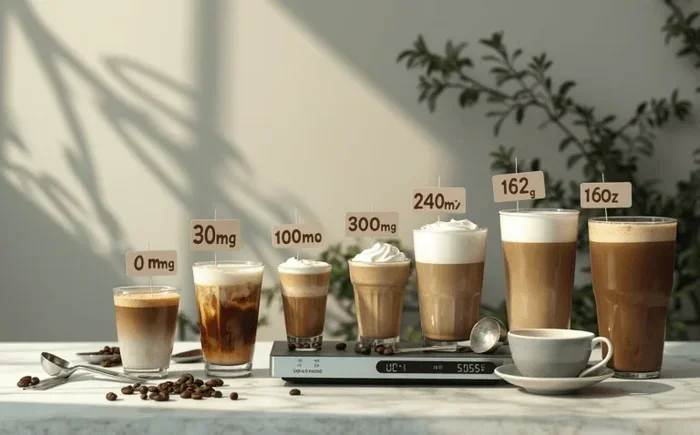
Not all coffee is created equal when it comes to caffeine. Different coffee drinks deliver very different amounts of caffeine per serving. Here is a closer look at the most popular types and their approximate caffeine levels.
Brewed Coffee
Standard drip or brewed coffee is the most common way people drink coffee at home and in offices. An 8-ounce cup of brewed coffee typically contains between 80 and 100 milligrams of caffeine. This is the baseline most people think of when they picture a regular cup of coffee. The exact number depends on the coffee grounds used, the water temperature, and how long the coffee brews.
If you pour a larger mug, say 12 or 16 ounces, the caffeine content goes up proportionally. A 16-ounce brewed coffee can have around 180 to 200 milligrams of caffeine. This is important to keep in mind if you drink oversized mugs throughout the day.
Espresso
A single shot of espresso contains about 63 milligrams of caffeine. A double shot, which is the standard at many coffee shops, has roughly 126 milligrams. Espresso is made by forcing hot water through finely ground coffee at high pressure, which extracts caffeine quickly and efficiently.
Even though espresso has a higher caffeine concentration per ounce, the total caffeine in a single shot is lower than a full cup of brewed coffee. This is because a shot of espresso is only about 1 to 2 ounces, while a cup of brewed coffee is 8 ounces. So if you order a latte with two shots of espresso, you are getting about 126 milligrams of caffeine from the espresso alone.
French Press Coffee
French press coffee, also called press pot or plunger pot coffee, tends to have a slightly higher caffeine content than drip coffee. An 8-ounce cup of French press coffee can contain around 80 to 135 milligrams of caffeine. This is because the coffee grounds steep in hot water for a longer time, which allows more caffeine to be extracted.
The coarse grind and extended steeping time are key factors. Many coffee lovers prefer the fuller body and richer flavor of French press coffee, and the slightly higher caffeine content is a bonus for those who need an extra morning boost.
Cold Brew Coffee
Cold brew coffee is made by steeping coffee grounds in cold water for 12 to 24 hours. This long steeping process extracts a lot of caffeine, resulting in a concentrated coffee base. A typical 8-ounce serving of cold brew can contain anywhere from 100 to 200 milligrams of caffeine, depending on the dilution ratio.
Many people drink cold brew straight or with just a little water, which means they consume more caffeine per serving compared to diluted versions. If you make cold brew at home, you control the strength, which gives you more power over your caffeine intake.
Instant Coffee
Instant coffee is the quickest and easiest option for a morning cup. One teaspoon of instant coffee dissolved in 8 ounces of water contains about 30 to 90 milligrams of caffeine. The wide range is because different brands and formulations vary in their coffee concentration.
Instant coffee generally has less caffeine than brewed or French press coffee. It is a good choice if you are sensitive to caffeine or want a milder pick-me-up without overdoing it.
Decaf Coffee
Decaf coffee is not completely caffeine-free, despite the name. An 8-ounce cup of decaf coffee typically contains about 2 to 5 milligrams of caffeine. The decaffeination process removes most of the caffeine, but a small amount remains. If you are very sensitive to caffeine, even this small amount can be noticeable.
Decaf is a great option for people who love the taste of coffee but want to avoid the stimulating effects of caffeine. It allows you to enjoy a warm cup in the evening without worrying about sleep disruption or caffeine jitters.
How Brewing Method Affects Caffeine Levels
The way you brew your coffee has a huge impact on how much caffeine ends up in your cup. Different methods extract caffeine at different rates and in different amounts. Let us break down the main factors that influence caffeine extraction.
Brewing Time
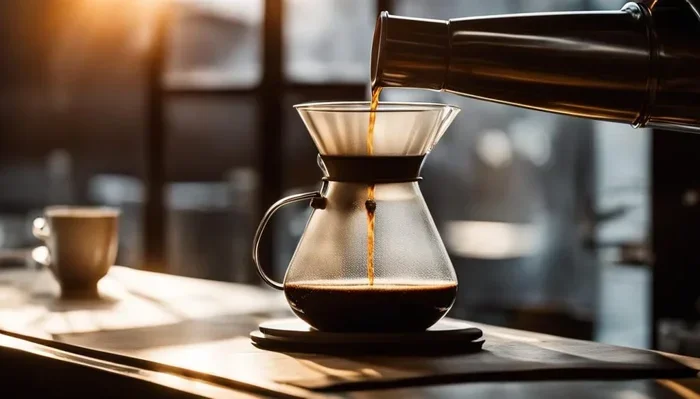
The longer coffee grounds are in contact with hot water, the more caffeine gets extracted. This is why French press coffee, which steeps for about 4 minutes, tends to have more caffeine than drip coffee, which passes through quickly. Cold brew takes this even further with 12 to 24 hours of steeping, pulling out a significant amount of caffeine.
If you want to reduce caffeine, try shortening the brew time. A shorter steep or a faster drip cycle means less caffeine ends up in your final cup. On the flip side, if you want a stronger caffeine kick, extend the brew time or use more coffee grounds.
Water Temperature
Hotter water extracts caffeine more efficiently than cooler water. This is why boiling water is typically recommended for brewing methods like drip coffee and pour-over. Cold brew uses cold or room-temperature water, which extracts caffeine more slowly and over a much longer time.
The temperature difference explains why cold brew can be so potent despite using cold water. The long steeping time compensates for the lower extraction rate. If you are using a pour-over method with very hot water, expect a faster and more complete caffeine extraction.
Grind Size
Finer coffee grinds have more surface area exposed to water, which means more caffeine is extracted during brewing. Espresso uses a very fine grind, which contributes to its high caffeine concentration per ounce. French press uses a coarse grind, but the long steeping time still allows plenty of caffeine to be extracted.
If you grind your own beans at home, you can control the grind size to fine-tune your caffeine levels. A finer grind generally means a stronger, more caffeinated cup, while a coarser grind produces a milder brew.
Coffee-to-Water Ratio
Using more coffee grounds per cup of water increases the caffeine content. A standard ratio is about 2 tablespoons of ground coffee per 6 ounces of water. If you use more scoops or a heavier hand with the grounds, your cup will have more caffeine.
This is one of the easiest ways to control your caffeine intake at home. Simply use less coffee for a milder cup, or more for a stronger one. It is a simple adjustment that makes a real difference in your daily caffeine consumption.
Coffee Cup Size And Caffeine
One factor many people overlook is the size of their coffee cup. A standard serving of coffee is 8 ounces, but most mugs today hold 12, 16, or even 20 ounces. The bigger the cup, the more coffee you drink, and the more caffeine you consume.
Here is a simple comparison of caffeine content based on cup size for standard brewed coffee:
- 8 ounces (standard cup): 80 to 100 milligrams
- 12 ounces (medium mug): 120 to 150 milligrams
- 16 ounces (large mug): 160 to 200 milligrams
- 20 ounces (extra large): 200 to 250 milligrams
As you can see, drinking from a large travel mug can easily push your caffeine intake past 200 milligrams in a single sitting. If you are sensitive to caffeine, consider using a smaller cup or splitting a large coffee into two servings throughout the day.
Many coffee shops serve drinks that are even larger than 20 ounces. A 24-ounce drip coffee from a popular chain can contain over 300 milligrams of caffeine. Always check the size of your drink and be mindful of how much you are actually consuming.
Dark Roast vs Light Roast: Caffeine Myths
One of the most common myths about coffee is that dark roast has more caffeine than light roast. The truth is more nuanced. The roasting process does not significantly change the amount of caffeine in coffee beans. A bean roasted to dark perfection has roughly the same caffeine as a light roast bean.
However, there is a small catch. Because dark roast beans are roasted longer, they lose more moisture and become lighter in weight. This means that if you measure your coffee by volume (using a scoop), a scoop of dark roast beans actually contains fewer beans than a scoop of light roast. Fewer beans means slightly less caffeine.
On the other hand, if you measure by weight, dark roast and light roast deliver about the same caffeine. The difference is so small that it is practically negligible for most coffee drinkers. So if you prefer a dark roast for its bold flavor, you do not need to worry about it having significantly more or less caffeine than a light roast.
The real differences between dark and light roast come down to flavor, acidity, and body. Dark roasts taste bolder and less acidic, while light roasts preserve more of the bean’s original flavors and have a brighter taste profile. Both are equally valid choices when it comes to your morning caffeine boost.
Robusta vs Arabica: The Caffeine Difference
Coffee beans come in two main varieties: Arabica and Robusta. Arabica beans are the most popular and are known for their smooth, complex flavors. Robusta beans have a stronger, more bitter taste but contain significantly more caffeine.
Robusta beans have about 2.2 to 2.7 percent caffeine by weight, while Arabica beans contain roughly 1.2 to 1.5 percent. This means Robusta beans have nearly double the caffeine content of Arabica beans. Many instant coffee brands use Robusta beans because of their higher caffeine content and lower cost.
If you are looking for a stronger caffeine kick, check whether your coffee uses Arabica, Robusta, or a blend. Pure Robusta coffee will give you more caffeine per cup than pure Arabica. Most specialty coffee shops use 100 percent Arabica beans, which means their coffee has a smoother taste but a slightly lower caffeine content.
How Much Caffeine Is Too Much?
The FDA recommends limiting caffeine intake to 400 milligrams per day for most healthy adults. This equals about four 8-ounce cups of brewed coffee. However, individual tolerance varies widely based on body weight, metabolism, and personal sensitivity.
Consuming too much caffeine can lead to unpleasant side effects. These include restlessness, rapid heartbeat, insomnia, headaches, and digestive discomfort. Some people experience anxiety or panic attacks after consuming large amounts of caffeine. If you notice these symptoms, it is a good idea to cut back on your coffee intake.
Pregnant women should limit caffeine to 200 milligrams per day or less. Children and teenagers should consume even less. If you are unsure about your personal caffeine limit, talk to your doctor. They can help you determine a safe amount based on your health and lifestyle.
One easy way to manage your caffeine is to track how much you drink. A simple notebook or a phone app can help you log your daily intake. Once you know your typical milligrams of caffeine per day, you can make adjustments if needed. Small changes like switching to half-caf or drinking smaller cups can make a big difference.
Also keep in mind that caffeine is not just in coffee. Tea, soda, energy drinks, chocolate, and some medications all contain caffeine. When you add up your total daily intake from all sources, it can add up quickly. Being aware of all your caffeine sources helps you stay within a healthy range.
Pairing your coffee with a good meal can also help slow caffeine absorption and reduce jittery side effects. A hearty breakfast or a warm dinner roll fresh from the oven alongside your morning coffee makes for a satisfying and balanced start to the day. Similarly, enjoying a cup of coffee after a slow-cooked meal like reheated short ribs makes for a comforting evening ritual. And if you are planning a cozy weekend lunch, a warm shepherds pie heated through in the oven pairs beautifully with a milder cup of coffee, letting you enjoy the flavor without overloading on caffeine.
Final Thoughts On Caffeine In Your Cup
The caffeine content in your coffee depends on many factors: the type of beans, the roast level, the grind size, the brew method, the water temperature, and the cup size. A standard 8-ounce cup of brewed coffee has about 95 milligrams of caffeine, but this number can range from as low as 30 milligrams in instant coffee to over 200 milligrams in a strong cold brew.
Understanding these differences empowers you to make choices that fit your lifestyle and caffeine sensitivity. Whether you prefer a quick shot of espresso, a smooth French press, or a refreshing cold brew, you now have the knowledge to manage your intake wisely. The next time you brew a cup, you will know exactly how much caffeine you are getting.
Remember that moderation is key. Stick to the recommended daily limit, listen to your body, and enjoy your coffee without worry. A well-informed coffee drinker is a happy coffee drinker. So go ahead, pour your next cup, and savor every sip knowing exactly what you are putting into your body.
Frequently Asked Questions
How many milligrams of caffeine are in a standard cup of coffee?
A standard 8-ounce cup of brewed coffee contains about 80 to 100 milligrams of caffeine. The exact number depends on the coffee beans, grind size, and brewing method used.
Which type of coffee has the most caffeine per cup?
Cold brew coffee typically has the highest caffeine content, with 100 to 200 milligrams per 8-ounce serving. This is because the long steeping time extracts more caffeine from the grounds compared to other methods.
Does decaf coffee have zero caffeine?
No, decaf coffee is not completely caffeine-free. An 8-ounce cup of decaf coffee still contains about 2 to 5 milligrams of caffeine. The decaffeination process removes most, but not all, of the caffeine.
How does espresso compare to brewed coffee in caffeine content?
A single shot of espresso has about 63 milligrams of caffeine, which is less than a full 8-ounce cup of brewed coffee. However, espresso has a higher caffeine concentration per ounce because the serving size is much smaller.
Is it safe to drink coffee every day?
Yes, for most healthy adults, drinking 3 to 4 cups of coffee per day is considered safe. The FDA recommends staying under 400 milligrams of caffeine per day. If you experience jitters or sleep issues, try reducing your intake.
Can caffeine content vary between different coffee brands?
Yes, caffeine content can vary significantly between brands and coffee types. Factors like bean origin, roast level, grind size, and brewing instructions all affect the final caffeine level in your cup. Always check the label or brand information if you want precise numbers.
===
=== URL SLUG ===
how-many-milligrams-of-caffeine-in-a-cup-of-coffee
=== SEO TITLE ===
How Many Milligrams Of Caffeine In A Cup Of Coffee
=== META TITLE ===
How Many Milligrams Of Caffeine In A Cup Of Coffee?
=== META DESCRIPTION ===
Discover how many milligrams of caffeine are in a cup of coffee. We break down caffeine levels by brew type, cup size, and roast so you can enjoy your daily coffee with confidence.