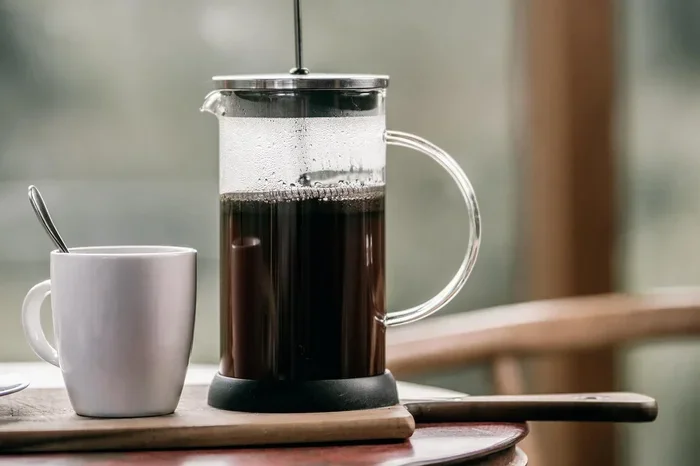
How Long To Soak Coffee In French Press For Perfect Brew
The ideal soak time for French press coffee is 4 minutes. This simple rule unlocks a rich, full-bodied cup without bitterness. Getting the timing right, along with the proper coffee-to-water ratio and water temperature, transforms your morning routine into a café-quality experience at home.
Key Takeaways
- 4 minutes is the sweet spot: This is the standard steeping time recommended by coffee experts for French press brewing.
- Use coarse grounds: A consistent coarse grind prevents over-extraction and keeps your coffee smooth.
- Water temperature matters: Heat your water to 195-205 degrees Fahrenheit for optimal extraction.
- The ratio is key: Use 1:15 or 1:16 coffee-to-water ratio for balanced flavor.
- Don’t skip the bloom: Let the coffee sit for 30 seconds after adding water to release gases.
- Plunge slowly: A gentle, steady plunge preserves the coffee’s natural oils and flavor.
- Serve immediately: Pour your coffee right after plunging to avoid over-extraction.
📑 Table of Contents
- How Long To Soak Coffee In French Press For The Perfect Cup
- The Ideal Coffee-to-Water Ratio For French Press
- Step-By-Step: How Long To Soak Coffee In French Press
- Water Temperature And Its Role In Extraction
- Common Mistakes That Ruin Your French Press Brew
- How To Adjust Your Brew For Different Coffee Beans
- How To Clean And Maintain Your French Press
- The Science Behind French Press Brewing
- Key Takeaways
How Long To Soak Coffee In French Press For The Perfect Cup
If you love French press coffee, you already know it delivers a rich, full-bodied cup that drip machines simply can’t match. But here is the thing many people get wrong: soaking time. The amount of time your coffee grounds stay in the water makes or breaks your brew. Too short and it tastes weak. Too long and it turns bitter and harsh.
So how long to soak coffee in French press? The answer is simpler than you think. Most experts agree on 4 minutes as the gold standard. But there is more to it than just setting a timer. Your grind size, water temperature, coffee ratio, and even the type of beans you use all play a role. In this guide, we walk through everything you need to know to nail your French press brew every single time.
Whether you are a complete beginner or someone who has been making immersion brewed coffee for years, there is always room to refine your technique. Let us dive in and turn your morning cup into something truly special.
Why Steeping Time Is So Important
Coffee extraction is the process where hot water pulls flavor compounds out of the grounds. When you soak coffee in French press, the grounds sit fully submerged in water the entire time. This is called immersion brewing, and it gives you much more control over the final taste.
Here is what happens during steeping:
- First 30 seconds: The coffee blooms. Gases escape and the grounds begin to release their oils.
- 30 seconds to 2 minutes: Flavor compounds start dissolving into the water. This is where you get the bright, acidic notes.
- 2 to 4 minutes: The deeper, sweeter flavors come through. Think chocolate, caramel, and nutty tones.
- Beyond 4 minutes: Bitter compounds start extracting. This is where your coffee goes from smooth to harsh.
Understanding this timeline helps you see why timing is everything. A French press brewing time of just 30 seconds too long can shift your cup from perfectly balanced to unpleasantly bitter.
The Ideal Coffee-to-Water Ratio For French Press
Before we talk more about timing, let us cover the ratio. Getting the right amount of coffee to water is just as important as your steeping time. If you use too little coffee, your brew will be weak no matter how long you soak it. Too much, and it becomes overpowering and muddy.
The standard French press coffee ratio is 1:15 or 1:16. That means 1 gram of coffee for every 15 to 16 grams of water. For a typical 8-cup French press, this translates to about 50 grams of coffee and 750 to 800 milliliters of water.
Here is a quick reference guide:
- Single cup (8 oz): 10 grams of coffee to 150 milliliters of water
- Two cups (16 oz): 20 grams of coffee to 300 milliliters of water
- Standard 8-cup press (34 oz): 50 grams of coffee to 750 milliliters of water
- Large 12-cup press (51 oz): 70 grams of coffee to 1050 milliliters of water
Using a kitchen scale makes this so much easier. Scooping coffee with a spoon is convenient but inconsistent. A scale takes the guesswork out and ensures you get the same great cup every time.
When you are measuring your grounds, remember that consistency matters just as much as quantity. If you are looking for ways to make other breakfast items alongside your coffee, check out how to make toast in the oven without a toaster for a complete morning routine.
Step-By-Step: How Long To Soak Coffee In French Press
Now let us get into the process itself. Here is a simple, foolproof method for the perfect French press steeping. Follow these steps and you will notice an immediate difference in your cup.
Step 1: Heat Your Water
Bring your water to a boil, then let it sit for about 30 seconds. You want the temperature between 195 and 205 degrees Fahrenheit. Water that is boiling hot will scorch the coffee and bring out unwanted bitter flavors. Too cool and you will under-extract, leaving your coffee sour and thin.
Step 2: Add Your Coffee Grounds
Add your measured coffee to the bottom of the French press. Use a coarse grind, similar to the texture of sea salt. Pre-ground coffee from the store works, but grinding your own beans right before brewing gives you far better flavor and freshness.
Step 3: Start The Bloom
Pour just enough hot water to saturate the grounds. You will see them puff up and bubble. This is the coffee bloom, and it releases carbon dioxide that was trapped during roasting. Let this sit for about 30 seconds. It is a small step, but it makes a big difference in the final taste.
Step 4: Pour The Remaining Water
After the bloom, pour the rest of your hot water evenly over the grounds. Place the lid on the French press but do not plunge yet. Set a timer for 4 minutes. This is the ideal steeping time for most coffee beans.
While your coffee is steeping, you might want to start some breakfast. A quick bacon and sausage in the oven pairs beautifully with a fresh cup of French press coffee. The smells together make for an unbeatable morning.
Step 5: Plunge Slowly
After 4 minutes, press the plunger down with a slow, steady motion. Do not rush this. A fast plunge can disturb the grounds and make your coffee gritty. It also forces fine particles through the filter, which affects the texture and taste.
Step 6: Serve Immediately
Pour your coffee into a mug right away. Leaving it in the French press keeps it in contact with the grounds, which leads to over-extraction. Even a few extra minutes in the press can turn a smooth cup into a bitter one.
Water Temperature And Its Role In Extraction
Water temperature is one of the most overlooked factors in French press brewing. Many people simply boil their water and pour it straight over the grounds. This is a mistake that can ruin even the best beans.
The sweet spot for French press water temperature is 195 to 205 degrees Fahrenheit. At this range, the water is hot enough to extract the desirable flavors but not so hot that it pulls out the bitter compounds.
Here is a simple way to think about it:
- Below 190 degrees: Under-extraction. Your coffee will taste sour, thin, and flat.
- 195 to 205 degrees: Perfect extraction. Balanced flavor with natural sweetness and acidity.
- Above 205 degrees: Over-extraction. Bitter, harsh, and unpleasant.
If you do not have a thermometer, just bring your water to a boil and wait about 30 seconds before pouring. This cooling period brings it right into the ideal range.
Temperature also connects to your soaking time. Higher water temperatures extract faster, which means you can pull back slightly on your steeping time. Lower temperatures need a bit more time to extract the same flavors. This is why 4 minutes at the right temperature is so reliable.
Common Mistakes That Ruin Your French Press Brew
Even experienced coffee lovers make mistakes with their French press technique. Here are the most common ones and how to avoid them.
Using The Wrong Grind Size
This is the number one mistake people make. A fine grind will slip through the metal filter and create a muddy, gritty cup. It also over-extracts quickly, making your coffee bitter. Always use a coarse grind for French press. Think sea salt, not powdered sugar.
Soaking Too Long
It is tempting to let the coffee sit, especially when you are busy. But leaving the grounds in the water for 6 or 7 minutes will over-extract the coffee. Stick to the 4-minute rule. If you like a stronger cup, add more coffee grounds rather than extending the steeping time.
Skipping The Bloom
Some people pour all the water at once and skip the bloom entirely. This is a missed opportunity. The bloom阶段 allows gases to escape and lets the grounds expand properly. Skipping it can result in uneven extraction and a less flavorful cup.
Not Preheating The French Press
Pouring hot water into a cold French press drops the temperature of your water instantly. This slows extraction and can lead to an under-extracted, sour brew. Rinse your press with hot water before you start brewing. This small step keeps your water at the right temperature throughout the steeping process.
For those who also enjoy other morning beverages, learning proper timing is key. Just as timing matters for coffee, it matters for everything. If you are curious about other cooking techniques, check out how long to bake steak in the oven at 350 to see how timing affects results in a completely different context.
How To Adjust Your Brew For Different Coffee Beans
Not all coffee beans are the same, and your steeping time can be adjusted based on the roast and origin of your beans.
Light Roast Beans
Light roasts have more complex, fruity, and acidic flavors. They benefit from a full 4-minute steep. The longer contact time helps extract the delicate flavors that light roasts are known for. Use slightly hotter water, around 205 degrees, to bring out the best in these beans.
Medium Roast Beans
Medium roasts are the most versatile. They work perfectly with the standard 4-minute steep and a water temperature of 195 to 200 degrees. You get a balanced cup with a mix of acidity, sweetness, and body.
Dark Roast Beans
Dark roasts are bold and smoky. They extract faster and can turn bitter if steeped too long. Try reducing your French press steeping time to 3 minutes. Use water at the lower end of the temperature range, around 195 degrees. This keeps the rich, roasted flavors without the bitterness.
Fresh vs. Pre-Ground Coffee
Freshly ground coffee always produces a better cup. The oils and aromatic compounds start to degrade as soon as the beans are ground. If you must use pre-ground, store it in an airtight container and try to use it within a week of opening. The difference in flavor between fresh and week-old pre-ground coffee is noticeable.
How To Clean And Maintain Your French Press
A clean French press makes better coffee. Oils and residue build up over time and can make your next cup taste stale or rancid. Cleaning your press after every use is essential.
Here is how to keep your French press in top shape:
- Discard the used grounds immediately after pouring out your coffee.
- Rinse the press with warm water to remove all coffee residue.
- Once a week, disassemble the plunger and filter. Wash all parts with warm, soapy water.
- For a deep clean, use a mixture of baking soda and warm water. Let it sit for 15 minutes, then rinse thoroughly.
- Never put your French press in the dishwasher unless the manufacturer says it is safe.
A well-maintained press lasts for years and consistently delivers great-tasting coffee. It is a small effort that pays off every morning.
The Science Behind French Press Brewing
If you are curious about why French press coffee tastes so different from other methods, it comes down to extraction science. In a drip coffee maker, water passes through the grounds quickly and then gets filtered through a paper filter. This paper catches oils and fine particles, giving you a cleaner but lighter cup.
In a French press, the metal filter allows oils and micro-grounds to stay in the coffee. This is what gives immersion brewed coffee its signature rich, full body. The oils carry a lot of the flavor and aroma that paper filters strip away.
The coffee bloom also plays a scientific role. When hot water hits fresh grounds, carbon dioxide is released. This gas creates a barrier between the water and the coffee. By letting the bloom happen first, you ensure that the rest of the water makes full contact with the grounds for even extraction.
Understanding this science helps you troubleshoot problems. If your coffee tastes sour, you are under-extracting. Try a slightly longer steep or hotter water. If it tastes bitter, you are over-extracting. Shorten the time or lower the temperature slightly.
For those who appreciate precision in brewing, you might also enjoy learning about other cooking methods. For instance, understanding timing is crucial across the board. Check out how long to cook spam in the oven to see how even simple foods require careful attention to timing and temperature.
Key Takeaways
- The standard steeping time is 4 minutes: This is the sweet spot for most coffee beans and roasts.
- Use a coarse grind: It prevents over-extraction and keeps your coffee smooth and grit-free.
- Water temperature should be 195 to 205 degrees: This range ensures balanced extraction without bitterness.
- The coffee-to-water ratio of 1:15 to 1:16 is your starting point: Adjust to taste from there.
- Always let the coffee bloom for 30 seconds: This step improves extraction and flavor clarity.
- Plunge slowly and serve immediately: These final steps preserve the quality of your brew.
- Clean your French press regularly: A clean press means better-tasting coffee every time.
Frequently Asked Questions
Can I soak my French press coffee for longer than 4 minutes?
You can, but it is not recommended. Steeping beyond 4 minutes increases the risk of over-extraction, which brings out bitter and unpleasant flavors. If you want a stronger cup, add more coffee grounds instead of extending the time. This gives you more flavor without the bitterness.
What happens if I use fine ground coffee in my French press?
Fine grounds will slip through the metal filter and create a muddy, gritty cup of coffee. They also over-extract very quickly, leading to a bitter taste. Always use a coarse grind, which is similar in texture to sea salt, for the best results.
Can I reuse the same coffee grounds for a second steep?
Yes, but the second steep will produce a much weaker cup with less flavor. Most of the desirable compounds are extracted in the first steep. If you want to reuse grounds, add 30 seconds to your steeping time, but do not expect the same rich flavor as the first brew.
Does the type of water I use affect my French press coffee?
Absolutely. Water makes up over 98 percent of your coffee, so its quality matters a lot. Use filtered water if possible. Hard water with high mineral content can affect extraction and leave a strange taste. Soft, clean water lets the true flavors of your coffee beans shine through.
Is French press coffee healthier than other brewing methods?
French press coffee retains more natural oils and antioxidants because it uses a metal filter instead of a paper one. Some studies suggest these oils have health benefits. However, French press coffee also contains more cafestol, a compound that can raise cholesterol. If you are sensitive to this, consider your intake or use a paper filter.
Can I make cold brew coffee in a French press?
Yes, you can. For cold brew, use a 1:8 coffee-to-water ratio with room temperature or cold water. Let it soak for 12 to 24 hours in the refrigerator. The long steeping time extracts smooth, low-acid flavors that are perfect for iced coffee. Strain and enjoy over ice.
=== CONCLUSION ===
Mastering how long to soak coffee in French press is one of the easiest ways to upgrade your daily coffee ritual. The 4-minute steeping rule gives you a solid foundation, and from there, you can fine-tune every variable to match your personal taste. Pay attention to your grind size, water temperature, and coffee-to-water ratio. These three elements, combined with proper timing, will consistently deliver a rich, satisfying cup.
Remember that great coffee is not about expensive equipment. It is about understanding the basics and applying them with care. Your French press is a simple tool, but in the right hands, it produces something extraordinary. Start with the 4-minute method, experiment with different beans and ratios, and trust your palate to guide you.
The next time you brew a cup, take those extra four minutes to savor the process. Watch the bloom, breathe in the aroma, and enjoy every sip. That is the beauty of French press coffee it turns a simple morning habit into a moment of genuine pleasure.