How To Clean Oily Oven With These Simple Cleaning Tips
Learn how to clean oily oven surfaces safely and effectively using household ingredients like baking soda and vinegar. This guide covers proven oven cleaning hacks that remove baked-on grease without harsh chemicals. You will discover step-by-step methods for deep clean oven interiors, racks, and glass doors with simple ingredients you already have at home.
Ovens get dirty. That is just a fact of cooking. Every time you roast a chicken or bake a pizza, grease splatters and oil builds up inside. Over time, that greasy oven buildup turns into tough, baked-on grime that smells bad and looks terrible.
But here is the good news. How To Clean Oily Oven does not have to be a nightmare. You do not need expensive store-bought products or harsh chemicals. In fact, some of the best oven cleaning hacks use items you probably already have in your kitchen. Baking soda, vinegar, and dish soap can do amazing things for a dirty oven.
In this guide, we will walk you through every method step by step. Whether you want to remove baked-on grease from the bottom of your oven or make your clean oven door glass sparkle again, we have you covered. These oven cleaning tips are simple, effective, and safe for your family.
Key Takeaways
- Baking soda paste is a powerful natural oven cleaner that breaks down grease and grime safely.
- Vinegar and baking soda work together to lift tough oily residue from oven surfaces.
- Regular oven maintenance prevents heavy grease buildup and makes cleaning much easier.
- Natural cleaners are safer than harsh chemical products and work just as well for most jobs.
- Soaking oven racks in hot soapy water is the best way to remove stuck-on grease.
- Preventing spills and splatters with foil or baking sheets reduces cleaning time significantly.
📑 Table of Contents
Why Ovens Get So Oily
Understanding why your oven gets oily helps you clean it better and prevent future messes. When you cook, fats and oils splash onto the walls, floor, and ceiling of your oven. Heat melts the grease and spreads it. As it cools, it sticks to surfaces and hardens over time.
The Science Behind Grease Buildup
Every time you cook at high temperatures, oil molecules become airborne. They settle on every surface inside your oven interior cleaning space. The repeated heating and cooling cycle causes grease to polymerize. That means it turns from a liquid into a solid film. This is why old grease feels so stubborn and hard to scrub off.
Food splatters make the problem worse. Sauces, cheese, and bread crumbs mix with oil and create a thick, crusty layer. This is especially common if you cook a lot of fried or roasted foods. The good thing is that knowing this helps you tackle the mess with the right approach.
Common Cooking Habits That Cause Oiliness
Certain cooking habits lead to more grease buildup than others. Frying, broiling, and roasting fatty meats all cause oil to splatter inside the oven. Even baking can leave residue, especially with buttery or oily recipes.
Here are habits that increase greasy oven buildup:
- Cooking fatty meats without a cover or foil
- Using high temperatures for long cooking times
- Overfilling pans, which causes spills
- Skipping the use of baking sheets or trays
- Not cleaning spills right after they happen
Being mindful of these habits can reduce how often you need to do a deep clean oven session. But even the best cooks will need to clean their oven from time to time.
How To Clean Oily Oven With Baking Soda
Baking soda is one of the most effective natural oven cleaner ingredients available. It is gentle, non-toxic, and incredibly powerful at breaking down grease. When mixed with water, it forms a thick paste that clings to oily surfaces and lifts grime away.
Making the Perfect Baking Soda Paste
Creating a baking soda paste is simple and takes less than two minutes. You will need just three ingredients: baking soda, warm water, and a small amount of dish soap.
Here is how to make it:
- Mix half a cup of baking soda with two tablespoons of warm water.
- Add one teaspoon of dish soap for extra grease-fighting power.
- Stir the mixture until it forms a thick, spreadable paste.
- If the paste is too thick, add a little more water, one teaspoon at a time.
The paste should be thick enough to spread on the oven walls but thin enough to apply smoothly. Think of it like a toothpaste consistency. This baking soda oven cleaner mixture works wonders on light to moderate grease.
Step-by-Step Application
Now that you have your paste, it is time to apply it. Make sure your oven is completely cool before you start. Never apply cleaning paste to a hot oven.
- Remove the oven racks and set them aside.
- Put on gloves to protect your hands.
- Using your fingers or a sponge, spread the paste evenly on the oven walls, floor, and ceiling.
- Avoid the heating elements. Do not cover them with paste.
- Let the paste sit for at least 12 hours or overnight.
- The longer it sits, the better it breaks down the grease.
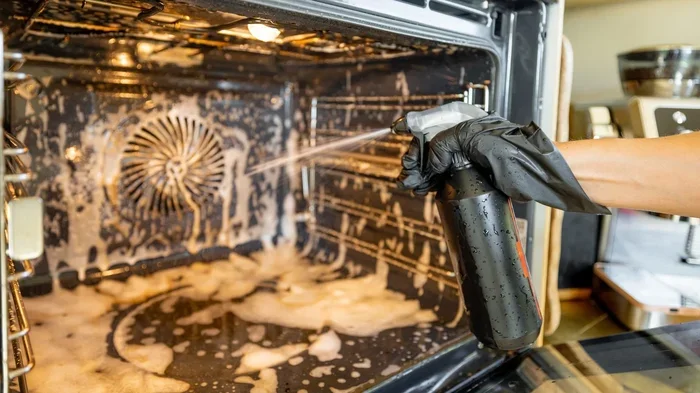
After the paste has had time to work, dampen a cloth or sponge with warm water and wipe away the paste. You will see the grime come off easily. For stubborn spots, gently scrub with a non-abrasive sponge. Repeat if needed for heavily greasy areas.
Quick Tip: For extra grease-fighting power, add a few drops of lemon juice to your baking soda paste. The acid helps cut through tough oil stains and leaves a fresh scent behind.
How To Clean Oily Oven With Vinegar
Vinegar is another fantastic ingredient for vinegar oven cleaning. White distilled vinegar is acidic, which makes it excellent at dissolving grease and mineral deposits. When combined with baking soda, it creates a chemical reaction that lifts dirt and grime from surfaces.
The Vinegar and Baking Soda Method
This method works best after you have already applied a baking soda paste. The vinegar reacts with the leftover baking soda to create a fizzy action that loosens stuck-on grime.
Here is how to do it:
- After removing the baking soda paste, spray or sprinkle white vinegar lightly over the oven surfaces.
- Watch the fizzing reaction as the vinegar meets any remaining baking soda.
- Let it sit for 10 to 15 minutes.
- Wipe everything down with a damp cloth.
- Rinse with clean water and dry with a soft towel.
This oven cleaning solution is perfect for tackling greasy oven buildup that has been sitting for weeks. The fizzy reaction helps lift dirt that simple wiping cannot reach.
Using Vinegar as a Standalone Cleaner
You can also use vinegar on its own for lighter cleaning jobs. Mix equal parts white vinegar and warm water in a spray bottle. Spray the inside of your oven and let it sit for five minutes. Then wipe clean with a damp cloth. This works well for regular oven cleaning routine maintenance between deeper cleans.
Vinegar is safe on most oven surfaces, including glass and metal. However, avoid using it on natural stone or marble surfaces, as the acid can damage them over time.
Natural Cleaners vs Commercial Oven Products
When it comes to oven cleaning products, you have two main options: natural homemade cleaners and commercial chemical sprays. Both have their pros and cons. Let us compare them so you can decide what works best for your needs.
Comparison Table
| Feature | Natural Cleaners | Commercial Products |
|---|---|---|
| Cost | Very affordable (pennies per use) | Moderate to expensive |
| Toxicity | Non-toxic and safe | May contain harsh chemicals |
| Grease Removal | Good for light to moderate grease | Excellent for heavy buildup |
| Ease of Use | Requires soaking time | Quick spray and wipe |
| Environmental Impact | Eco-friendly | May contain harmful chemicals |
| Availability | Always available at home | Must purchase at store |
| Scent | Lemon or vinegar smell | Strong chemical fragrance |
When to Use Each Option
Natural cleaners are perfect for regular maintenance and light cleaning. They are safe around children and pets and do not fill your kitchen with harsh fumes. If your oven has only light to moderate grease, a natural oven cleaner will do the job just fine.
Commercial products shine when you are dealing with heavy, baked-on grease that has built up over months. Many oven degreaser products are formulated to dissolve tough grime quickly. If you choose a commercial product, look for one that is low in volatile organic compounds (VOCs) and always ventilate your kitchen while using it.
Common Mistakes to Avoid:
- Using abrasive scrubbers that scratch oven surfaces
- Mixing different chemical cleaners together
- Skipping the pre-soak step for tough grease
- Using too much water inside a hot oven
- Forgetting to remove racks before cleaning
How To Clean Oily Oven Racks and Glass
Oven racks and the glass door often need special attention. Racks sit in the bottom of the oven and catch the most drips and splatters. The glass door shows every streak and smear, making it one of the most visible parts of a dirty oven.
Cleaning Oven Racks
The best way to clean oven racks is to soak them separately. This loosens the grease and makes scrubbing much easier.
Here is what to do:
- Remove the racks from the oven.
- Place them in a large sink or bathtub.
- Cover them with hot water and add two tablespoons of dish soap.
- Add half a cup of baking soda for extra grease-fighting power.
- Let them soak for at least two hours, or overnight for heavily greasy racks.
- Scrub with a non-abrasive sponge to remove loosened grime.
- Rinse thoroughly and dry completely before placing them back in the oven.
If your racks are extremely greasy, you can also boil them in a large pot with water and dish soap. This method works well for burnt grease removal on metal racks. Just make sure the racks are fully submerged and let them simmer for 30 minutes.
Cleaning the Oven Door Glass
The glass door on your oven lets you watch food cook, but it also shows every streak and stain. A clean oven door glass makes your whole oven look much better.
For the glass, make a paste of baking soda and water. Spread it on the glass and let it sit for 15 to 20 minutes. Then wipe it away with a damp cloth. For stubborn spots, spray vinegar on the paste and let it fizz before wiping. Finish by buffing the glass with a dry, lint-free cloth for a streak-free shine.
Another great method is to use a mixture of equal parts vinegar and warm water in a spray bottle. Spray it on the glass, wait five minutes, and wipe clean. This is a quick and easy option for regular oven maintenance tips between deep cleans.
Expert Insight: Many homeowners do not realize that cleaning the oven glass from the outside matters too. Use the same baking soda paste on the outer glass door. This removes fingerprints, cooking splatter, and grease marks that build up over time from opening and closing the door.
Preventing Grease Buildup in Your Oven
The best way to keep your oven clean is to prevent grease from building up in the first place. A few simple habits can save you hours of scrubbing and make your oven cleaning routine much easier.
Use Foil and Baking Sheets
Lining the bottom of your oven with aluminum foil or a baking sheet catches drips before they reach the oven floor. This simple trick prevents grease from baking onto the oven walls and floor. Just make sure the foil does not touch the heating elements, as this can cause a fire hazard.
Clean Spills Immediately
When food spills happen, clean them up as soon as the oven cools down. The longer a spill sits, the harder it becomes to remove. A quick wipe with a damp cloth after each use keeps grease from building up into a tough mess.
Steam Clean Your Oven
Steaming is a gentle but effective way to keep your oven fresh. Place a heat-safe bowl of water in the oven and heat it on high for 10 to 15 minutes. The steam loosens grease and grime, making it easier to wipe away. This steam clean oven method works great for light maintenance between deeper cleaning sessions.
Establish a Regular Cleaning Schedule
Set a schedule for cleaning your oven. A light wipe-down every two weeks prevents heavy buildup. A deeper clean every three to four months keeps your oven in top shape. Sticking to a schedule means you never have to face a completely greasy oven again.
Here is a simple schedule you can follow:
- Every two weeks: Wipe down the interior with a damp cloth
- Every month: Clean the oven racks and glass door
- Every three to four months: Perform a full deep clean with baking soda paste
- After every large meal: Check for spills and wipe them up
Quick Tip: Place a layer of salt on the oven floor before cooking. Salt absorbs grease and prevents it from sticking to the oven surface. After cooking, simply sweep it up and wipe the area clean.
Common Mistakes When Cleaning an Oily Oven
Even with the best intentions, people make mistakes when cleaning their ovens. Avoiding these common errors saves time and protects your oven from damage.
One of the biggest mistakes is using steel wool or abrasive scrubbers. These can scratch the enamel or non-stick surfaces inside your oven. Once the surface is scratched, grease sticks more easily, making future cleaning even harder. Always use a soft sponge or microfiber cloth.
Another mistake is not letting the cleaning solution sit long enough. Baking soda paste needs time to break down grease. If you wipe it away after just 10 minutes, you are not giving it a chance to work. Always let it sit for at least a few hours, or ideally overnight.
Some people also use too much water when cleaning. Excess water can drip into the oven’s electrical components or heating elements. Use damp cloths and sponges instead of soaking the interior. A little moisture goes a long way in cutting through grease.
Finally, never mix bleach with vinegar or ammonia-based cleaners. These combinations create toxic fumes that are dangerous to breathe. Stick to one cleaning method at a time and rinse thoroughly between uses.
Conclusion
How To Clean Oily Oven is easier than most people think. With simple ingredients like baking soda and vinegar, you can tackle even the toughest grease buildup without harsh chemicals. Whether you prefer a natural oven cleaner approach or want to use a commercial oven degreaser, the methods in this guide give you options for every level of mess.
Remember that prevention is just as important as cleaning. Using foil, cleaning spills right away, and following a regular schedule keeps your oven in great shape all year round. A clean oven cooks food better, smells fresher, and lasts longer.
Start with the baking soda method for your next cleaning session. You will be amazed at how well it works. Your oven will look and smell like new, and you will save money by skipping expensive chemical products. Happy cleaning!
Frequently Asked Questions
Can I use baking soda and vinegar together to clean my oven?
Yes, absolutely. Baking soda and vinegar work great together for oven cleaning. Apply baking soda paste first, let it sit overnight, then spray vinegar over it. The fizzy reaction helps lift grease and grime from the oven surfaces. This is one of the most popular oven cleaning hacks for a reason.
How often should I deep clean my oven?
A deep clean every three to four months is usually enough for regular home cooks. If you cook frequently or use your oven for fatty or oily foods, you may need to clean it more often. Regular light cleaning every two weeks helps reduce the need for deep cleaning sessions.
Is it safe to clean a self-cleaning oven with homemade solutions?
Yes, homemade solutions are safe for self-cleaning ovens. In fact, many people prefer natural cleaners because they avoid the strong fumes that come with the self-cleaning cycle. Just make sure you do not use abrasive tools on the interior, and always let the oven cool completely before cleaning.
What is the best way to remove burnt-on grease from the oven floor?
The best method is to apply a thick layer of baking soda paste and let it sit overnight. The paste softens burnt grease and makes it easier to wipe away. For extremely stubborn spots, add a little vinegar to the paste and scrub gently with a non-abrasive sponge. This approach is safe and effective for remove oil stains oven floors.
Are commercial oven cleaners safe to use?
Most commercial oven cleaners are safe when used as directed. However, they often contain strong chemicals that can irritate your skin and lungs. Always wear gloves, ventilate your kitchen, and avoid using them near food. If you prefer a safer option, natural cleaners like baking soda and vinegar work well for most cleaning jobs.
Can I clean my oven racks in the dishwasher?
Yes, you can clean oven racks in the dishwasher, but it may not remove all the grease. For best results, soak them in hot soapy water with baking soda first, then run them through the dishwasher. This two-step process ensures clean oven racks that are free from sticky grease and baked-on residue.