How To Cook A Beef Chuck Roast In Oven And Get It Right
Learning how to cook a beef chuck roast in oven is easier than you think. This guide walks you through every step from picking the right cut to serving a perfect pot roast. You will get clear tips on seasoning, searing, oven temperature, and cooking time. A beef chuck roast becomes fork-tender when you use low and slow heat. Follow this guide and you will never serve a dry roast again.
There is nothing quite like a beef chuck roast coming out of the oven. The kitchen smells amazing. The meat is tender and falls apart with a fork. And the gravy? Pure gold.
If you have been wondering how to cook a beef chuck roast in oven, you are in the right place. This guide covers everything from start to finish. You do not need to be a fancy chef to nail this recipe. All you need is a little patience and a hot oven. Oven-braised beef is one of the most forgiving cooking methods. Even if you are a beginner, you will get great results.
We will walk through every single step. You will learn about picking the right cut, seasoning it well, and getting the oven temperature just right. By the end, you will feel confident enough to make this dish anytime. A pot roast dinner is perfect for family nights, holidays, or any day you want a warm, hearty meal.
Key Takeaways
- Choose the right cut: A well-marbled beef chuck roast gives you the best flavor and tenderness.
- Sear before baking: Searing locks in juices and builds a rich brown crust.
- Low and slow is key: Cook at 300-325°F for a tender, juicy result.
- Add liquid and vegetables: Beef broth and root vegetables make the roast moist and flavorful.
- Use a kitchen thermometer: An internal temp of 195-205°F ensures the roast is perfectly done.
- Rest before slicing: Let the roast rest for 15-20 minutes to keep juices inside.
- Store leftovers properly: Refrigerate within two hours and enjoy for up to four days.
📑 Table of Contents
- Why A Beef Chuck Roast Is Perfect For Oven Cooking
- Choosing The Right Chuck Roast
- How To Prep Your Chuck Roast
- The Best Oven Temperature And Time
- Adding Vegetables And Liquid
- Serving And Storing Your Roast
- Common Mistakes To Avoid
- Expert Tips For The Best Chuck Roast
- Frequently Asked Questions
- Conclusion
Why A Beef Chuck Roast Is Perfect For Oven Cooking
What Makes Chuck Roast So Great
The beef chuck roast comes from the shoulder area of the cow. This muscle works hard, which means it has lots of connective tissue and fat. When you cook it low and slow, all that collagen breaks down. The result is tender beef roast that melts in your mouth. You simply cannot get this texture from lean cuts like sirloin or tenderloin.
Chuck roast oven recipes work so well because the oven provides even, steady heat. Unlike a stovetop where hot spots can burn the meat, an oven surrounds the roast with consistent warmth. This makes braised beef chuck one of the easiest dishes to master.
Why The Oven Works Best For Pot Roast
Using an oven for slow cooking beef has many advantages. First, you do not need to stand over a stove and watch it. Once the roast is in the oven, you can go about your day. Second, the enclosed space keeps moisture locked in. This means your roast stays juicy instead of drying out.
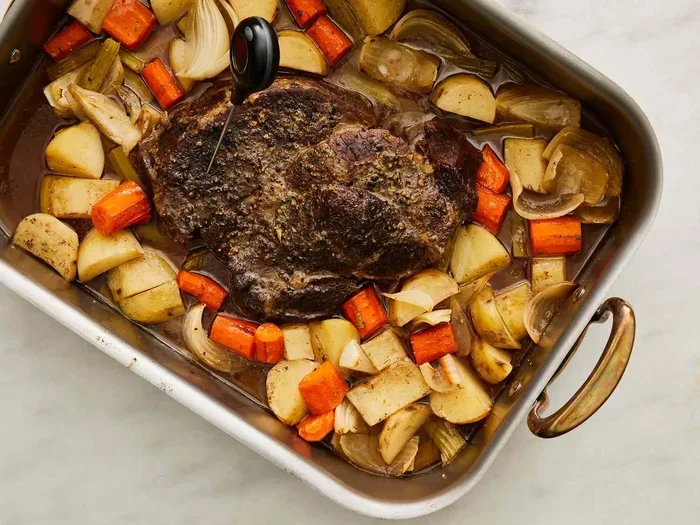
Another big plus is that you can cook vegetables right in the same pan. Carrots, potatoes, and onions all soak up the beefy juices. Everything cooks together in one dish. That means less cleanup and more flavor. Oven pot roast is truly a one-pot meal that the whole family will love.
Choosing The Right Chuck Roast
Picking The Best Cut At The Store
Not all chuck roasts are the same. When you are at the butcher or grocery store, look for a cut with good marbling. Marbling is the thin white lines of fat running through the meat. More marbling means more flavor and more tenderness after cooking. Avoid lean cuts for this recipe because they can turn tough and dry.
The label should say “beef chuck roast” or “pot roast”. Some stores sell it as a “chuck eye roast” or “chuck roll.” These are all good options. If you are unsure, just ask the butcher. They can point you to the best piece for oven braising.
Size And Thickness Matter
For most families, a roast weighing 3 to 4 pounds is ideal. This size fits well in a standard Dutch oven or oven-safe baking dish. A chuck roast size that is too small will dry out fast. One that is too big may not cook evenly.
Try to pick a roast that is about 4 to 5 inches thick. Thicker cuts hold more moisture during the long cook time. If you buy a very thin piece, it will overcook before the inside becomes tender. Beef chuck roast cooking time depends a lot on the size, so plan accordingly.
| Roast Weight | Approximate Cook Time | Oven Temp |
|---|---|---|
| 2-3 lbs | 3-4 hours | 325°F |
| 3-4 lbs | 4-5 hours | 325°F |
| 4-5 lbs | 5-6 hours | 300°F |
| 5-6 lbs | 6-7 hours | 300°F |
How To Prep Your Chuck Roast
Seasoning The Roast Properly
Seasoning is where the flavor starts. Keep it simple but effective. A good base is salt, black pepper, garlic powder, and onion powder. Sprinkle this mix generously over all sides of the roast. Do not be shy with the salt. It helps draw out moisture and creates a beautiful crust during searing.
Some cooks like to add paprika, cumin, or dried herbs like rosemary and thyme. These extras add depth to the flavor. But the basics are all you really need. The long cooking time will let the seasonings sink deep into the meat. A well-seasoned chuck roast seasoning makes a huge difference in the final dish.
Searing For Maximum Flavor
Searing is the step most people skip. Do not make that mistake. Searing the roast before it goes in the oven adds a rich, deep flavor. This process is called the Maillard reaction. It creates complex flavors that you simply cannot get any other way.
Here is how to do it. Pat the roast dry with paper towels. Heat a tablespoon of oil in a Dutch oven over medium-high heat. Once the oil is shimmering, place the roast in the pot. Let it sear for about 3-4 minutes on each side. You want a dark brown crust, not just a light tan. Use tongs to turn the roast and sear the edges too.
After searing, remove the roast and set it aside. You will use the browned bits stuck to the pot to build your braising liquid. Those bits are pure flavor gold. This step is what separates a good oven-braised beef from a great one.
The Best Oven Temperature And Time
Temperature Guide For Perfect Results
The secret to a perfect beef chuck roast is low and slow heat. Set your oven to 300°F or 325°F. Higher temperatures will cook the outside too fast before the inside has time to become tender. Low and slow cooking gives the collagen time to break down into gelatin. That is what makes the meat so tender and juicy.
Some recipes call for 275°F for an even slower cook. This works great too. It just adds an extra hour or so to the total time. The key is to keep the temperature steady. Avoid opening the oven door too often. Every time you open it, the temperature drops and the cook time increases.
Cooking Time By Weight
A good rule of thumb is about 30 minutes per pound at 325°F. So a 3-pound roast needs roughly 90 minutes. A 4-pound roast needs about 2 hours. But these are just starting points. The real way to know if your roast is done is with a kitchen thermometer.
The target internal temperature for a tender pot roast is between 195°F and 205°F. At this range, the connective tissue has fully broken down. The meat will be fall-apart tender. If you pull it out at 180°F, it will still be okay but not as tender. Be patient. The extra time makes all the difference.
Adding Vegetables And Liquid
Best Vegetables For Pot Roast
Vegetables are a big part of any great pot roast. They soak up the rich beef broth and become incredibly flavorful. The best choices are hearty vegetables that can handle long cooking times. Carrots, potatoes, onions, and celery are the classic options.
Cut the vegetables into large chunks. They need to hold their shape during the long cook. Small pieces will turn to mush. Place the vegetables around and under the roast. This way they get maximum exposure to the juices. You can also add parsnips, turnips, or sweet potatoes for variety.
Liquid Choices For Braising
The liquid is what creates the steam that cooks the roast gently. Beef broth is the most popular choice. It adds rich, savory flavor to the meat and the vegetables. You can also use a mix of beef broth and red wine for a deeper taste.
A good starting point is about 2 cups of liquid for a 3-4 pound roast. You want the liquid to come about one-third to one-half way up the sides of the roast. It should not cover the top. The roast needs to be partially exposed so it can brown and develop flavor.
Other liquid options include beef stock, red wine, beer, or a mix of broth and tomato paste. Each one adds a different flavor profile. Tomato paste gives the gravy a rich, slightly sweet depth. Red wine adds a subtle complexity. Experiment and find what you like best. Braising liquid is the foundation of your entire dish, so take time to get it right.
Serving And Storing Your Roast
How To Tell When The Roast Is Done
Knowing when the roast is ready is the most important part. The best tool for this is a meat thermometer. Insert it into the thickest part of the roast, avoiding any bones. When the temperature hits 195-205°F, your tender beef roast is ready.
You can also test it with a fork. Gently poke the meat with a fork and twist. If it shreds apart easily, it is done. If there is any resistance, it needs more time. Do not rush this step. A perfectly cooked roast is worth the wait.
Letting The Roast Rest
Once the roast is out of the oven, let it rest for at least 15-20 minutes. This step is just as important as the cooking. During resting, the juices redistribute throughout the meat. If you cut into it right away, the juices will run out and the roast will be dry.
Cover the roast loosely with aluminum foil during resting. This keeps it warm without trapping too much steam. After resting, you can slice it against the grain for the most tender pieces. Resting your roast is a simple step that makes a big difference.
Leftover Ideas And Storage
Beef roast leftovers are some of the best meal leftovers you can have. Shredded chuck roast makes amazing sandwiches the next day. Add some barbecue sauce and coleslaw for a pulled beef sandwich. You can also chop it up and toss it into soups, stews, or tacos.
Store leftovers in an airtight container in the refrigerator. They will keep for up to four days. You can also freeze the roast for up to three months. Reheat gently on the stovetop or in the microwave. Adding a splash of beef broth while reheating keeps the meat moist. Do not reheat at high heat or the roast will dry out quickly.
Common Mistakes To Avoid
Even experienced cooks can make mistakes with oven pot roast. Here are the most common ones to watch out for.
- Skipping the sear: Searing adds a layer of flavor you cannot get any other way. Do not skip this step.
- Using too high heat: High heat dries out the roast before the inside can become tender. Stick with 300-325°F.
- Not using enough liquid: The liquid creates the steam that braises the meat. Too little liquid and the roast will dry out.
- Opening the oven too often: Every time you open the door, the temperature drops. This adds unnecessary cooking time.
- Cutting too soon: Cutting into the roast right after it comes out lets all the juices escape. Always let it rest.
- Using a pan that is too small: The roast needs room for air to circulate. Use a Dutch oven or baking dish that fits the roast comfortably.
Expert Tips For The Best Chuck Roast
Use a Dutch oven. This heavy pot distributes heat evenly and locks in moisture. It is the best tool for oven-braised beef. If you do not have one, any oven-safe deep baking dish will work.
Bring the roast to room temperature before cooking. Take it out of the refrigerator about 30 minutes before it goes in the oven. This helps it cook more evenly from edge to center.
Add a splash of vinegar or Worcestershire sauce to the braising liquid. This brightens up the flavor and cuts through the richness. It is a small addition that makes a noticeable difference.
Make the gravy on the stovetop after cooking. Pour the juices from the pot into a saucepan. Add a bit of flour or cornstarch to thicken it. Season with salt and pepper. You will have a rich, homemade gravy that elevates the whole dish.
Do not be afraid of a long cook time. The magic of beef chuck roast is in the patience. The longer it cooks at low heat, the more tender it becomes. If you have the time, go for it.
Frequently Asked Questions
Can I cook a beef chuck roast in oven without a Dutch oven?
Yes, you absolutely can. Any deep, oven-safe baking dish or roasting pan will work. Just make sure it has a lid or you can cover it tightly with aluminum foil. The lid helps trap moisture and creates the steaming effect needed for braising. A Dutch oven is ideal because it holds heat so well, but it is not required.
How long does it take to cook a beef chuck roast in oven at 325°F?
At 325°F, a 3-4 pound chuck roast typically takes about 4 to 5 hours. The exact time depends on the size and thickness of the roast. A good rule is about 30 minutes per pound. Always use a meat thermometer to check the internal temperature. The roast is done when it reaches 195-205°F.
What is the difference between braising and roasting?
Braising involves cooking with liquid in a covered pot at low heat. Roasting typically means cooking dry in an open pan at higher heat. Oven-braised beef uses a small amount of liquid and a lid to create tender, moist meat. Regular roasting without liquid can dry out a chuck roast because it lacks the connective tissue to stay juicy at high temperatures.
Can I use frozen beef chuck roast for this recipe?
It is best to use a thawed roast for even cooking. If you must cook from frozen, add about an extra hour to the cook time. The roast will cook more unevenly because the outside will be overcooked before the center thaws. For the best results, thaw the roast in the refrigerator overnight before cooking.
How do I know if my chuck roast is done without a thermometer?
The fork test is your best friend. Poke the meat with a fork and twist gently. If the meat shreds apart easily and offers no resistance, it is done. You can also press the meat with a spoon or tongs. A fully cooked roast will feel very soft and give way easily. If it feels firm or springy, it needs more time.
What vegetables pair best with a beef chuck roast?
Classic choices include carrots, potatoes, onions, and celery. These hearty vegetables hold up well during long cooking times. You can also add parsnips, turnips, sweet potatoes, or mushrooms. Cut everything into large chunks so they do not fall apart. Place them around the roast so they absorb all the flavorful juices from the braising liquid.
Conclusion
How to cook a beef chuck roast in oven is a skill that will serve you well for years to come. It is one of the most rewarding dishes you can make at home. The process is simple. Season the roast, sear it, add liquid and vegetables, and let the oven do the work. Low and slow oven cooking transforms a tough cut of meat into something truly spectacular.
Remember the key points. Choose a well-marbled roast. Sear it for flavor. Keep the oven at 300-325°F. Use enough liquid. Cook until the internal temp reaches 195-205°F. And always let it rest before slicing. Follow these steps and you will serve a tender beef roast that will impress everyone at the table.
Now that you have all the tools and tips, it is time to get cooking. Grab a chuck roast from the store, preheat your oven, and start your journey to the perfect pot roast. A delicious beef chuck roast dinner is just a few hours away. Enjoy every bite.