How Fine To Grind Coffee Beans For The Best Espresso
The ideal grind for espresso is very fine, like powdered sugar. How fine to grind coffee beans for espresso depends on your grinder and machine. A consistent, fine grind ensures proper extraction and rich crema. This guide walks you through the exact settings, common mistakes, and expert tips.
Making a great espresso starts long before the water touches the coffee. The secret lives in the grind. If you have ever wondered how fine to grind coffee beans for espresso, you are not alone. The answer is not a single number. It is a balance of particle size, consistency, and personal taste. This guide will show you exactly what to look for, how to adjust your grinder, and how to fix common problems. You will learn the difference between a sour shot and a bitter one, all by changing the grind. Let us dive in.
Espresso is all about pressure. Hot water forces through tightly packed, finely ground coffee in about 25 to 30 seconds. That short window demands a very specific texture. Too coarse, and the water rushes through, giving you a weak, sour shot. Too fine, and the water struggles to pass, leading to over-extraction and bitterness. How fine to grind coffee beans for espresso is the single most important variable you control at home. Get it right, and you will pull shots with thick, golden crema and balanced flavor.
Many beginners buy an expensive espresso machine but skip the grinder. That is a mistake. The grinder matters just as much as the machine. In fact, a great grinder on a modest machine can outperform a cheap grinder on a high-end machine. This article focuses on the grind itself, but we will also touch on cleaning and maintenance because a dirty grinder taints every shot. You will even see how keeping your kitchen gear clean, like knowing how to use Aqualift self clean on Kitchenaid oven, helps you stay focused on brewing.
Key Takeaways
- Fine grind is essential: Espresso requires a very fine, uniform grind to create the right pressure and extraction.
- Burr grinders win: They produce consistent particle sizes, which blade grinders cannot match.
- Dial in your shot: Adjust grind size based on brew time, taste, and crema color.
- Avoid common mistakes: Using the wrong grind, stale beans, or inconsistent tamping ruins the shot.
- Clean your gear: Regular cleaning keeps your grinder and oven in top shape, just like you would clean an oven with a dishwasher tablet without scrubbing for a deep, easy clean.
- Use the right tools: A scale, timer, and tamper help you perfect your espresso routine.
📑 Table of Contents
Understanding Espresso Grind Size
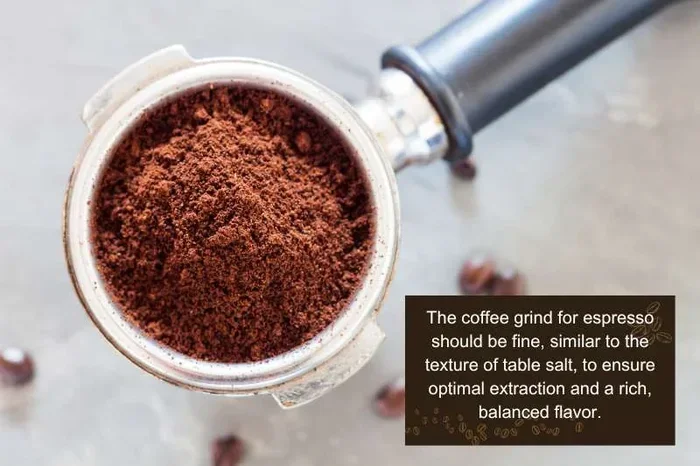
The grind size for espresso sits at the very fine end of the spectrum. Think of a scale from flour to sea salt. Espresso needs something closer to flour, but not quite powder. The goal is a texture that feels like fine sand or powdered sugar. When you rub a pinch between your fingers, it should feel smooth, not gritty.
Why Does Grind Size Matter So Much?
Grind size controls the surface area of the coffee. Fine grinds expose more surface to the water, speeding up extraction. In espresso, this happens in under 30 seconds. If the grind is too large, the water zips through the puck without extracting enough flavor. You get a thin, sour cup. If the grind is too small, the water pools and over-extracts. You get harsh, bitter notes. The sweet spot is a grind that yields a 25- to 30-second brew time for a double shot.
Here is a simple way to picture it. Imagine a coffee puck as a sponge. Coarse grinds create big holes. Water flows right through. Fine grinds create tiny, dense holes. Water moves slowly, pulling out more flavor. How fine to grind coffee beans for espresso is really about finding the density that lets water flow at just the right speed.
The Fine Grind Spectrum
Not all fine grinds are the same. There is a range within espresso grinding. Here is a quick breakdown:
- Extra fine (flour-like): Almost powdery. Risk of channeling and over-extraction. Use only if your machine runs very hot.
- Fine (powdered sugar): The standard starting point for most espresso machines. This is where most people land.
- Medium-fine (table salt): Slightly coarser. Good for pre-infusion machines or if you taste bitterness.
- Coarse (sea salt): Too coarse for true espresso. You will get a fast, weak shot.
When you ask how fine to grind coffee beans for espresso, the target is the fine to medium-fine zone. Start at powdered sugar and adjust from there.
How To Set Your Grinder For The Perfect Fine Grind
Setting your grinder correctly is the first step to dialing in your espresso. Whether you use a burr grinder or a blade grinder, the process is similar. You will make small, deliberate changes and taste the results.
Burr Grinders vs. Blade Grinders
Burr grinders crush beans between two abrasive surfaces. They produce a much more uniform particle size. This consistency is critical for espresso because it ensures even extraction. Blade grinders chop beans with spinning blades. They create a mix of fine powder and coarse chunks. That uneven mix leads to channeling and inconsistent shots.
If you are serious about espresso, invest in a burr grinder. It is the single best upgrade you can make. A quality burr grinder lets you set the grind size precisely. You can turn the dial to the exact position needed for how fine to grind coffee beans for espresso. With a blade grinder, you are guessing.
Dialing In Your Grinder
Dialing in means adjusting the grind until your shot tastes balanced. Follow these steps:
- Start with a fine setting, like powdered sugar.
- Grind 18 to 20 grams of coffee for a double shot.
- Tamp evenly with firm pressure.
- Pull a shot and time it. The goal is 25 to 30 seconds from start to finish.
- Taste the shot. Is it sour or salty? The grind is too coarse. Is it bitter or hollow? The grind is too fine.
- Adjust one notch at a time. Make small changes.
- Repeat until you hit a 25- to 30-second brew time and a balanced flavor.
This process takes patience. You might need to adjust the grind every day depending on humidity, bean age, and roast level. How fine to grind coffee beans for espresso is not a set-it-and-forget-it setting. It is a living adjustment.
Grind Settings By Machine Type
Different espresso machines respond differently to grind size. A commercial lever machine might need a slightly finer grind than a home semi-automatic machine. Here is a quick comparison:
| Machine Type | Typical Grind Setting | Brew Time Target |
|---|---|---|
| Lever (manual) | Very fine | 25-30 seconds |
| Semi-automatic | Fine | 25-30 seconds |
| Super-automatic | Fine (pre-set) | 20-30 seconds |
| Moka pot | Medium-fine | 4-5 minutes |
The Moka pot is not true espresso, but it uses a similar principle. The table above gives you a starting point. Always adjust based on taste.
The Role Of Grind Consistency In Espresso
Consistency is the hidden hero of espresso. Even if your average grind size is correct, a mix of very fine and coarse particles will cause problems. The fines (tiny particles) can clog the puck, while the boulders (large chunks) let water sneak through. This creates uneven extraction.
What Causes Inconsistent Grinds?
Several factors affect grind consistency:
- Grinder quality: Cheap burr grinders have wider particle size distributions. Expensive ones are tighter.
- Bean freshness: Very fresh beans are more brittle and can shatter into uneven sizes.
- Static electricity: Fine grinds cling to the catch bin, causing clumping.
- Heat buildup: Grinding too fast heats the beans, changing their texture and oil content.
To combat static, some baristas use a technique called the WDT method. They stir the grounds with a needle-like tool before tamping. This breaks up clumps and promotes even extraction. Consistency is so important that when you learn how fine to grind coffee beans for espresso, you must also learn how to keep that grind uniform.
Testing Your Grind Consistency
You can do a simple test at home. Take a small sample of your ground coffee and spread it on a dark surface. Look closely. Do you see a lot of very fine dust? Are there visible chunks? A good espresso grind should look mostly uniform, with only a few fines. If you see a wide range of sizes, your grinder may need cleaning or replacement.
Common Mistakes When Grinding Coffee For Espresso
Even experienced home baristas make grinding mistakes. Avoiding these pitfalls will save you hours of frustration and bad shots.
Mistake 1: Using Pre-Ground Coffee
Pre-ground coffee loses freshness fast. The oils oxidize, and the flavor goes flat. Espresso is especially sensitive because it uses such a small amount of coffee. Always grind beans just before brewing. If you must buy pre-ground, use it within a week and store it in an airtight container.
Mistake 2: Grinding Too Far Ahead
Some people grind a full week of coffee on Sunday. This is a bad idea for espresso. The grounds will absorb moisture and lose their aromatic compounds. Grind only what you need for the next few minutes.
Mistake 3: Ignoring The Grinder Burrs
Burr grinders have moving parts that wear down over time. Dirty burrs produce inconsistent grinds and can even add a metallic taste. Regular cleaning is essential. In fact, keeping your kitchen equipment clean extends to everything. Just as you might clean an oven with a dishwasher tablet without scrubbing for an effortless deep clean, you should clean your grinder burrs regularly with a soft brush and a quick wipe.
Mistake 4: Tamping Unevenly
Even with the perfect grind, an uneven tamp creates channels. Water finds the path of least resistance and bypasses the coffee. This leads to a sour, under-extracted shot. Use a level tamp with about 30 pounds of pressure. The goal is a flat, uniform puck.
Mistake 5: Not Adjusting For Humidity
Coffee is hygroscopic. It absorbs moisture from the air. On a humid day, the same grind setting that worked yesterday might be too fine today. The grounds clump and slow the shot down. On dry days, the grind might be too coarse. Learn to adjust your settings with the seasons.
Cleaning Your Gear For Better Espresso
A clean grinder and machine are essential for great espresso. Oils from coffee build up inside the grinder and can turn rancid. This taints every shot with a bitter, off flavor. Regular cleaning keeps your equipment running smoothly and your coffee tasting fresh.
Cleaning Your Espresso Grinder
You should clean your grinder at least once a week. Remove the burrs or grinding chamber and brush out old grounds. Use a soft, dry brush to avoid damaging the burrs. Some grinders have a cleaning cycle. Run it with a small amount of rice or a dedicated grinder cleaning tablet. This pulls out trapped oils and fines.
For the machine group head and portafilter, backflush with a detergent designed for espresso machines. This removes coffee residue from the shower screen and dispersion block. Clean parts regularly, and your espresso will taste brighter and more vibrant.
Keeping Your Kitchen Equipment Spotless
Espresso making is a full kitchen experience. Your countertop, your machine, and even your oven need attention. If you use your oven to warm cups or keep water hot, you want it clean. A self-clean feature makes this easy. For example, if you own a Kitchenaid oven, you can use the Aqualift self clean on Kitchenaid oven to steam away grime without harsh chemicals. After a self-clean cycle on some models, you might need to unlock the LG oven door if you have that brand, so keep that in mind. Clean equipment is part of the ritual of making great coffee.
Fine-Tuning Your Espresso Shot
Once you have your grind dialed in, you can focus on the shot itself. Fine-tuning means watching the brew time, the color of the espresso, and the crema. These visual cues tell you if your grind is right.
Reading The Espresso Flow
A perfect shot starts with a slow, honey-like drip. It should look like warm caramel dripping from a spoon. If the flow is too fast and watery, your grind is too coarse. If the flow is a trickle or stops entirely, your grind is too fine. Adjust in small increments. A quarter turn on the grinder can make a big difference.
The Crema Test
Crema is the golden foam on top of a shot. Thick, persistent crema usually indicates a good grind and fresh beans. Thin, quickly fading crema suggests over-extraction or a too-fine grind. Dark, thin crema with large bubbles can mean under-extraction or a too-coarse grind. When you master how fine to grind coffee beans for espresso, you will read crema like a pro.
Shot Volume And Ratio
A standard double shot is about 2 ounces of liquid espresso, pulled from 18 to 20 grams of coffee. This 1:2 ratio is a great starting point. If you pull a 2-ounce shot in 25 seconds and it tastes balanced, you have found your sweet spot. If it tastes sour, try grinding finer to slow the extraction. If it tastes bitter, grind coarser to speed it up.
Temperature And Pressure
Grind size works hand-in-hand with water temperature and pressure. Most home machines run at 9 bars of pressure and 200°F to 205°F. If your machine runs hot, a slightly coarser grind can prevent over-extraction. If it runs cool, a finer grind helps. Always consider the full picture when troubleshooting your shot.
Expert Insight: The Dial-In Routine
Professional baristas follow a routine every morning. They grind a small amount, pull a shot, taste, and adjust. They keep notes on the grind setting, brew time, and taste. This habit is called dialing in. You can adopt it at home. Keep a small notebook or use your phone. Write down the grinder setting and the result. Over time, you will build an intuition for how fine to grind coffee beans for espresso without even thinking about it.
Remember, the perfect grind is not a fixed number. It is a range that shifts with the beans, the weather, and your machine. Embrace the process. Each adjustment is a step toward a better cup.
Conclusion
Learning how fine to grind coffee beans for espresso is a journey, not a destination. The ideal grind is fine, consistent, and tailored to your specific equipment. Start with a burr grinder set to a powdered sugar texture. Dial in by timing your shots and tasting the results. Avoid common mistakes like using stale pre-ground coffee or ignoring grinder maintenance. Clean your gear regularly, just as you would use Aqualift self clean on a Kitchenaid oven to keep it in top shape. With patience and practice, you will pull shots with rich crema and balanced flavor every single time. The perfect espresso is waiting. All you need is the right grind.
Frequently Asked Questions
What is the best grind size for espresso?
The best grind size for espresso is very fine, similar to powdered sugar or fine sand. It should feel smooth between your fingers, not gritty. This fine texture allows water to extract flavor at the right speed during the 25- to 30-second brew time.
Can I use a blade grinder for espresso?
You can, but the results will be inconsistent. Blade grinders chop beans into a mix of fine powder and coarse chunks. This uneven mix causes channeling and uneven extraction. A burr grinder is strongly recommended for espresso because it produces a uniform particle size.
How do I know if my grind is too fine or too coarse?
Watch your brew time and taste. A sour, salty, or thin shot usually means the grind is too coarse. A bitter, hollow, or slow-dripping shot usually means the grind is too fine. Aim for a 25- to 30-second extraction for a double shot.
Should I grind coffee right before brewing?
Yes, always. Coffee grounds lose freshness quickly. The aromatic oils oxidate within minutes of grinding. For the best espresso, grind only the amount you need for the immediate shot. This ensures maximum flavor and crema.
How often should I clean my espresso grinder?
You should clean your grinder at least once a week. Remove and brush out old grounds, and wipe down the burrs or chamber. A deep clean with a grinder cleaning tablet or a small amount of rice can remove built-up oils that turn rancid over time.
What if my espresso tastes bitter even with the right grind?
Bitterness can also come from water temperature that is too high, an over-extraction due to a long brew time, or stale beans. Check your machine temperature, shorten the brew time by grinding coarser, and use fresh roasted beans. Clean your machine regularly to remove old coffee oils that contribute to off-flavors.