Can Decaf Coffee Dehydrate You Discover The Real Answer
Can decaf coffee dehydrate you? The short answer is no. Decaf coffee is not a significant cause of dehydration. While it contains trace amounts of caffeine, the levels are too low to act as a strong diuretic. You can enjoy your cup of decaf without worrying about losing too much fluid.
You probably enjoy a warm cup of coffee in the morning. Maybe you switched to decaf because you want to cut back on caffeine. But then you heard a rumor. Someone told you that even decaf coffee can dehydrate you. That claim might have made you pause mid-sip. So what is the truth?
Can decaf coffee dehydrate you? The answer might surprise you. Most research says no. Decaf coffee is not a meaningful cause of dehydration. In this article, we will walk through the science, bust some myths, and give you clear answers. You will learn exactly what happens inside your body when you drink decaf. By the end, you will feel confident about your daily cup.
Let us start with the basics. Understanding what decaf coffee actually is makes everything clearer. From there, we will explore how caffeine affects hydration. We will also compare decaf to regular coffee. By the time you finish reading, you will know exactly how to stay hydrated while still enjoying your favorite beverage.
Key Takeaways
- Decaf coffee does not dehydrate you: The caffeine content is minimal, so it won’t cause significant fluid loss.
- Decaf still contains some caffeine: A typical cup has about 2 to 5 mg, compared to 95 mg in regular coffee.
- Coffee’s diuretic effect is mild: Even regular coffee only causes a slight increase in urine production.
- Water is still your best hydrator: But decaf can count toward your daily fluid intake.
- Individual responses vary: Some people may be more sensitive to caffeine, even in small amounts.
- Practical tip: Balance decaf coffee with plain water throughout the day for optimal hydration.
📑 Table of Contents
- What Is Decaf Coffee?
- The Science Behind Coffee and Dehydration
- How Much Caffeine Is In Decaf Coffee?
- Decaf Coffee vs Regular Coffee: Hydration Comparison
- Can Decaf Coffee Count As Water Intake?
- Who Should Be Careful With Decaf Coffee?
- Common Myths About Decaf Coffee and Hydration
- Expert Insights On Coffee and Hydration
- How To Make The Most Of Your Decaf Coffee
- Conclusion
What Is Decaf Coffee?
Decaf coffee starts as regular coffee beans. The decaffeination process removes most of the caffeine. But it does not remove all of it. A typical cup of decaf contains about 2 to 5 milligrams of caffeine. A regular cup of coffee has around 95 milligrams. That is a big difference.
The decaffeination process uses water, solvents, or carbon dioxide. These methods extract caffeine from the beans. Most methods remove about 97 percent of the caffeine. That means only a tiny amount remains. This trace amount is usually not enough to cause any noticeable effects.
How Is Caffeine Removed From Coffee Beans?
There are several methods used to remove caffeine. The Swiss Water Process uses only water and osmosis. It is chemical-free and popular among health-conscious drinkers. The direct solvent method uses methylene chloride or ethyl acetate. These solvents bind to caffeine molecules and remove them. The CO2 method uses pressurized carbon dioxide. Each method has its pros and cons. But all of them leave behind only a small amount of caffeine.
Even though the process is thorough, decaf is not completely caffeine-free. If you are extremely sensitive to caffeine, you might still notice a very mild effect. But for most people, that tiny amount does not impact hydration or sleep.
The Science Behind Coffee and Dehydration
To understand whether decaf coffee dehydrates you, we need to look at the science. The concern comes from caffeine’s diuretic effect. A diuretic is something that increases urine production. When you pee more, you lose fluid. That is where the dehydration idea comes from.
Caffeine does have mild diuretic properties. But here is the key detail. The effect is very weak at low doses. Decaf coffee contains so little caffeine that its diuretic effect is almost nonexistent. You would need to drink many cups of regular coffee to feel a noticeable diuretic effect. With decaf, you are nowhere near that threshold.
What Does Research Say About Coffee and Hydration?
Several studies have looked at this question directly. One study published in the journal PLOS ONE found that moderate coffee consumption does not lead to dehydration. Researchers gave participants either coffee or water over a period of time. They measured hydration levels using blood and urine markers. The results showed no significant difference between the two groups.
Another study from the British Journal of Nutrition confirmed similar findings. Regular coffee drinkers showed no signs of fluid loss compared to water drinkers. Even habitual coffee consumption did not cause a net loss of body water. These findings are reassuring for coffee lovers everywhere.
The bottom line is clear. Coffee, including decaf, contributes to your daily fluid intake. It does not pull water out of your body the way many people believe. Your kidneys handle the small amount of caffeine efficiently. They balance fluid levels without any problem.
How Much Caffeine Is In Decaf Coffee?
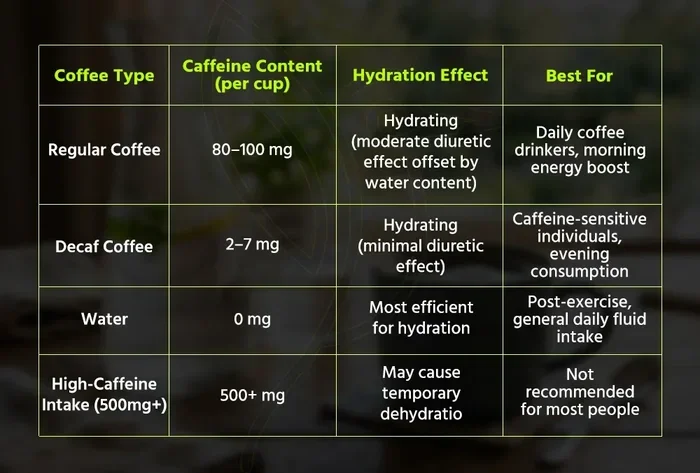
The caffeine content in decaf coffee varies by brand and brewing method. On average, an 8-ounce cup contains about 2 to 5 milligrams. Compare that to a regular cup with 95 milligrams. Decaf has roughly 97 percent less caffeine. That is a massive reduction.
Some brands may have slightly more or less. The roasting process also plays a role. Darker roasts tend to have slightly less caffeine than lighter roasts. But the difference is small either way. What matters most is that the amount is too low to cause dehydration.
Caffeine Content Comparison Table
- Regular Coffee (8 oz): 80 to 100 mg of caffeine
- Decaf Coffee (8 oz): 2 to 5 mg of caffeine
- Espresso (1 oz): 63 mg of caffeine
- Decaf Espresso (1 oz): 0 to 15 mg of caffeine
- Instant Coffee (8 oz): 30 to 90 mg of caffeine
- Decaf Instant Coffee (8 oz): 2 to 5 mg of caffeine
As you can see, the caffeine in decaf is minimal. Even if you drink three or four cups throughout the day, you are still consuming less than 20 milligrams total. That is not enough to trigger any meaningful diuretic response. Your body handles it easily.
Decaf Coffee vs Regular Coffee: Hydration Comparison
People often wonder whether switching to decaf changes how their body handles fluids. The answer is straightforward. Both regular and decaf coffee contribute to your overall hydration. The difference lies in the caffeine content, not in the water content.
A standard cup of coffee is mostly water. About 98 percent of brewed coffee is water. Whether that water contains a little caffeine or none at all does not change its hydrating power. Your body absorbs the water the same way either way.
Does Regular Coffee Dehydrate You?
Regular coffee has more caffeine, so the question comes up more often. The truth is that regular coffee still does not dehydrate you in moderate amounts. Studies show that habitual coffee drinkers develop a tolerance to caffeine’s diuretic effect. Your body adjusts over time. The mild increase in urine production is offset by the fluid you consume in the coffee itself.
However, there is a caveat. If you drink very large amounts of regular coffee, you might notice a slight diuretic effect. We are talking about five or more cups per day. Even then, the dehydration risk is minimal if you also drink water throughout the day. For most people, moderate coffee consumption of any kind is perfectly fine for hydration.
Why Do People Believe Coffee Causes Dehydration?
This myth has been around for decades. It likely started because caffeine does have a mild diuretic effect. Early studies focused on high doses of caffeine isolated from coffee. Those results were then applied to coffee drinking in general. But the context was wrong. The amount of caffeine in a normal cup of coffee is too low to cause meaningful dehydration.
Also, coffee makes some people pee more soon after drinking it. That immediate urge can feel like dehydration. But it is just your body responding to the warm liquid and the small amount of caffeine. You are still gaining more fluid than you lose. The net effect is positive for hydration.
Can Decaf Coffee Count As Water Intake?
The short answer is yes. Decaf coffee can absolutely count toward your daily fluid intake. Health experts generally agree that moderate coffee consumption contributes to your overall hydration. This includes both regular and decaf varieties.
Your body needs about 2 to 3 liters of fluid per day. This includes water from all sources. Beverages like coffee, tea, and juice all contribute. Food also provides some water, especially fruits and vegetables. So your morning cup of decaf is definitely doing its part.
How Much Fluid Do You Actually Need?
The old advice of eight glasses a day is a good starting point. But individual needs vary. Your body size, activity level, and climate all play a role. Hot weather and exercise increase your fluid needs. So does pregnancy or breastfeeding. Pay attention to your body’s signals. Thirst is a reliable guide for most people.
One easy way to check your hydration is the color of your urine. Pale yellow means you are well hydrated. Dark yellow suggests you need more fluids. Clear urine might mean you are over-hydrated. Use this simple test as a daily guide.
Tips For Staying Hydrated While Enjoying Coffee
Here are some simple tips to keep your hydration balanced:
- Drink a glass of water with your morning coffee.
- Pace yourself throughout the day. Do not gulp large amounts at once.
- Include hydrating foods like watermelon, cucumbers, and oranges in your diet.
- Set a water reminder on your phone if you tend to forget.
- Alternate between coffee and water during the day.
- Listen to your body. If you feel thirsty, drink more fluids.
These small habits make a big difference. They help you enjoy your coffee without any guilt or worry about hydration.
Who Should Be Careful With Decaf Coffee?
Most people can drink decaf without any concerns. But some individuals should be more mindful. Certain health conditions or medications can interact with even small amounts of caffeine. If you fall into one of these groups, it is worth paying extra attention.
Pregnant or Breastfeeding Women
Health guidelines recommend limiting caffeine during pregnancy. The general advice is to stay under 200 milligrams per day. Decaf is a great choice for pregnant women who still want the taste of coffee. With only 2 to 5 milligrams per cup, decaf fits comfortably within safe limits. But it is always best to consult your doctor.
People With Sensitive Caffeine Tolerance
Some people feel jittery or anxious from even small amounts of caffeine. If you are one of them, decaf is a safe option. The trace caffeine is usually not enough to cause issues. But if you notice any symptoms, consider switching to caffeine-free herbal tea instead.
People With Acid Reflux or Stomach Issues
Coffee of any kind can trigger acid reflux in some people. This is because coffee increases stomach acid production. Decaf is slightly less acidic than regular coffee. But it can still cause discomfort for those with sensitive stomachs. If you experience heartburn after drinking decaf, try limiting your intake or switching to low-acid coffee brands.
Just as you need to know what can and cannot go in the oven to keep your kitchen safe, you need to understand what your body can handle. Everyone’s tolerance is different. Pay attention to how you feel after drinking decaf.
People Taking Certain Medications
Some medications interact with caffeine. Even small amounts can affect how certain drugs work. If you take prescription medications, check with your pharmacist or doctor. They can tell you whether decaf coffee is safe for your specific situation. It is always better to be cautious than to risk an interaction.
Common Myths About Decaf Coffee and Hydration
There are many myths floating around about decaf coffee. Let us clear up a few of the most common ones.
Myth 1: Decaf coffee has zero caffeine. This is not true. Decaf still contains small amounts of caffeine. Usually 2 to 5 milligrams per cup. That is very little, but it is not zero.
Myth 2: Decaf coffee is completely flavorless. Modern decaffeination methods preserve much of the original flavor. You might notice a slightly different taste compared to regular coffee. But it is far from flavorless. Many people enjoy the rich, smooth taste of a good decaf.
Myth 3: Decaf coffee has no health benefits. Decaf still contains antioxidants and beneficial compounds. Studies have linked decaf coffee to reduced risks of type 2 diabetes and liver disease. The health benefits are slightly less than regular coffee, but they are still significant.
Myth 4: You should not count decaf toward your water intake. This is false. Decaf coffee is mostly water and contributes to hydration. You can absolutely count it toward your daily fluid goals.
Myth 5: Decaf is completely safe for everyone. While decaf is safe for most people, individual sensitivities vary. Always pay attention to how your body responds. If something feels off, adjust your habits accordingly.
Understanding these myths helps you make informed choices. You do not need to fear decaf coffee. It is a safe, enjoyable beverage that fits into a healthy lifestyle.
Expert Insights On Coffee and Hydration
Nutrition experts generally agree on one thing. Coffee, whether regular or decaf, is a net positive for hydration. The fluid content far outweighs any mild diuretic effect. Dr. Lauren O’Connor, a registered dietitian, states that moderate coffee consumption can be part of a healthy hydration plan.
Experts also emphasize balance. No single beverage should be your only source of hydration. Water should always be your primary fluid. But coffee, tea, and other beverages play a supporting role. Variety in your fluid intake is key to overall wellness.
Knowing what is safe in the kitchen matters too. For instance, if you ever worry about whether Calphalon glass lids can go in the oven, you know to check before taking risks. The same careful approach applies to what you put in your body. Stay informed and make choices that work for you.
Safety matters in every aspect of daily life. Whether it is kitchen safety or beverage choices, being informed is the first step. Just as you would not ignore signs of trouble like oven fires and their aftermath, do not ignore your body’s signals about hydration and caffeine intake.
Final Thoughts From Experts
The consensus among health professionals is clear. Decaf coffee is a hydrating beverage. It fits comfortably into a balanced diet. Enjoy it without worry. Just make sure you also drink plenty of plain water throughout the day. That combination keeps you healthy, hydrated, and happy.
How To Make The Most Of Your Decaf Coffee
Now that you know decaf will not dehydrate you, let us talk about how to enjoy it even more. A few simple tips can elevate your decaf experience. You will get better flavor and better hydration at the same time.
Start with good quality beans. Freshly roasted decaf coffee tastes noticeably better than old or stale beans. Look for brands that use the Swiss Water Process for the cleanest flavor. Store your beans in an airtight container away from light and heat.
Brew your decaf at the right temperature. Water between 195 and 205 degrees Fahrenheit extracts the best flavors. Too hot and you risk bitterness. Too cool and you get a weak, flat taste. Invest in a simple kitchen thermometer if you are serious about your brew.
Consider adding a splash of milk or a dash of cinnamon. These small additions enhance flavor without adding sugar. They also make your coffee more satisfying. A well-made decaf cup is just as enjoyable as any regular coffee.
Finally, pair your decaf with a glass of water. This habit ensures you stay hydrated. It also gives you a moment to pause and enjoy your drink mindfully. Small rituals like this add up to big health benefits over time.
Conclusion
Can decaf coffee dehydrate you? The evidence says no. Decaf coffee is a safe and hydrating beverage. The trace amounts of caffeine it contains are not enough to cause any meaningful fluid loss. You can enjoy your daily cup with complete confidence.
Remember that decaf counts toward your daily fluid intake. It is mostly water with a hint of coffee flavor. The science supports moderate coffee consumption as part of a healthy hydration plan. Whether you choose regular or decaf, your body benefits from the fluid it provides.
Stay informed, stay hydrated, and enjoy your coffee. The choice between regular and decaf is a personal one. But when it comes to hydration, both are good options. Trust the science, listen to your body, and keep enjoying the things you love.
Frequently Asked Questions
Does decaf coffee have caffeine?
Yes, decaf coffee contains a small amount of caffeine. Typically 2 to 5 milligrams per 8-ounce cup. This is far less than regular coffee, which has about 95 milligrams. The trace amount is generally not enough to cause any effects.
Will drinking decaf coffee count as water intake?
Absolutely. Decaf coffee is mostly water and contributes to your daily fluid needs. Health experts agree that moderate coffee consumption counts toward hydration. Just make sure you also drink plain water throughout the day.
How many cups of decaf coffee can I drink per day?
Most health guidelines suggest 3 to 5 cups per day is safe for most people. Decaf is even more flexible because of its low caffeine content. Listen to your body and adjust based on how you feel.
Can decaf coffee cause insomnia?
It is very unlikely. The caffeine content in decaf is too low to disrupt sleep for most people. However, if you are extremely sensitive to caffeine, you might want to avoid drinking decaf in the evening. Individual tolerance varies.
Is decaf coffee healthier than regular coffee?
Both have health benefits. Decaf may be better for people who are sensitive to caffeine. It still contains antioxidants and beneficial compounds. The choice between regular and decaf depends on your personal health needs and preferences.
Why does decaf coffee make me pee more?
Drinking any warm beverage can increase urine production. The warmth of the liquid stimulates your bladder. This is not specific to decaf coffee. It happens with tea, warm water, and other hot drinks too. It does not mean you are dehydrated.