What Migh Happen If Coffee Beans Are Being Stored In Freezer
Storing coffee beans in the freezer can extend their shelf life, but it also introduces risks like moisture damage, flavor absorption, and freezer burn. When done correctly with airtight containers and proper portioning, frozen coffee beans can stay fresh for months. However, improper freezer storage can ruin the quality, aroma, and taste of your favorite beans.
You have a bag of coffee beans sitting on the counter, and you are wondering whether tossing them in the freezer is a good idea. Maybe you bought too much. Maybe you want to keep your favorite roast fresh for weeks instead of days. Either way, the question is simple but the answer is more complicated than you might think.
What might happen if coffee beans are being stored in the freezer? The truth is, several things can happen, and not all of them are bad. Freezing coffee beans can actually preserve their freshness and extend their shelf life significantly. But if you do it wrong, you risk ruining the flavor, introducing moisture, and wasting your hard-earned beans. This guide covers everything you need to know about freezer storage for coffee beans, from the science behind it to practical tips you can use today.
Whether you are a casual coffee drinker or a serious home barista, understanding how freezing affects coffee beans is essential. Let us dive into the details so you can make an informed decision about your storage method.
Key Takeaways
- Freezing coffee beans works: It slows oxidation and preserves freshness when done the right way.
- Moisture is the enemy: Condensation can degrade bean quality and cause freezer burn.
- Airtight containers are essential: Glass containers with secure lids (like those from Calphalon or Hexclad) work great for freezer storage.
- Portion your beans: Only thaw what you need to avoid repeated temperature changes.
- Avoid the original bag: It is not airtight enough for long-term freezer storage.
- Freezer burn hurts flavor: It strips away the nuanced tasting notes you paid for.
- Whole beans freeze better: Ground coffee degrades faster and absorbs more moisture.
📑 Table of Contents
- What Happens When Coffee Beans Are Stored In The Freezer
- Benefits Of Freezing Coffee Beans
- Risks And Downsides Of Freezer Storage
- Best Practices For Storing Coffee Beans In The Freezer
- Common Mistakes People Make When Freezing Coffee Beans
- Freezer Storage Vs Room Temperature Storage
- Expert Tips For The Best Results
- Final Thoughts On Freezer Coffee Storage
What Happens When Coffee Beans Are Stored In The Freezer
When you place coffee beans in the freezer, the cold temperature slows down the chemical processes that cause beans to go stale. The main culprit behind stale coffee is oxidation, which happens when the oils in the beans react with oxygen. Cold temperatures dramatically reduce the rate of oxidation, which is why freezing coffee beans can keep them fresher for longer.
But temperature is not the only factor at play. Moisture, light, air, and odors all affect coffee bean quality. The freezer addresses one of these factors, but it can introduce problems with the others if you are not careful.
The Science Behind Freezing Coffee Beans
Coffee beans are full of volatile aromatic compounds. These are the molecules that give your coffee its unique smell and taste. When beans are exposed to heat, light, or air, these compounds break down over time. Freezing slows this breakdown significantly.
Think of it like putting food in the fridge to keep it from spoiling. The same principle applies to coffee beans, but with a few important twists. Coffee beans are porous, which means they can absorb moisture and odors from their surroundings. This is where freezer storage gets tricky.
Moisture And Condensation Risks
Every time you take frozen coffee beans out of the freezer, warm air meets the cold surface of the beans. This creates condensation. That tiny bit of moisture can seep into the beans and cause a number of problems:
- Flavor dilution: Moisture weakens the concentrated flavors in the beans.
- Mold growth: Over time, excess moisture can lead to mold, which ruins the beans completely.
- Clumping: Wet beans stick together and grind unevenly, which affects your brew.
- Freezer burn: Just like with food, freezer burn strips away the delicate oils that give coffee its rich taste.
This is why moisture control is the most critical part of freezer coffee storage. If you can keep moisture out, you can enjoy the benefits of freezing without the downsides.
Benefits Of Freezing Coffee Beans
Despite the risks, there are real benefits to storing coffee beans in the freezer. Let us look at why many coffee lovers swear by this method.
Extending Shelf Life Significantly
At room temperature, whole coffee beans stay fresh for about two to four weeks after roasting. Ground coffee degrades even faster, usually within one to two weeks. When you freeze beans, you can extend that freshness window to three to six months or even longer. This is a game-changer if you buy beans in bulk or receive subscription shipments.
The key is that freezing pauses the clock on bean degradation. The oils, aromatics, and flavors stay locked in until you are ready to use them. This means every cup you brew from frozen beans can taste almost as good as the day you roasted them.
Preserving Freshness And Aroma
One of the biggest advantages of freezer storage is aroma preservation. Coffee lovers know that the smell of freshly roasted beans is half the experience. Freezing helps lock in those volatile aromatic compounds that would otherwise escape into the air.
When stored properly, frozen beans release their full aroma when ground and brewed. You get a richer, more complex cup of coffee that closely mirrors what you would get from freshly roasted beans. For serious coffee drinkers, this alone is worth the effort of freezer storage.
Risks And Downsides Of Freezer Storage
Freezing coffee beans is not without its downsides. Understanding these risks helps you avoid common pitfalls and get the best results.
Freezer Burn On Coffee Beans
Freezer burn happens when air reaches the surface of the beans. The cold, dry air in the freezer draws out moisture from the beans and creates ice crystals on the surface. This damages the bean structure and strips away the oils responsible for flavor.
Beans with freezer burn taste flat, dull, and sometimes even slightly burnt or icy. The nuanced tasting notes that make single-origin beans special are the first to go. If you have ever wondered why your frozen coffee tastes off, freezer burn is the likely culprit.
Flavor Absorption From Other Foods
Coffee beans are like sponges when it comes to odors. If you store them loosely in the freezer, they can absorb flavors from nearby food. Imagine grabbing a bag of beans and opening it to find that your coffee smells like last night’s leftover garlic lasagna. This is not as rare as you might think.
Because of this, it is critical to store beans in a sealed, odor-proof container. Glass containers with tight-fitting lids work especially well. If you use containers with glass lids that are oven-safe, like Calphalon glass lids, they make excellent freezer storage options too. The same goes for silicone-sealed containers, which are generally freezer-safe and will not degrade, unlike silicone that can melt under high heat in the oven but holds up perfectly in the freezer.
Temperature Fluctuations
Every time you open your freezer door, the temperature inside changes slightly. These small fluctuations cause condensation to form on your beans. If you open the freezer frequently to grab a handful of beans, you are exposing them to repeated temperature swings, which accelerates flavor loss.
This is why portioning your beans before freezing is so important. Instead of storing one large bag, divide your beans into smaller daily portions. You only need to open one small container at a time, which minimizes temperature changes and condensation.
Best Practices For Storing Coffee Beans In The Freezer
Now that you know the risks and rewards, let us talk about how to do it right. Following these steps ensures your frozen coffee beans stay fresh and delicious.
Choosing The Right Container
The container you use matters more than you might think. Avoid the original packaging, which is usually not airtight enough for freezer storage. Instead, opt for one of these options:
- Glass jars with rubber gasket lids: These create an excellent seal and do not absorb odors.
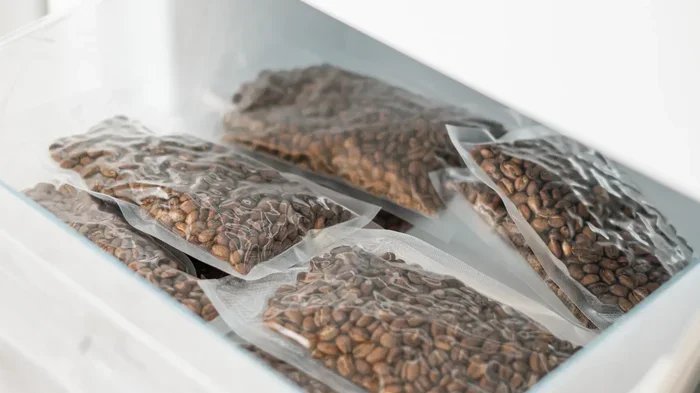
- Vacuum-sealed bags: Removing all air is the gold standard for freezer storage.
- Heavy-duty freezer bags: Squeeze out as much air as possible before sealing.
- Airtight plastic containers: Look for containers specifically rated for freezer use.
Glass containers with secure lids, like those made by Hexclad, are also a solid choice. Their glass lids are designed to be oven-safe, which means the material is durable and can handle temperature changes from freezer to countertop without cracking. You can learn more about Hexclad glass lids and their oven safety if you are curious about the material.
Portioning Your Beans Correctly
Divide your coffee beans into portions that match your daily or weekly usage. For most people, this means portions of 200 to 250 grams. Use small freezer bags or tiny glass jars for each portion.
Label each container with the roast date and the type of bean. This way, you always know exactly what you are grabbing and how long it has been in the freezer. Rotation is key, just like with any stored food.
How Long Can You Keep Coffee Beans In The Freezer
Whole coffee beans can stay fresh in the freezer for up to six months without significant quality loss. After that, the flavor begins to decline gradually. Ground coffee should not be stored in the freezer for more than three months, as it has more surface area exposed to air and moisture.
If you want the absolute best flavor, try to use frozen beans within two to three months. This gives you the sweet spot between convenience and quality.
Common Mistakes People Make When Freezing Coffee Beans
Even with the best intentions, it is easy to make mistakes when storing coffee beans in the freezer. Here are the most common errors and how to avoid them.
Storing Beans In The Original Bag
The bag your coffee came in is convenient, but it is almost never airtight. The thin plastic allows air and moisture to seep through, and the fold-over top seal is not reliable enough for freezer storage. Transfer your beans to a proper container before freezing.
Refreezing Thawed Beans
Once you take beans out of the freezer and they warm up to room temperature, do not put them back in. The temperature change causes condensation inside the container, which leads to moisture damage. Only take out what you plan to use right away.
Ignoring Airtight Seals
Even a small gap in your container seal can let in air and odors. Check that your lids are fully closed and that freezer bags are completely sealed. If you use a vacuum sealer, even better. It removes nearly all the air and protects your beans from oxidation and flavor absorption.
Freezer Storage Vs Room Temperature Storage
How does freezer storage compare to the traditional method of keeping beans in a pantry or countertop container? Here is a quick comparison:
- Freshness duration: Freezer storage keeps beans fresh for 3 to 6 months, while room temperature storage lasts 2 to 4 weeks for whole beans.
- Flavor preservation: Freezing preserves more of the original tasting notes, especially in high-quality single-origin beans.
- Convenience: Room temperature is more convenient because beans are always ready to grind. Frozen beans need a few minutes to thaw.
- Risk of flavor loss: Room temperature beans lose flavor faster due to ongoing oxidation. Frozen beans risk flavor loss from moisture and odors if stored improperly.
- Best for: Freezer storage is ideal for bulk purchases and long-term storage. Room temperature works best for beans you will use within two weeks.
For most coffee drinkers, a combination of both methods works best. Keep a small amount of beans at room temperature for daily use, and store the bulk in the freezer. This gives you the convenience of ready-to-use beans without sacrificing long-term freshness.
Expert Tips For The Best Results
Here are a few extra tips from coffee professionals to get the most out of your freezer storage:
- Let beans come to room temperature before grinding: Cold beans can grind differently and affect extraction. Take them out 10 to 15 minutes before you plan to brew.
- Do not freeze flavored beans: Flavored beans have added oils that can degrade in the freezer and absorb odd odors more easily.
- Use a dark container: Light degrades coffee quality. If your freezer has a light inside, use an opaque container or keep beans in a dark part of the freezer.
- Consider the freezer type: A chest freezer maintains a more consistent temperature than a stand-up freezer with frequent door openings.
- Grind frozen beans directly: Some baristas grind beans straight from the freezer. The cold temperature can actually improve grind consistency for certain brewing methods.
These small adjustments can make a big difference in the quality of your coffee. The goal is to treat your beans with the same care you would give any fresh ingredient.
Final Thoughts On Freezer Coffee Storage
What might happen if coffee beans are being stored in the freezer? When done correctly, the answer is simple: your beans stay fresher longer, their aroma stays vibrant, and every cup tastes better. When done incorrectly, you risk moisture damage, flavor loss, and freezer burn that ruins even the best beans.
The secret is in the details. Use airtight containers, portion your beans, minimize temperature changes, and always label your storage. With these practices in place, freezer storage becomes one of the most effective ways to preserve the quality of your coffee beans.
Whether you are a casual morning brewer or a dedicated coffee enthusiast, taking the extra step to store your beans properly pays off in every cup. Your taste buds will thank you.
Frequently Asked Questions
Can you put ground coffee in the freezer?
Yes, you can freeze ground coffee, but it degrades faster than whole beans because it has more surface area exposed to air and moisture. Use an airtight container and try to use it within three months for the best flavor.
How do you thaw frozen coffee beans?
Let the beans sit at room temperature for 10 to 15 minutes before grinding. Do not use heat to speed up the process, as it can cause condensation on the beans. Only take out the portion you need for that day.
Does freezing coffee beans change the taste?
When stored properly, freezing does not change the taste of coffee beans. In fact, it can preserve the original flavor better than room temperature storage. However, improper storage can lead to moisture absorption and flavor loss.
Is it better to store coffee in the fridge or the freezer?
The freezer is better for long-term storage because the temperature is more consistently cold and the humidity is lower. The fridge has too much moisture, which can damage coffee beans quickly.
Can you store coffee beans in the freezer indefinitely?
No, coffee beans will eventually lose their quality even in the freezer. Whole beans stay best for up to six months, and ground coffee should be used within three months for optimal flavor.
What type of container is best for freezer coffee storage?
Vacuum-sealed bags and glass jars with airtight rubber gasket lids are the best options. They block moisture, odors, and air, which are the three biggest threats to frozen coffee beans.
=== CONCLUSION ===
Storing coffee beans in the freezer is one of the simplest ways to keep your favorite roast fresh for months. The key is understanding that freezer storage works best when you control moisture, limit air exposure, and avoid temperature fluctuations. By using the right containers, portioning your beans wisely, and following the best practices outlined in this guide, you can enjoy cafe-quality coffee at home every single day.
So go ahead and freeze those beans with confidence. Just remember to seal them properly, label them clearly, and only thaw what you need. Your morning cup of coffee will taste the difference.